Reality TV is all about provocation.
The format rides on shocking revelations and personality clashes to drive viewership traffic.
Whether reality TV can encourage open dialogue remains actively contested.
In reality TV shows, observing conflict, aggression, and violence provides an opportunity for audiences to engage in discussions about socialization and the social construction of gender, power and class. The ways in which aggression is framed and portrayed on TV shows often reflect gendered expectations and stereotypes about masculinity. It opens up ways of talking about varied stigma and prejudice. Unlearning them is too lofty an ask, but inaugurating conversation becomes a palpable ambition.
Prof Helen Wood of Lancaster University, who researches on the ethics and practices of reality TV, spoke to BBC in 2025 about flagging discussions on domestic abuse, "I remember a big debate about Love Island and whether it allows… a conversation on what domestic abuse looks like?" She emphasised it can either land as triggering or be actually helpful. Reality TV is a game in intuition, a tense play on imagining and teasing social boundaries. One starts wondering what they would do in situations participants are in. It’s is tied to the idea of discourse, an exchange of opinions. But there can be equal amount of toxicity, flare-ups that may churn trauma and negatively tide over identity. The bullying is compounded by the intense scrutiny. This format encourages an exhibition of humiliation. It's a spectacle sport of meanness. Viciousness is part of how the game is tossed among participants. Reality TV thrives on personality clashes.



Changing Contours Of Indian Reality TV
In India, reality TV arrived with quiz shows and then singing contests. The Bournvita Quiz Contest of Derek O’Brien (1992) led the early trail. It was among the most sober iterations of the format. The dance reality show Boogie Woogie came in 1996, introducing a new genre and involving middle-class viewers with gradual interest. In the words of Tarun Katial, Big FM's founder, "Reality TV gave people from the most humble backgrounds a shot at stardom”.
Soon came Kaun Banega Crorepati, in July 2000, which was another landmark outing. This year, it will be heading into its eighteenth season. However, the more easily recognisable strain of vitriolic reality TV that we are used to today swept in 2006. That year, Endemol India came up with Bigg Boss and Fear Factor on the channel SET India, changing the game entirely. Mediated voyeurism forms a massive draw for such shows. There's a vicarious thrill audiences mine from watching ‘big’ people flub or fumble or act in an embarrassing way. Sexual frankness on television is just one instance of the rising tide of cultural change in the Indian society. Reality shows have also shifted the social psychology of Indians. Their aspirations have witnessed a paradigm shift. From a time when the viewer looked up to media celebrities as demigods to the viewer getting the opportunity to attain celebrity status is one of the major breakthroughs of reality television.
The psychological consequences are undeniable. Performance-driven reality shows have an effect of exerting extraordinary pressure not just on its young participants but also those watching. These shows enhance and maximise imitativeness, leading parents to push their unsuspecting kids down the same route. The high-pressure environment of shows like Bigg Boss frequently leads to visible panic attacks, depressive episodes and severe anxiety on camera. Constant surveillance, sleep deprivation and strict isolation exacerbate the psychological stress of the participants. Show runners often exploit these emotional breakdowns as dramatic cliffhangers rather than providing immediate, sensitive psychological intervention. Broadcasters use contestant distress to drive viewer engagement and fortify daily viewership numbers.
The line between entertainment and psychological exploitation is dangerously thin in locked-in formats. There are ethical boundaries which are gleefully and dangerously crossed. On Bigg Boss Malayalam Season 7 (2025), the show's first openly lesbian couple, Adhila Nasarin and Fathima Noora, faced homophobic remarks from wildcard contestants Ved Lakshmi and Mastani. Host Mohanlal defended the couple on-air and later invited them to his home during the Grand Finale. This move was widely praised on social media. On MTV Splitsvilla 16 (2026), contestant Akanksha Choudhary made bi-phobic remarks about Ruru, leading to online backlash over the comments and MTV's censorship of the word "bisexual".
The Lock Upp Controversy
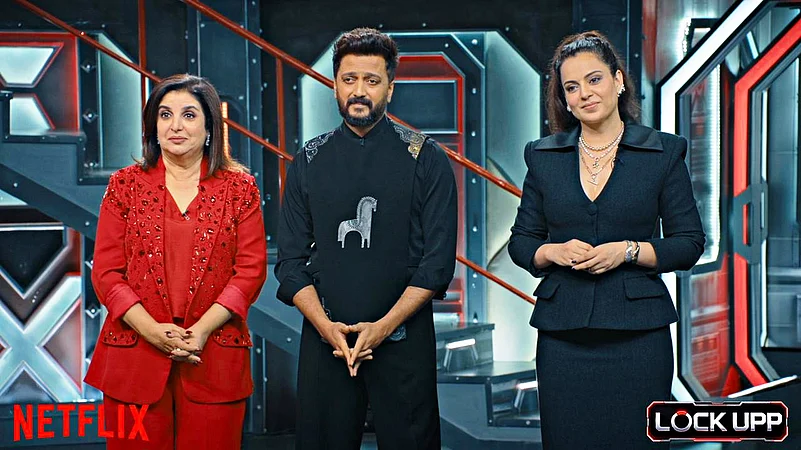
The second season of Lock Upp has been rife with talking points. Akanksha Chamola lashed out at Shreya Kalra after her bisexuality was revealed on the show without her consent. Calling Shreya the “most evil” person she had ever met, Akanksha accused her of using a private conversation to gain an advantage in the game. Despite Akanksha breaking down, Shreya stood by her decision, saying she did it purely as part of the competition. Chamola later admitted to being in relationships with women before her marriage and that her husband, Gaurav Khanna, was in the know and accepted her graciously. Chamola has spawned abundant conversation on the show. She publicly announced her separation from Khanna, leading to ample online chatter. She has also spoken about not wanting kids unlike her husband, which was also a point of rift. Chamola broke down on the show, claiming that she's been shamed for not wanting children.
Other participants have also landed in hoopla. Ram Kapoor attracted huge ire with his statement that infidelity isn't a deal breaker in marriage. He added, “If you really love your partner, nothing is a deal breaker. Marriage is hard, and it’s a journey. You have to work at it every day. Sometimes, after 20-25 years, you have highs and lows, good and bad periods. In the bad phase, if one partner makes a mistake and ends up cheating, and you can’t live without them or the children, and want the best for the family, then time heals everything, and nothing is a deal breaker.” Chamola quickly countered, insisting those aren't mere accidental slip-ups.
Disclosures and debates around queerness are thrust in these kinds of shows for dramatic emphasis. A fellow participant, Harshad Chopda, talked about his fear of gay men, which cast him in an unfavourable light as seen by woke social media. In the wake of his comments, there have been umpteen social media posts probing such homophobic assumptions. David Morley, a cultural studies giant, would put this down to audiences interpreting media differently based on their own experiences. Some might view Chopda’s remarks as honest introspection, many would slam them as prejudice. The resulting conversations animate what kinds of lives are being held as accessible and acceptable in a particular society.