



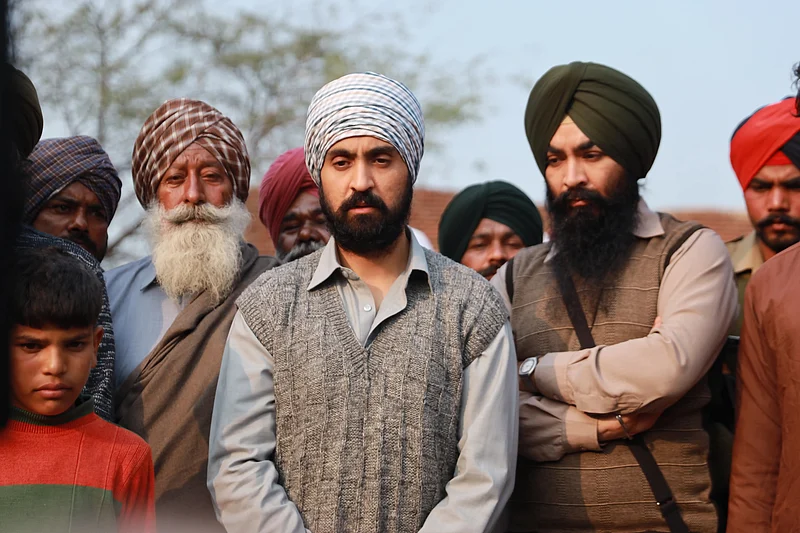
Satluj has been struck in censor board woes for over three years.
The trouble first loomed over Honey Trehan's film in 2022.
Formerly Punjab '95, Satluj has been taken off ZEE5 in India.
Honey Trehan’s inescapably controversial Satluj has dredged up age-old conversations circling censorship, an artist’s freedom and the State’s desperate autocratic desire to wipe out anything that dares to rake up a provocative history.
The film's predicament, from a three-year CBFC run-in and a sudden removal from ZEE5, is not an isolated case. India has consistently struggled with how cinematic representations of sensitive events should be regulated and assessed, particularly when those representations challenge official or dominant narratives. Satluj is just the latest casualty in the Indian State’s familiar over-reach and anxious curbs on narratives that question the establishment in any manner or form.
The CBFC vs IT Rules
It must be clearly established that OTT isn’t under the CBFC’s controlling auspices. The Central Board of Film Certification (CBFC) operates under the Cinematograph Act, holding statutory authority to mandate cuts, modifications or outright refusals for films intended for theatrical release. Its decisions are binding and, historically, conservative.
Digital streaming platforms operate under an entirely different architecture. The Information Technology (Intermediary Guidelines and Digital Media Ethics Code) Rules govern OTT platforms through a system of self-classification and a three-tiered grievance redressal mechanism, the final one which might attract the Centre’s attention itself. Unlike the theatrical route, OTT demands a post-publication regulatory framework, with platforms dictating age ratings.


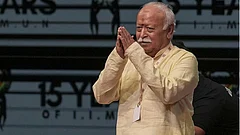

This jurisdictional gap creates significant friction. A film that clears the CBFC with heavy cuts for theatres may launch on a streaming platform in a different form, provoking accusations of regulatory inconsistency. Conversely, content produced directly for OTT sidesteps CBFC scrutiny altogether—a route that increasingly alarms those who believe the board's mandate should branch to all distribution channels.
There have been several versions of a Code of Ethics, the latest one being in September 2020. In November 2020, after hearing a petition to regulate OTT platforms, the Supreme Court issued a notification that directly asked to bring all OTT platforms come within the ambit of the Ministry of Information and Broadcasting. This is a worrying development.
Guidelines state that the platforms should comply with the laws of India and not stream content that threaten the integrity and sovereignty of India, ensuring security of the country and friendly relations with foreign countries. Peace and harmony are to be maintained. OTT content in India will continue to remain outside the jurisdiction of the Central Board of Film Certification (CBFC). This clarification was reiterated by the Ministry of Information and Broadcasting on December 17, 2025, insisting that digital content is regulated separately under extant IT rules.

The Legal Route for OTT Content
The Satluj controversy drives a critical legal point about India's OTT regulatory framework: while OTT content does not require prior CBFC certification, it is not safe from government intervention even after publication.
In practice, the existing three-tier structure governing OTT content has quickly revealed damaging ramifications. Petitioners have repeatedly approached courts seeking judicial intervention against streaming content, arguing that the grievance redressal mechanism is inadequate when matters of public order or communal harmony are at stake. Several High Courts have entertained such petitions, hurling notices at platforms and producers.
The overriding consequences is that "the legal route for OTT content" remains distinct but increasingly vulnerable to executive overreach and public interest litigations (PILs). What was designed as a self-regulatory framework is being hijacked by judicial and political intervention. There are ample prominent precursors that have suffered a similar fate to the Diljit Dosanjh-starrer. The Amazon Prime series Tandav and Netflix’s A Suitable Boy were slapped with lawsuits and eventually conceded to remove the supposedly objectionable scenes altogether. The makers and platforms had to publicly apologise after bullying political representatives rallied for FIRs to be dumped on them.

The Politics of Historical Films
Historical films in India have increasingly turned into contested ground for competing political narratives and fraught identity politics. They are inherently a tricky proposition for the question of who gets to be framed as a hero and how it’s reflected in posterity will have severe implications. Satluj might burrow into the recent past but its concerns and images are just as harrowingly topical. The scam around unclaimed bodies that the Punjab government and police tried to cover up in active collusion could just as well hold true for what the pandemic brought to light, its mishandling by the State.
The subject matter of a film—especially one dealing with state violence, militancy or minority experiences—can determine whether it receives quiet clearance or becomes a national controversy even before a single frame is publicly seen and assessed. Cinema has a vast import. The mounting of historical films and their reception can shift public legibility of the past. Any particular spin has the power to influence scores of people. There have been major examples of even leading filmmakers who have been harassed. Take for instance Sanjay Leela Bhansali who was beleaguered by the Karni Sena over Padmaavat (2018).

Creative Freedom Versus National Security
Certain films veering to propaganda do seem to have a rather impressive track record for getting away despite playing fast and loose with history. The State anoints these films, renders them tax-free and actively enables and encourages a spurt of such vicious works, like The Kerala Story, The Kashmir Files that peddle hate and a rhetoric of communal spite.
Article 19(2) empowers the State to impose "reasonable restrictions" in the interests of sovereignty and integrity of India, security of the state, public order, decency and morality—a list broad and deliberately vague enough to accommodate a wide range of justifications. Anything and anyone can be attacked.
State governments and local administrations have frequently banned or delayed film screenings, invoking the threat of law-and-order disruptions as justification. In several documented instances, this pre-emptive action has preceded any actual public unrest, effectively allowing administrative anxiety to substitute for evidence of harm.
The deeper problem is cinema's role as a tool of political mobilisation. When a film is seen as vindicating one community's grievance or condemning a government's historical conduct, it becomes a proxy for battles fought elsewhere—in electoral campaigns, in courts and in the streets. This political weight complicates the release of any nuanced historical drama that refuses easy moral resolution. National security becomes the catchphrase for bringing any work under the fray. Given the looseness, the suspect vagueness of an insinuation like being a threat to national integrity and security makes the matter infinitely murky.
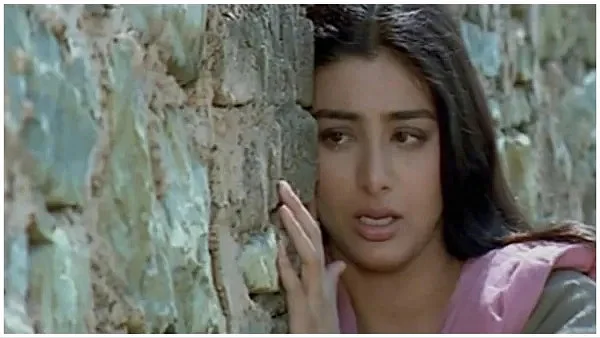
Punjab's Insurgency Legacy in Cinema
The Punjab insurgency, which swelled from the late 1970s through the mid-1990s, remains one of India's most sensitive historical wounds. For both regional communities who lived through it and federal security agencies responsible for containing it, the period resists comfortable narration. The human cost—of militancy, of state action and of the civilians caught between—has never been fully reckoned with publicly. Satluj arrives in the wake of scores of films that have sought to touch on the lingering scars of a state rocked by unending violence.
Filmmakers who attempt to document this era have been beset with a specific and largely unofficial set of obstacles. Accusations of glorifying militancy are easily levied, cast swiftly at any project that grants interiority to those who took up arms or that examines state conduct with a critical eye. Extensive censor cuts and informal blacklisting of projects have promptly ensued. The most mainstream example remains Gulzar’s 1996 classic, Maachis. It argues for the visibility of women’s lives and struggles, caught in the crosshairs between the brutal play of the State and the insurgents. It depicts a vicious cycle, the radicalisation that initially appears thrilling but which splinters in the absence of a common goal. However, it also tends to bypass a more sober, holistic consideration of the Khalistan movement.
On the independent side, Gurvinder Singh’s Chauthi Koot (2015) is constructed as a taut psychological unravelling. It captures the air of paranoia and fear that grips the state. How do households and communities live with and tackle the onslaught of suspicion and extortion by the police forces? Just as Satluj locks in on the dread that wells up from a police officer who comes knocking at an innocent family’s doorstep late at night, Singh’s film applies a similar threat posed by militants.
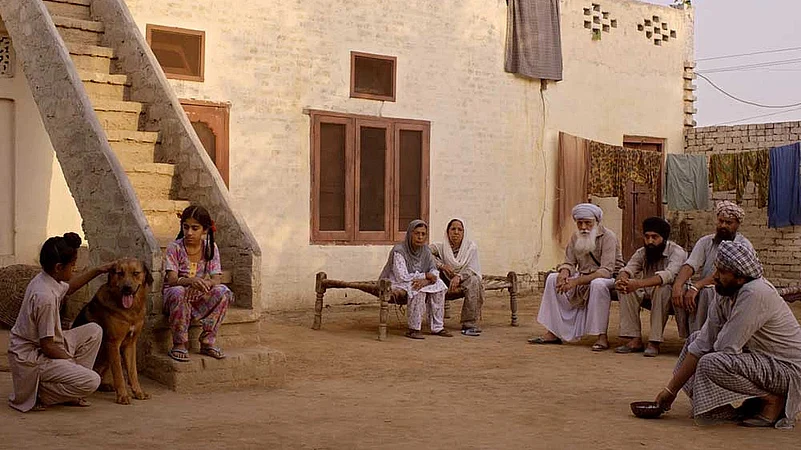
What This Case Could Mean for Future Filmmakers
The regulatory resolution of the dispute over Honey Trehan’s film will set a crucial precedent on how far filmmakers in India believe themselves to be capable of exerting independent expression. Trehan’s nightmarish ordeal is a warning for every filmmaker trying to tell a story in their individual way, without being encumbered by perceived and projected threats.
Increased regulatory pressure of this kind typically produces self-censorship, a phenomenon shadier to map than official bans but no less damaging to the breadth of Indian cinema. Once storytellers turn self-effacing and risk-averse by reverse-engineering, art is finished.
For global streaming platforms, the calculus is commercial as well as legal. They must navigate local political sensitivities to protect their market access and subscriber base, which creates a structural incentive to pacify regulatory pressure rather than contest it. If the Satluj saga results in further restrictions on historically contentious content, it will narrow the space available to every filmmaker who believes that cinema has an obligation to remember what official history prefers to occlude, rather forgets altogether.















