The Blow marks Julien Gaspar-Oliveri's feature debut.
The film premiered in Cannes Critics' Week 2026 as a Special Screening.
Led by ferocious performances from Diego Murgia and Romane Fringeli, the film centers a father-son bond shaded by an ugly secret.
Julien Gaspar-Oliveri’s debut feature, The Blow (aka La Frappe), is a profoundly disquieting drama. Premiering in Critics’ Week sidebar at the Cannes Film Festival 2026, the film leaves us rattled and shattered with its unflinching, gut-wrenching force. Its anger, hurt, despair and shame lodge deeply. It’s tough viewing, as the director has no interest in softening the blows. We sit in its pit, twisting and turning in acute discomfort, while a repressed truth slowly wells up.
Their father’s release from prison causes ruptures between siblings, Enzo (Diego Murgia) and Carla (Romane Fringeli). The two, one nineteen and the other twenty, hold vastly conflicting attitudes on their father, Anthony’s (Bastien Bouillon) return. The siblings are terrifically close and protective of each other. But Anthony’s release wedges a wall between them. Enzo wants to give his father another shot, much to Carla’s disfavour. So, the sister moves out of the house, alert to imminent danger.
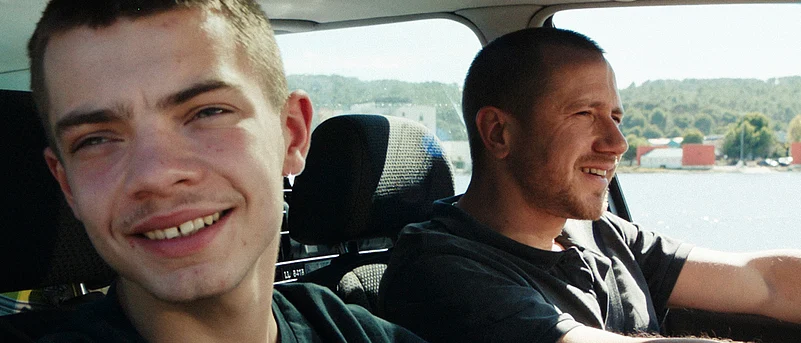

A storyteller with a penetrating, humane eye, Gaspar-Oliveri never lapses to shock tactics. A seed of dark violence runs through The Blow. There are secrets stemming in the past that trails the teenage leads. We feel its thrumming constantly, even as we dread its potential all-out emergence at any possible instant. It’s a testament to the director how he forges this uneasy, seething tension in a way that hovers instead of pouncing right away. He abjures dramatic confrontations and goes for the awkward, slippery circling of individuals over truths that demand firm negotiation. The siblings clash over how they want to welcome their father in their lives. Does he really deserve it after all that he has done? Carla charges at Enzo. She’s unwilling to concede any space for their father in their lives.
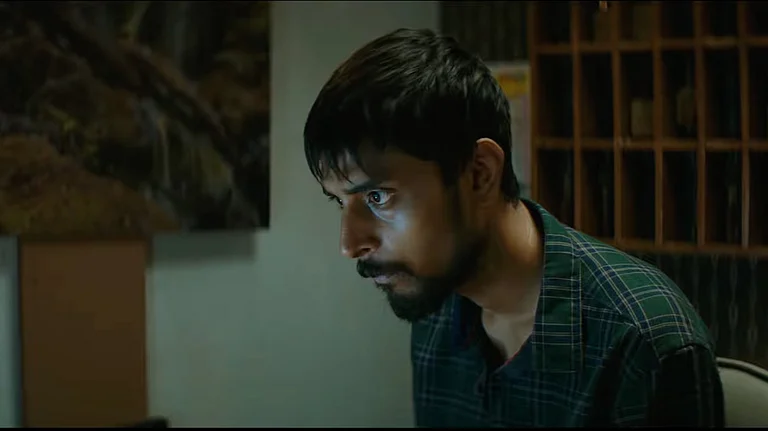
Enzo ropes in his father for his business stints, which turn out to be ill-thought until Anthony takes over the reins fully. An illusion of togetherness tempts Enzo. They are working together, hanging out. Anthony isn’t the overly watchful parents, rather enabling Enzo to be unruly and freely chase his impulses no matter how reckless. It can be thrilling until we encounter the rotten heart behind layers of casual neglect embossing this relationship. Enzo steps into this trap just as his sister may have intuited and hence staked her distance. He looks to his father with so much hope it’s almost moving.

The body holds its own memory, which the mind may only try to stave aside and fail. Enzo strives to rebuild familial love with his father, but he hasn’t yet confronted in full measure what Anthony did to him. Gaspar-Oliveri finds a sharp, sensitive lens to hint at a murky secret binding the father and son. This relationship is so fundamentally warped its shade threatens Enzo on a nearly cellular level.
Those enduring scars call for more than hasty patching over of the son-father duo. Wary of the ripples Anthony’s return can provoke, Carla immediately removes herself from the situation. Reckonings with violence will soon catch up with Enzo, leading to unpredictable eruptions. His whole self, emotional and physical, begins to crumble, lashing out in spite over what has been inflicted on it. Since the father cannot be targeted, the rage hits another deep bond, the one with his girlfriend. Roxane (Heloise Volle). Along with his cinematographer Martin Rit, Gaspar-Oliveri plumbs a deeply internal world. The handheld camerawork infuses constant restlessness, spiking a re-igniting parent-child equation with subterranean flares of torment. Murgia is absolutely heartbreaking as a boy whose mien shuttles from sunny expectation to an eruption over which he himself has no control. There’s a standout, shattering scene when he drops by his mother for a surprise visit, perhaps expecting some quiet empathy. But even there, he’s brusquely shunted. The immense friability Murgia affects makes you want to reach out and give Enzo a tight hug. Fringeli is as searing, a brilliantly judged, bracing mix of prickliness and tender vulnerability.

The Blow has no qualms in how it referees trauma, tangled emotional equivocation. When the mind cannot entirely make sense of, reconcile with all that the body has endured, the latter retaliates by latching onto misplaced conduits. Eruptions in the film, when they do smack, clobber you sideways, despite a considerable run-up. You know it’s all going to explode, yet the effects are devastating. With delicacy and a sobering emotional crescendo, Gaspar-Oliveri traverses the messy, fraught road between denial and being faced head-on with ghastly truths. The Blow is a tremendous debut.