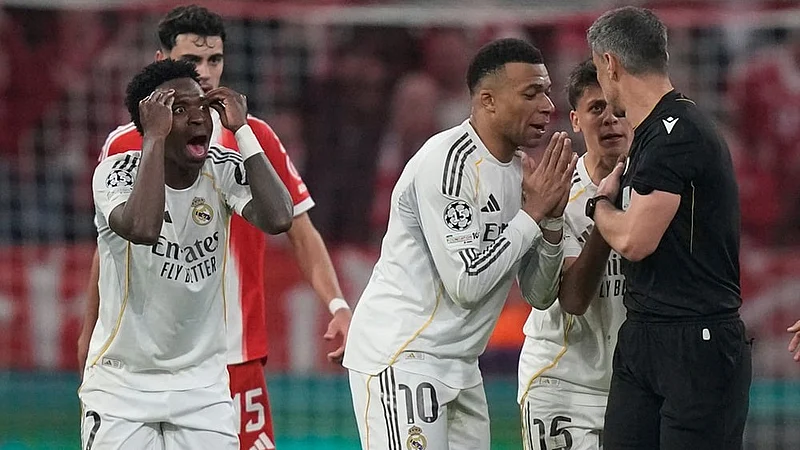
Kylian Mbappe's latest racism row highlights football's continuing battle against discrimination despite stricter regulations
From Vinícius Jr. to Mbappe, football's biggest stars have repeatedly become targets of racist abuse
The article examines FIFA's tougher anti-racism measures, including the "Vinicius Jr. Law," and why racism remains a persistent problem
Just when football appears to have taken another step forward in its battle against racism, another incident drags the sport back into a familiar conversation.
The latest flashpoint came during the FIFA World Cup 2026, when France captain Kylian Mbappe publicly condemned Paraguayan senator Celeste Amarilla after she posted racist remarks targeting his heritage following France's Round of 16 victory.
The French Football Federation, French President Emmanuel Macron and Paraguay's own government swiftly denounced the comments, but the episode once again highlighted a troubling reality: racism in football is no longer confined to stadium terraces. It now spills into politics, social media and public discourse, reminding the football world that despite years of campaigns and stricter regulations, prejudice continues to find new ways to surface.
For many fans, Mbappe's case felt less like an isolated incident and more like another chapter in an endless story. Before the headlines surrounding the French superstar could fade, the sport was once again forced to confront uncomfortable questions about whether football is truly winning its fight against discrimination, or merely reacting to one incident after another.


From Vinicius Jr. To Mbappe: A Pattern That Refuses To End
Few modern footballers have become as closely associated with the fight against racism as Real Madrid forward Vinicius Jr. Over the past several seasons, the Brazilian has repeatedly been subjected to racist abuse in Spain, turning him into the face of football's anti-racism movement. What began as isolated incidents evolved into a global conversation, with governments, clubs, FIFA and fellow players rallying behind him.
The numbers alone paint a disturbing picture. By early 2026, Vinicius had reportedly been the victim of around 20 alleged racist incidents during his eight years in Spain. Those episodes ranged from monkey chants inside stadiums to an effigy of the Brazilian being hung from a bridge in Madrid before a derby. Instead of remaining silent, Vinicius repeatedly demanded stronger punishments, insisting that campaigns and slogans alone would never solve the problem.
His stand inspired fellow stars, including Mbappe, Jude Bellingham, Neymar and several others, to speak more openly whenever racist abuse emerged. Yet even as awareness increased, so did the number of high-profile cases involving players such as Lamine Yamal, Nico Williams and Alejandro Balde, demonstrating that the issue extends far beyond one club or one league.
When Football Changed Its Rulebook
The most significant response arrived in 2026.
Following an incident involving Benfica's Gianluca Prestianni and Vinícius Jr. during a Champions League fixture, where allegations of discriminatory language became difficult to verify because the accused player covered his mouth while speaking, football authorities moved to close what many viewed as a loophole.
FIFA introduced a controversial directive for the 2026 World Cup, popularly referred to as the "Vinícius Jr. Law" by many media outlets, allowing referees to issue an immediate red card to players who deliberately cover their mouths while confronting opponents. The objective was simple: prevent abusive or discriminatory language from being hidden from cameras, officials and subsequent investigations.
The rule quickly made headlines during the tournament, with Paraguay's Miguel Almirno and Ecuador's Piero Hincapie among the first players dismissed under the new regulation. FIFA defended the move as another step toward accountability, arguing that transparency is essential if discriminatory behaviour is to be effectively punished.
Not everyone agreed. UEFA later confirmed it would not adopt the automatic red-card policy in its own competitions, preferring referees to judge such situations individually. The differing approaches illustrated just how divided football's governing bodies remain over the best way to tackle discrimination on the pitch.
Rules Are Becoming Tougher. The Abuse Isn't Disappearing
The introduction of stricter regulations is only one part of football's evolving anti-racism strategy.
Over recent years, governing bodies have expanded the three-step anti-racism protocol that allows referees to stop matches, suspend play and ultimately abandon games if discriminatory behaviour persists. Clubs now face stadium closures, supporter bans, heavy financial penalties and disciplinary investigations. Criminal prosecutions have also become increasingly common in several countries.
Yet every fresh incident raises the same uncomfortable question: why does racism continue despite harsher consequences?
Part of the answer lies beyond football itself. Social media has created an environment where abuse can spread instantly and anonymously, often reaching players long after the final whistle. Politicians, public figures and even former players occasionally contribute to inflammatory rhetoric, giving discriminatory narratives wider visibility.
In Mbappe's case, the abuse did not originate inside a stadium but from an elected official, demonstrating how football increasingly reflects broader societal tensions rather than existing separately from them.
Players Continue Leading The Fight
One striking aspect of football's anti-racism movement is that players have often driven change faster than institutions.
Vinicius Jr. repeatedly challenged Spanish authorities to take stronger action. Mbappe immediately confronted racist comments directed at him instead of ignoring them. England stars, French internationals and numerous others have chosen to publicly support teammates whenever abuse emerges, ensuring incidents remain impossible to dismiss as isolated.
That collective voice has helped force meaningful reforms, but it has also revealed an uncomfortable truth: football's biggest stars continue carrying the burden of demanding change. The sport has indeed become better at responding. What it still hasn't achieved is preventing these stories from happening in the first place.