The Shiv Sena was founded by cartoonist Balasaheb Thackeray in 1966 as a political movement.
The party first allied with the BJP in 1984 and was associated with the saffron party for nearly three decades.
Shiv Sena split in 2022 after faction led by Eknath Shinde rebelled against the leadership of Uddhav Thackeray.
Nearly six decades after it was founded by Balasaheb Thackeray as a Marathi regional movement, the Shiv Sena finds itself on the brink. In the past few years, it has undergone a bitter split, legal battles and a shrinking electoral role. Two entities now contest the legacy established by Thackeray, whose party once dominated Maharashtra politics.
In its latest chapter, the Shiv Sena (UBT), the faction led by Balasaheb's son Uddhav Thackeray, is on the verge of another split after enduring one in June 2022.
Operation Tiger, as it is being dramatically referred to, is the alleged bid by the BJP to bring Shiv Sena (UBT) MPs into the NDA fold by merging them with the Shiv Sena faction led by Eknath Shinde, which is already part of the alliance.
Outlook looks at the party's history and the developments that have brought it to this point.
1966: Balasaheb Founds Shiv Sena
The Shiv Sena was founded by Balasaheb Thackeray in June 1966. At the time, Thackeray was a cartoonist who published a satirical weekly named Marmik, through which he disseminated anti-migrant sentiments.


His political movement espoused a similar ideology, championing Marathi pride and the rights of the "sons of the soil."
The movement gained momentum in Mumbai and the Konkan region, soon becoming a dominant political force in Maharashtra.
In 1984, the Shiv Sena first allied with the BJP as it gradually shifted from its regionalist ideology towards a more Hindu nationalist stance. Between 1995 and 1999, the alliance formed the government in Maharashtra.

2019: BJP-Sena Fallout
Before the 2014 Maharashtra Assembly elections, the two allies could not finalise a seat-sharing agreement and contested the polls separately. Although they reconciled after the results and formed a government that lasted four years, their differences were becoming increasingly evident.
These differences came to a head over the chief minister's post. After the 2019 Assembly election, the Shiv Sena claimed there had been a pre-poll agreement with the BJP to rotate the chief ministership every 2.5 years. The BJP vehemently denied the claim.
Eventually, the Uddhav Thackeray-led Shiv Sena joined hands with its long-time rivals—the Congress and the NCP—to form the government in Maharashtra, with Uddhav Thackeray as chief minister.
2022: Eknath Shinde Rebellion
In June 2022, senior Shiv Sena leader Eknath Shinde and a majority of the party's MLAs rebelled. The revolt toppled the Thackeray government, forcing Uddhav Thackeray to resign after losing his majority in the Assembly.
Shinde subsequently joined hands with the BJP and was sworn in as chief minister at the head of the revived alliance.
The rebellion triggered an intense legal battle over the party's name and its iconic 'bow and arrow' symbol, with both sides claiming to be the real Shiv Sena. A bitter contest over who represented Balasaheb Thackeray's political legacy also ensued.

2023: Election Commission Verdict
The Eknath Shinde faction petitioned the Election Commission of India (ECI), staking its claim to the Shiv Sena name and symbol. The ECI ruled in favour of the Shinde faction, awarding it both the party name and the iconic symbol.
The decision was based on the legislative strength of the two factions, with the Shinde camp enjoying an overwhelming majority. The split was thus formalised. The Shinde faction retained the name Shiv Sena, while the Uddhav Thackeray faction was officially recognised as Shiv Sena (Uddhav Balasaheb Thackeray).
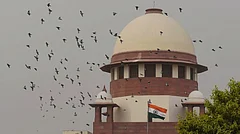
The Thackeray faction challenged the decision in the Supreme Court, where the matter remains pending.
2024: Lok Sabha Election
The 2024 Lok Sabha election was a crucial moment for both the Shiv Sena and the Shiv Sena (UBT). It marked the first major electoral contest between the two factions.
The Shiv Sena (UBT) emerged ahead, winning nine seats—the second-highest tally in Maharashtra after its ally, the Congress. It matched the BJP's seat count and outperformed the Shinde-led Shiv Sena, which won seven seats.
However, the party suffered a heavy defeat in the simultaneously held Maharashtra Assembly elections, in which the BJP-led alliance secured a decisive victory.
2026: Operation Tiger
Fresh political turmoil has emerged within the Shiv Sena (UBT), with reports suggesting that six MPs are on the verge of joining the Shinde faction. The alleged operation has been dubbed "Operation Tiger."
The development has fuelled speculation about another split within the party, one that could weaken it even further.
The move, coupled with the reported rebellion within the TMC, is being seen by political observers as an attempt by the BJP to shore up support for its delimitation Bill in Parliament after the government reportedly failed to secure the required two-thirds majority for its passage last year.