



The two-day visit is significant as both Germany and India seek stability in a rapidly changing world.
Merz will begin will visit Sabarmati ashram to pay homage to Mahatma Gandhi
Opportunities for Indians, especially engineering and science graduates, is opening up in Germany
German Chancellor Friedrich Merz’s visit to India is at a time of profound global churn triggered by US President Donald Trump’s unpredictable actions and sweeping tariffs unsettling economies and alliances alike. The German Chancellor’s two-day visit to India is of significance to both countries as they seek stability and economic opportunity in a rapidly changing world.
Merz landed early Monday in Ahmedabad, Prime Minister Narendra Modi’s home state. His trip to India, the first to an Asian country, will begin with a visit to the Sabarmati ashram to pay homage to Gandhiji. He will get a touch of Gujarati culture when he attends a kite festival ahead of official talks with Modi. He will also attend a skill development event afterwards. The next day he leaves for Bengaluru where he is scheduled to visit the Bosch campus in Adulgodi, as well as a Nano Science and Engineering CeNSE. The talks between Modi and Merz will focus on strengthening trade ties, boosting cooperation in skill development, mobility, research, education and technology. A few agreements are also on the cards.
Momentum to FTA?
The current international situation following the US action in Venezuela and how both leaders view these developments will certainly be part of the agenda. Germany, like India and the rest of Europe is looking for an early end to the war in Ukraine. Germany puts the blame for the war squarely on Russia and Vladimir Putin. Merz, like other European leaders, is unhappy over India’s steadfast refusal to point a finger at Russia. Despite placing the utmost pressure on India especially in the beginning of the war, the west could not break the traditional India-Russia friendship. That was compounded with the visit of President Putin to India last month. DW reported that Merz had in the past advocated for sanctions against countries buying discounted oil from Russia. However, since the 25 percent cess was slapped on India for lifting Russian oil, Merz has not commented publicly on the issue. More so as China, the biggest buyer of Russian oil has not been targeted. Putin and Russia’s war on Ukraine is a point of divergence between the two countries. However, most European nations now realize that this is not the time to isolate India on its close links with Russia. Trump has shaken the foundation of the world order and nations are scrambling to forge new economic and trade alliances. The India-EU free trade agreement (FTA) which has been in the works for a long time, is now getting fresh momentum as countries are looking to quickly tie-up bilateral trade deals. The two leaders are likely to add some momentum to the FTA as well as bilateral trade between the two countries.


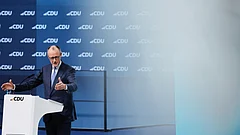
The good news for India is that Germany is looking for skilled workers and is hoping to get more people from the country. They are in need of care givers and nurses for the elderly for an ageing population. India is also desperately seeking employment opportunities for young men and women." India's strengths are primarily in the services sector," Christian Wagner, India specialist at the Berlin-based German Institute for International and Security Affairs (SWP) was quoted by DW as saying. "India serves as the office of the global economy. China, on the other hand, is more like the factory of the global economy." The opportunity for Indians, especially engineering and science graduates, is opening up in Germany. DW noted that many large German companies have outsourced their research institutes to India. Meanwhile, with the US system becoming more and more difficult to crack with social media posts of applicants also being considered for entry, Indians are looking to other destinations for study. Indians have now become the largest group of foreign students at German universities.
Trade on the table
Improving bilateral trade will also come up for discussions. Germany's trade with India has grown significantly in recent years, hitting $33.7 billion in 2024, though if goods and services are combined it comes to around $50 billion. But that is a fraction of Germany's trade volume with China. On its part, India is looking to fresh markets for its products as Trump’s 50 percent tariffs have literally closed the large lucrative US market. Both leaders are hoping that today’s meeting will help to boost overall political understanding and kick-start robust economic activity.















