For India, a long-drawn war involving Iran is not a distant geopolitical spectacle but a direct economic and human crisis in the making
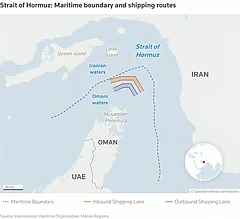
Nearly 2/3rd of India's crude oil and half of its LNG imports transit the strait of Hormuz which faces disruption threats from Iran
More than nine million Indians live and work across the Gulf Cooperation Council countries
The drums of war have drowned out the voices of reason. The combined attack on Iran by Israel and the US that brought down the country’s spiritual and temporal head Ayatollah Ali Khamenei and wiped out the upper echelons of government and the IRGC, is now engulfing the region. The strikes happened even as another round of talks was on the cards, according to the Omani facilitator. Diplomacy was thrown out of the window. But as the war enters the fourth day, there is an urgent need for diplomacy to be put back on the table quickly. The question is who will bell the cat?
The diplomatic window may have narrowed, but the urgency to resurrect it has never been greater. Yet the larger question looms: can anyone meaningfully influence Netanyahu, Donald Trump, or Tehran?
Can Prime Minister Narendra Modi, who was in Israel earlier this week celebrating the India-Israel relationship, take on this delicate test? His well-publicised rapport with Israeli Prime Minister Benjamin Netanyahu has been projected as a strategic asset. Can that personal equation now be deployed to urge restraint? The stakes are high for every country as well as for New Delhi and the Modi government.
``Our west Asia policy and interests are being shaken by this war. Our growing trade, investment, energy, technology, defence and human ties with this region have constituted a great success of our foreign policy. The model of development being pursued in this region was in alignment with our interests. Now there are immediate question marks. If instability in Iran persists our interests will suffer,’’ says Kanwal Sibal, former foreign secretary.


For India, a long-drawn war involving Iran is not a distant geopolitical spectacle but a direct economic and human crisis in the making. Nearly nine to ten million Indians live and work across the Gulf Cooperation Council (GCC) countries, from Saudi Arabia and United Arab Emirates to Qatar and Kuwait. Their remittances sustain families back home and bolster India’s foreign exchange reserves. Any regional conflagration threatens not just oil supplies, but livelihoods.
``Prolonged war in the Gulf and the West Asia region poses severe economic, energy and security challenges for India given its heavy reliance on the area for oil ,trade routes and remittances. Escalations like the recent Iran-Israel-US conflict, amplify these vulnerabilities,’’ says Anil Wadhwa, who also served as India’s ambassador to Oman.
Wadhwa points out that nearly 2/3 rd of India's crude oil and half of its LNG imports transit the strait of Hormuz which faces disruption threats from Iran. Prolonged conflict will spike oil prices fueling inflation straining public finances and forcing costly rerouting through the Cape of Good Hope. Higher energy prices will drive up inflation. Trade disruption in Bab-el-Mandeb will affect 30 per cent of India's west bound exports, Wadhwa explains. Fiscal pressures will mount from import bills and delayed investments.
``The Gulf supplies 38 per cent of India's remittances. Job losses among 10 million expats risks slashing inflows, weakening forex reserves and household incomes,’’ says Wadhwa.
Biswajit Dhar, development economist and former JNU professor agrees with ambassador Wadhwa that if the war continues in West Asia, it will be a nightmare scenario for India and would severely affect the country’s economy.
``A sustained rise in crude prices would also swell India’s import bill, straining the balance of payments. Even reports of a fire in a Saudi oil refinery triggered by a falling debris from an Iranian drone, without an immediate jump in real-time oil prices, were enough to weaken the rupee to 91against the dollar. As the import burden grows, the Reserve Bank of India will find it harder to contain inflation. Higher interest rates could follow, triggering a domino effect across the broader economy,’’ says Dhar.
A co-ordinated diplomatic effort by India, China, Russia and European leaders is urgently needed to stop further escalation of an already grim situation. Prime minister Narendra Modi was on the phone to the King of Jordan Monday evening. Foreign minister Subramanyam Jaishankar has also been in touch with all his counterparts in the Gulf Kingdoms. He also spoke to Iran’s foreign minister Abbas Araghchi. So far however, New Delhi has not commented on Ayatollah Khamenei’s killing.