






New Delhi has responded with caution, even as it quietly reviews contingency plans for the safety of its nationals
Disruption in oil supplies can hit India particularly hard.
If the Strait of Hormuz is closed for a long time by Iran, suppliers of oil and petroleum products will be affected.
The American decision to choose war over diplomacy by launching a war on Iran have sent shockwaves not just in West Asia but beyond, with India and South Asia watching anxiously as the conflict threatens to upend lives, livelihoods, energy security and India’s hard-won diplomatic balances.
The timing is diplomatically sensitive. The waves of airstrikes against military and civilian targets by Israel and the US, follows closely on the heels of Prime Minister Narendra Modi’s high-profile visit to Israel, where the two sides elevated their ties to a “special strategic partnership,” underlining growing political and security convergence.
An attack initiated by Israel so soon after that high-profile outreach complicates India’s carefully calibrated engagement in a region where it maintains deep ties not only with Israel but also with Iran and the Gulf Arab states.
New Delhi has responded with caution, calling for restraint and a return to negotiations, even as it quietly reviews contingency plans for the safety of its nationals. As the war clouds gather over Iran, the crisis is fast becoming not just a West Asian conflict, but a test of South Asia’s economic resilience and diplomatic dexterity.
India’s relations with the Gulf Arab states have strengthened significantly in recent years, particularly after Narendra Modi assumed office in 2014. Since then, New Delhi has made a concerted effort to deepen engagement with every country in the region. Today, India enjoys robust ties with Saudi Arabia, the United Arab Emirates, Bahrain, Qatar and Kuwait. In particular, India’s partnerships with Riyadh and Abu Dhabi have evolved well beyond a traditional buyer–seller dynamic in energy trade, expanding into broader economic collaboration and growing political alignment.


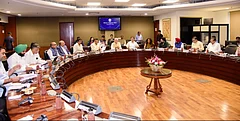

In a statement released by the MEA Saturday evening India called for all sides to exercise restraint, avoid escalation, and prioritise the safety of civilians. Dialogue and diplomacy should be pursued to de-escalate tensions and address underlying issues,’’ and that ``sovereignty and territorial integrity of all states must be respected.’’ External affairs minister Subramanyam Jaishankar was on the phone to the Iranian foreign minister Abbas Araghchi and posted on X ``had a telecon with Iranian FM Seyed Abbas Araghchi this evening. Shared India’s deep concern at the recent developments in Iran and the region. @araghchi. He also spoke to his Israeli counterpart ``Spoke with Israeli FM Gideon Sa’ar this afternoon. Reiterate India’s call for dialogue and diplomacy to de-escalate tensions. @gidonsaar as well as to foreign ministers of Saudi Arabia, Kuwait, Bahrain and Qatar to discuss the ongoing escalation of tension in the region.
For New Delhi, the stakes are especially high. Nearly nine million Indians live and work across the Gulf, forming the backbone of sectors from construction to healthcare to IT, and sending home billions in remittances each year. Any escalation risks not only regional instability but also economic tremors that could ripple through households across India.
But it is not just India, nationals of other south Asian countries are also in the region. Pakistan has around eight million of its citizens employed in the Gulf nations, and Bangladesh has around 2.9 million, and Sri Lanka just above a million. The fallout of instability and conflict could be severe. Millions of South Asians depend on jobs in the oil-rich Gulf monarchies.
Disruption in oil supplies will hit India hard. If the Strait of Hormuz is closed for a long time by Iran, suppliers of oil and petroleum products will be affected. However India’s petroleum ministry has clarified that India has enough oil stocks to last over 20 days.
The concern in South Asia also revolves around attacks on oil infrastructure by Iran. Tehran has done so in the past and if the war continues energy sources could either be directly targeted or unintentionally hit. This would lead to an immediate spike in international oil prices.
India which has had a long historical relation with Iran bought large quantities from Iran. But that went down after President Trump during his first term in office, slapped secondary sanctions against companies or nations lifting Iranian oil. India has also all but washed its hands from involvement in the Chabahar port under American pressure.
Like the rest of the world South Asia is also hoping that the war does not escalate or drag on for too long.
















