



Reset in ties comes after relationship hit unprecedented low during Justin Trudeau’s last term
Among the agreements signed between India and Canada is a long-term commercial agreement for the supply of Uranium needed for nuclear power plants
Carney has been under extensive tariff pressure from the US, its largest trading partner.
India and Canada signed several agreements after talks between Prime Minister Narendra Modi and his counterpart Mark Carney on Monday. The two countries are resetting ties that plunged to their lowest point during Justin Trudeau’s last term in office.
The diplomatic thaw began after Mark Carney took office, moving swiftly to steady relations. ``There has been more engagement between the Canadian and Indian governments in the last year than there has been in more than two decades combined, ” Carney said while delivering his remarks to reporters after the talks with Modi.
Trudeau had accused New Delhi of involvement in the killing of a Sikh separatist leader on Canadian soil, a charge India vehemently denied triggering tit-for-tat expulsions and a deep freeze in political contact. But now in a world rocked by economic uncertainty and sharpening geopolitical fault lines, Carney and Narendra Modi appear ready to turn the page. The PM also lavished praise on the visitor and said: "Since our first meeting, our relationship has been infused with new energy, mutual trust, and positivity. I credit my friend, Prime Minister Carney, for the growing momentum in every area of cooperation.’’ Modi went on to say "India and Canada share an unwavering belief in democratic values. We celebrate diversity. The well-being of humanity is our shared vision. This vision inspires us to move forward in every field. Today, we discussed transforming this vision into a Next Level Partnership.’’


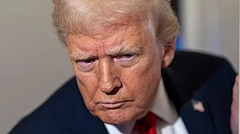
US President Donald Trump put Canada on notice since taking oath for the second term. Carney has been under extensive tariff pressure from the US, its largest trading partner.
Mark Carney, a former governor of the Bank of England, has attempted to diversify Ottawa’s trade relations long intertwined with the US. In January this year, he travelled to China, meeting with President Xi Jinping to establish a new partnership focused on trade, energy, and climate. The visit resulted in a deal to lower Chinese tariffs on Canadian agricultural products in exchange for allowing up to 49,000 Chinese electric vehicles into Canada at a reduced 6.1% tariff.
Carney’s visit to India is part of the plan to diversify economic ties. Today among the many agreements signed between India and Canada are those on critical minerals, clean energy, space and higher education.
A commercial contract between the Department of Atomic Energy and Canada’s Cameco for the supply of uranium ore concentrates was also signed. This is a major step to help expand the use of nuclear energy in India, keeping in mind the PM's decision to shift to 100 GW by 2047. Moreover, the terms of reference for a Comprehensive Economic Partnership Agreement (CEPA) to be completed late this year have also been finalised. So, trade, innovation, technology and people to people ties have been set in motion. Canada and India will also now regularly have a defence dialogue, and Ottawa will join the International Soar Alliance. The relations that had veered dangerously off-track, are now striking a new path.

``So this is not merely the renewal of a relationship, it is the expansion of a valued partnership with new ambition, focus, and foresight, a partnership between two confident countries charting our own course for the future,’’ as the Canadian PM eloquently described it.
Carney’s visit , though somewhat overshadowed by fast-moving developments in Iran, produced tangible outcomes.
For Modi it is a win-win situation with Ottawa's support for Khalistani Sikhs living in Canada pushed under the carpet for now. India’s ties with Canada have from time to time become prickly because of support to Sikh Khalistani supporters living in that country. While the Khalistan issue has long lost relevance in Punjab, it is kept alive by Khalistani groups who have refused to move on from that turbulent and violent chapter. Possibly it is nostalgia that has kept expatriate Sikhs dreaming of an independent Sikh country. In India it has no resonance.
According to Canada's CBS news, sections of the Sikh community are unhappy with the PM. "Carney’s trip is raising questions within the local Sikh community on whether the government is putting deals with New Delhi over the lives and safety of its members, but it's also earning praise from some Toronto business owners who see it as a chance to boost the economy’’ the CBS news website reported “[It] feels like a betrayal, it feels like our community doesn't really matter,” Balpreet Singh, legal counsel and spokesperson for the World Sikh Organization of Canada, told CBS.















