The killing of the Supreme Leader creates an unprecedented succession crisis, testing Iran’s clerical-military power structure.
Iran’s retaliation has expanded the conflict beyond Israel to US assets and Gulf states, raising fears of a wider West Asian war.
While Washington and Tel Aviv may seek regime weakening, prolonged instability, not regime change, could become the most likely outcome.
“First time as a tragedy, second time as a farce,” as Karl Marx famously wrote, borrowing from Hegel to describe humanity’s failure to learn from history.
This phrase couldn’t have been more apt for the embattled Iranian regime, which has again been caught off guard by joint Israel-US strikes in less than a year. This is the fourth time in less than two years that both Iran and Israel have come to exchange direct blows.
The joint strikes were launched from land, air and sea on targets across the majority of Iranian provinces and major cities, including bombings of the Iranian capital, which is home to nearly one-sixth of the total Iranian population.
Shock and Decapitation
Along with military installations, the attacks were also launched to target current and former senior political and military leadership, in what is termed as “decapitation” strategy, aimed at extensively weakening the regime, a repeat of last year’s June (or 12-day) war between the two.
The joint Israel-US-led attacks started in the morning hours of 9.30 am (local time) on February 28, Saturday, the first day of the Iranian work week, aimed at maximum damage to the leadership structure.

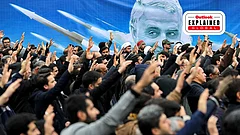
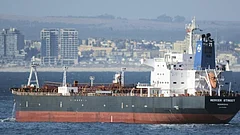
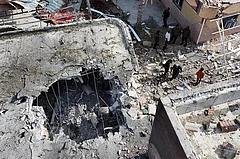
The attacks, codenamed “Operation Roaring Lion” by Israel and “Operation Epic Fury” by the US, targeted the Leadership House compound, which houses Iran's Supreme Leader Ayatollah Ali Khamenei, resulting in his death.
The 86-year-old Khamenei was at the helm of the Iranian regime’s political and ideological structure for nearly 37 years and was a much-revered figure among millions of Muslims across the world (and in India), especially among the Shiites.
He was killed along with his close family members, including his daughter, son-in-law, daughter-in-law and grandson. Iran has declared 40 days of national mourning on the death of its Supreme Leader.
Along with Khamenei, President Masoud Pezeshkian was also targeted, who survived the strikes. Meanwhile, there are conflicting reports about the fate of the former Iranian President Mahmoud Ahmadinejad, a controversial figure. Apart from that, close to 40 senior political and military leaders are reported to have been killed as of writing.
These include top security officials- Secretary of the Iranian Defense Council, Ali Shamkhani (who was leading the nuclear negotiations with the US), Mohammad Pakpour, commander of the Islamic Revolutionary Guard Corps (appointed at the helm after the assassination of his predecessor the similar way during last year’s the June war), Defense Minister Aziz Nasirzadeh, and Mohammad Shirazi, the head of Supreme Leader's military office, among other senior officials.
So far, the joint Israel-US strikes have resulted in more than 200 killed and 700 injured in Iran, with the number expected to rise. The number also includes the tragic deaths of around 148 school girls, mostly aged seven to 12, with nearly 100 wounded after missiles struck their all-girls school. While in Israel, around ten people have been killed, with around 30 injured, the majority of fatalities coming from a single strike in a town in central Israel near Jerusalem.
The military buildup in the region, led by the US, amassing military assets, including its two Aircraft carrier groups (USS Abraham Lincoln and USS Gerald R. Ford, the largest warship in the world), was almost an open secret. Even as strikes were anticipated, Iran and Russia had just concluded their pre-planned naval drills in the Gulf of Oman on February 21st. Thus, the attacks themselves have not been surprising for the keen observers of the region.
Moreover, the Indian embassy in Tehran had also issued an official travel advisory on February 23, advising all Indian nationals to leave Iran. Amidst this backdrop, there is a reasonable probability that the highest echelons of the Indian security establishment might have had some inklings of the impending strikes.
That said, whether knowingly or unknowingly, PM Narendra Modi’s visit coincided with a period of intense diplomatic activity in the region, a usual strategy before initiation of a military operation of this scale, which requires months of planning.
But even then, what is surprising is how Iran was again caught off guard and failed to protect its senior leadership and most important figures of the regime. The serious security failure within the Iranian apparatus has now resulted in the killings of its top echelons, just like last June, but now including its most revered Supreme Leader.
The ongoing nuclear negotiations with the US (again as a deceptive cover), the timing and the manner of the attacks, the targeted assassination of its politico-military leaders, and Iran’s response in the form of a volley of Ballistic missiles as well, all look like a repeat from the playbook of the June 2025 war.
However, Iran’s response, codenamed Operation True Promise IV, has been much swifter and more widespread this time around. Iran has promised a harsh response and has said that all American and Israeli assets and interests in the region are now legitimate targets with no red lines for it.
Along with targets in Israel, Iran has attacked the American military installations in the six Gulf Arab countries (excluding Oman, the mediator of the nuclear talks) and in Jordan, thus widely expanding the scope of the war.
There have been confirmed reports of Iranian strikes on the military installations in the headquarters of the US Fifth Fleet located in Manama, Bahrain. The continued Iranian retaliatory attacks on targets in major Gulf cities like Dubai, Abu Dhabi, Manama and Doha have resulted in fears of widening conflict. There have already been reports of three deaths in the UAE and injuries from falling debris reported in both the UAE and Qatar.
Global Reactions and Diplomatic Faultlines
While the majority of world opinion has been cautious in its response, statements in support of Iran condemning Israel-US attacks from major powers have so far only come from Russia, China and Brazil. Although Iran has a joint-treaty on Comprehensive Strategic Partnership with Russia, it is not supposed to result in any substantial help, embattled as Russia is in its own quagmire in Ukraine.
On the other hand, China, one of the largest importers of Iranian crude oil and natural gas and with extensive economic interests in the region, is also not expected to help in any substantial way beyond diplomatic support at the UN, just like Russia. With the UN Security Council scheduled to meet on the situation, diplomatic support from both Russia and China will be crucial for Iran.
Meanwhile, EU foreign policy officials have largely endorsed actions of the US and Israel, while directing measured criticism towards Iran and calling for deescalation and a negotiated solution.
Likewise, the three major European countries (France, Germany, and the UK) have condemned Iran in a joint statement, while categorically calling for a "negotiated solution." The PM of the UK, Keir Starmer, has indicated that although they are not participating in the hostilities, they are part of defensive aerial operations in partnership with regional Arab states and Israel.
Statements from Gulf Arab states have been particularly blistering on Iran for attacking their territories. Still, dependent as they are on US-Israeli security for their own regime survival, they are not expected to take any unilateral action on their own, despite saying that they reserve the right to respond to Iranian retaliatory strikes.
Notably, most of these Gulf Arab states, including Saudi Arabia, have had improved relations with Iran in the recent past. The UAE, and Dubai in particular, has extensive economic ties with Iran. The appetite of Gulf states to absorb such attacks is much more limited and is thus expected to exert pressure on the US to de-escalate the situation. Iranian strategy to attack the Gulf states stems from this calculation.
While the regional allies of Iran, like Hezbollah in Lebanon, the Houthi (or Ansarallah) movement in Yemen and Shiite militias in Iraq, seem to be holding their guns and are not in a position to attack Israeli or American interests in the region. The punishing strikes from Israel and the US in the recent past and domestic compulsions have had an effect in silencing them.

What of India?
The Indian response to the eruption of the war, considering the high stakes and long standing relations it has in the region, with both Israel and Iran, has been its usual short, tepid, predictable and not far off from its recent statements concerning the region.
Its official statement pithily notes with deep concern “recent developments in Iran and the Gulf region,” without even mentioning Israel and the US. With millions of diaspora and our energy security and thus economic situation tied to stability in the region, India has a substantial stake in the deescalation of the conflict.
Any escalation or widening of the conflict, especially in the event of the closure of the Strait of Hormuz or the Strait of Bab Al-Mandeb, is sure to send our fuel prices skyrocketing and, with it, soaring inflation, amid the already-downturned state of our economy due to threats of Trump tariffs.
The stated and apparent aim of the US and Israel, as articulated by President Trump and PM Netanyahu respectively, has been to instigate regime change in Iran. But along with the stated aim, the fundamental objective stems from structural considerations, to maintain Israeli upper hand in the region.
To consistently achieve this hegemonic position and thwart any potential challenge to the Western order in any meaningful way, the US and Israel have always sought what is termed as “setting the clock back” strategy. It requires both of them to militarily, technologically, economically and socially weaken all those countries trying to challenge the Western hegemony in the region, thus setting their clocks back by a few decades through direct military action and/or other coercive means, just like it happened with the invasion of Iraq.
A Regime Under Internal Strain
Reeling under decades of economic sanctions, the Iranian economy has been severely battered and brought to a halt, with skyrocketing inflation and the collapse of the Rial, Iran’s official currency. In recent periods, even countries like India, which were once the largest importers of cheap Iranian oil, have scaled back the imports to almost zero, fearing American tariffs.
The resulting economic chaos and hardships associated with it have destabilised the support base of the Iranian regime.
Just a month ago, the Iranian regime barely emerged from widespread protests and violent uprisings across the country, which posed a significant security challenge. The protests in January also saw a weakening of its traditional middle-class base among the merchants or Bazaris.
This erosion of its primary support base has been indicative of its slippery slope for its military-clerical structure. The repression unleashed by it has been reported to have killed many hundreds, if not a couple of thousands, of its citizens. Casualties in hundreds have been reported among many of its own security members, too.
Both the easy targeting of its senior leadership in the ongoing war and the large-scale violence during the protests in January indicate a widespread sabotage network and deep penetration of its security architecture by its adversaries.

Severe economic conditions, increased rural to urban migration in destitution, coupled with one of the highest refugee populations in the world, have been contributing factors in this.
The highhanded response to January protests by the Iranian regime, in which it was already tottering to quell the uprising and was on the back foot, must have indicated a window of opportunity for Israel to attack Iran. With Trump at the helm of affairs, Israeli PM Netanyahu has reportedly pushed the attack as a once-in-a-lifetime opportunity of high risk and high gain to effectuate desired outcomes beneficial in the long-term interests of both.
Succession and the Road Ahead
The assassination of its Supreme Leader presents a unique succession challenge for the Iranian regime and its security. For now, the Assembly of Experts, a council of 88 clerics will choose the successor when the situation permits. Even though a formal succession structure exists at both the clerical and security levels, it won’t be smooth sailing for Iran.
Although regime change seems unlikely in the near future, prolongation and widening of the conflict may severely destabilise and thus rapidly change the situation for the Iranian regime in the shifting sands of the region. Even if the US and Israel succeed in toppling the present regime, it won't be a guarantee for a pro-American regime getting installed smoothly, much less the so-called crown prince, Reza Pahlevi, who has very little backing on the ground. In the absence of any meaningful opposition in Iran, what we will be up to in such a scenario is prolonged instability and lawlessness, or a plain military dictatorship, both desired outcomes for the US and Israel.
As the escalation rises, much also depends on Trump's appetite for the present war to continue. So far, he has indicated his willingness to absorb some American casualties as a result of the war; as of writing, three deaths and five injuries among the US service members are reported. But for a President who has come on the plank of Making America Great Again (MAGA) base and ending the forever wars in the region, winding back the current war can be as sudden and unexpected as with most of what Trump does. A Reuters early poll released Sunday shows just one in four Americans is supportive of the US strikes on Iran; subsequently, there have been protests opposing the war in New York City.
In the present circumstances, what is certain, however, is even further erosion of any respect for international law and any pretence of morality, if there ever was one. It will further prompt everyone to scramble for their guns, increasing the likelihood of flashpoints around the globe.
But for now, the embattled Iranian regime seems to be cornered by the roaring lions and epic furies. As it tries to emerge alive, bruised and battered from this current struggle for survival, its outcome will have long-term consequences for the region.
Sajid Inamdar
Is a Doctoral Candidate at the Centre for West Asian Studies (CWAS), in the School of International Studies (SIS) of Jawaharlal Nehru University (JNU), New Delhi.