



Eliminating Khamenei was likely the simplest phase; dismantling the system he embodied amidst mass public mourning will be far more difficult.
Iranian retaliation against U.S. bases in Gulf Cooperation Council states has dragged the wider region into conflict.
Disruptions around the Strait of Hormuz, airspace closures, airport damage, and flight suspensions underscore how quickly the conflict is impacting millions of expatriates, especially in the Gulf.
Israel’s operation Lion’s Roar and United States’ operation Epic Fury that began on 28 February 2026 with the stated goals of ending Iran’s nuclear capabilities, destroying its ballistic missiles capacity, and stopping Islamic Revolutionary Guard Corps (IRGC)’s support to the regional proxies, and an unstated goal of regime change in Iran, appears to have made significant headway with the killing of Iran’s Supreme Leader Ali Khamenei within 24 hours of the attack. Several other prominent and high profile Iranian political and security figures have been reportedly killed in the attacks.
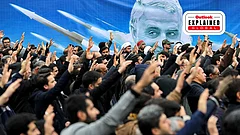
Nonetheless, the unfolding events could prove to be more complicated that meets the eye. The operation has just begun and eliminating the Supreme Leader was probably the easier part. Regime change and bringing stability consequently will be far more difficult to achieve with Khamenei’s mass following evident from number of mourners on the streets of Tehran and the unwavering support for the IRGC.

Meanwhile, the operation is proving to be costly for the region, especially the neighbouring Gulf Cooperation Council (GCC) countries of Qatar, Bahrain, the UAE, Kuwait and Saudi Arabia, whose territories have been targeted by the Iranian retaliatory attacks. Though Iran has noted that the targets are US bases stationed in these countries, some reports have suggested missiles and rockets falling in neighbouring civilian areas. Khamenei’s killing has also led to protests in Iraq. The countries with presence of proxies like Hezbollah and Houthis will also feel the heat with their retaliatory moves and Israeli response. Iran’s Parliament speaker Mohammad Bagher Ghalibaf has warned US and Israel of devastating blows for crossing the red line.


The human cost of the operation is continuing to rise, with more than a hundred people killed or injured. The situation raises more questions than it answers, particularly regarding the risk of instability and its impact on different factions within Iran. It also draws attention to the consequences for expatriate communities from South Asia living in these countries. More than nine million Indians reside in the GCC states and now find themselves in a difficult situation. The Indian government has been issuing regular advisories urging them to exercise caution, follow local guidance, and leave Iran if necessary.

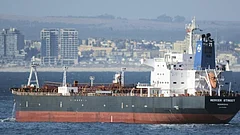
Oil flows through the Strait of Hormuz may also be affected, as it has become a key theatre of the conflict. Around one fifth of global oil supplies and a significant volume of LNG pass through the strait each day and are vulnerable to disruption. Airspace closures have already led to major flight disruptions, with thousands of passengers stranded or diverted. Dubai International Airport, the world’s busiest airport for international travel, has sustained damage. Airlines including Air India, Turkish Airlines, Delta Airlines, KLM, Lufthansa and British Airways have suspended or cancelled flights, while Iran, Israel, Qatar, Iraq, the UAE, Syria, Jordan and Kuwait have closed their airspace.
Iran’s retaliatory strikes on neighbouring GCC countries have further isolated it, drawing condemnation from Bahrain, Kuwait, Qatar, the UAE and Saudi Arabia, as well as Germany, France and the UK. Oman has called for an immediate cessation of military operations. Ukraine has accused Iran of triggering the chain of events, while Norway has stated that Israel breached standards of international law.
Russia, China, Venezuela and Pakistan issued statements supporting Iran, while the United Nations condemned the escalation and the European Union described the situation as deeply concerning. Belgium stressed the need to distinguish between the Iranian people and the actions of their government, while Ireland emphasised that the protection of civilian lives in both Iran and Israel is of paramount importance. India has urged all parties to exercise restraint, avoid further escalation, prioritise dialogue and diplomacy, and respect the sovereignty and territorial integrity of all states.
The US-Israel attack on Iran has disturbed the fragile strategic and security situation in West Asia. The region will have to pay the price for a while. Optimists may look at it as a phase of transition for Iran but its direction will be determined in due course of time depending on who replaces the regime in Iran considering lack of a prominent opposition leader. Article 111 of the Iranian constitution mandates that a temporary council handle duties until a new Supreme Leader is elected.
The government of Iranian President Masoud Pezeshkian has announced the formation of a three-member interim council to oversee the transition. However, it remains unclear how effectively the council will be able to respond to the US–Israel attack while maintaining continuity and stability. Iran is likely to enter a difficult period of transition once the US–Israel military intervention ends. The Persian Gulf and the wider West Asia region will bear serious strategic consequences of the war for the foreseeable future.
The author is Associate Professor at Jawaharlal Nehru University, New Delhi.















