






The Left had initially anchored its campaign around a development agenda
The Congress alleges that the CPI(M) and the BJP have fielded new faces in key constituencies as part of a clandestine deal
The CPI(M) points to instances in the past where the Congress and the BJP aligned to defeat the Left
Radhalekshmi, a daily wage labourer living near Walayar—a small Kerala town on the Tamil Nadu border—spends her evenings engaged in political work. An ardent CPI(M) supporter, she counts both the Congress and the BJP among her principal adversaries. Yet she is fully aware of the irony just across the border, where her party colleagues and Congress workers are jointly fighting the AIADMK-led NDA in Tamil Nadu. “There is nothing wrong in it,” she says. “Here in Kerala, the political situation is different. Our main fight is with the Congress.”
For CPI(M) activists like Radhalekshmi, as well as for the party’s top leadership, the Congress remains the primary rival. For the Congress in Kerala, defeating the CPI(M) is nothing short of a political imperative. What is more intriguing, however, is that both parties have made it a key campaign plank to accuse the other of maintaining an illicit understanding with the BJP—the underlying aim being to outdo each other in claiming the mantle of secularism.
When Congress president Mallikarjun Kharge visited Kozhikode for a UDF rally, he trained his guns on what he described as the shared political interests of the CPI(M) and the BJP. The remarks drew a sharp response from the CPI(M) Politburo, underscoring how regional political compulsions have widened the schism between the country’s two foremost secular formations. The exchange, in turn, made the INDIA alliance appear like an arrangement existing in a different political universe altogether.

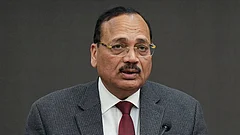


“National political alliances, especially after the BJP came to power at the Centre, have never really worked in Kerala,” says P T Nasar, a senior journalist and political commentator. “It has always been a contest between the CPI(M)-led front and the Congress-led front. What has changed now is that, with the BJP emerging as a force to reckon with, both these fronts are keen to project themselves as the principal bulwark against Hindutva forces,” he adds.
In 1991, in two constituencies—Vadakara Lok Sabha constituency and the Beypore Assembly constituency—the Congress-led UDF and the BJP extended joint support to independent candidates against the Left. This remains perhaps the first and only instance in Kerala where the Congress and the BJP backed a common candidate against their shared rival
Late K G Marar, in his memoir, wrote that there was a broader understanding between the two parties to support each other in other constituencies as well. However, the arrangement brought little electoral gain to the BJP, as none of its candidates emerged victorious. Even so, the episode—and Marar’s later revelation—left a lasting imprint on Kerala’s political discourse, continuing to be invoked in contemporary debates.
In the years that followed, the BJP steadily expanded its vote share in Kerala. It marked a breakthrough in 2016 by winning its first Assembly seat in the state, and in the 2024 Lok Sabha elections, the party went on to open its account in Parliament from Kerala.
Kerala is a state where roughly 46–48 per cent of the population belongs to minority communities—Muslims, who make up about 28 per cent, and Christians, around 20 per cent.
“It is this demographic composition that primarily stands in the way of the BJP. In the last Lok Sabha election, the party managed to make inroads into a sizeable section of Christian voters. But going by the local body election results, it appears that the Congress has largely regained that support,” says P T Nasar.
The result is a familiar political contest: both the UDF and the LDF accuse each other of maintaining a tacit understanding with the BJP, each seeking to project itself as the more credible secular force and thereby consolidate minority votes.
Chief Minister Pinarayi Vijayan and Leader of the Opposition V D Satheesan have been trading barbs, each alleging that the other has a history of association with the BJP.
“The real deal is between the Congress and the CPI(M)—that is evident from their national-level alignment. In Kerala too, when there were prospects of a BJP victory in constituencies like Manjeshwar and Palakkad, the CPI(M) allegedly cross-voted in favour of the UDF to ensure the BJP’s defeat. After doing that, these two parties continue to accuse each other—and even the BJP—of a tacit understanding,” says M T Ramesh, BJP secretary.
Leader of the Opposition V D Satheesan, however, levels a counter-charge. He alleges that the BJP has, in some constituencies where it enjoys a considerable vote share, refrained from fielding strong candidates and instead ceded those seats to organisationally weaker NDA allies. “The aim of the CPI(M) is to defeat the UDF and indirectly help the BJP. In constituencies like Palakkad, where the BJP has emerged as a strong second force, the CPI(M) has fielded a non-political face. In some other key constituencies too, they have left the field to their allies,” he says.
But some political observers believe these allegations and counter-allegations are unlikely to significantly influence voter preferences. “These charges are not new, but they have now taken centre stage. In many ways, this is a tactic to divert the electorate’s attention from more pressing issues in the election,” says Dr Kuttikrishnan, author of a book on Kerala’s electoral history.
In the last Lok Sabha election, the BJP registered its best-ever performance in the state. It not only won a seat for the first time but also emerged as the leading party in eleven Assembly segments. The party’s vote share crossed 16 per cent—the highest it has achieved in Kerala so far.
Key constituencies where the BJP is focusing its efforts include Manjeshwar, which borders Karnataka; Palakkad; and Nemom, all seen as crucial to its expansion strategy in the state.
The allegation of a clandestine deal stems from the major political formations’ attempt to project themselves as the foremost defenders of secularism. With national leaders like Rahul Gandhi and Mallikarjun Kharge foregrounding these charges—and the CPI(M) mounting a sharp counter—the Left’s development agenda has, for now, taken a backseat.
How far this narrative will translate into electoral gains for any of the formations remains to be seen. Yet, as a BJP leader puts it, advertently or otherwise, the very intensity of this exchange underlines a larger reality: the BJP has emerged as the elephant in the room for both the Congress and the CPI(M).
















