The US has laid out a list of maximalist demands, including dismantling Iran’s nuclear and ballistic missile programmes.
Iran insists that its nuclear enrichment is for peaceful use and it has no intention of producing nuclear weapons.
Despite Trump’s reassuring words that a deal is in the making, the region is on the edge.
As tensions escalate in West Asia, the United States and Iran are locked in a high-stakes game of brinkmanship, with war and diplomacy moving in parallel tracks. “Hopefully, we’ll make a deal. If we do make a deal, that’s good. If we don’t make a deal, we’ll see what happens,” US President Donald Trump said, raising hopes that war could be averted.
However,this is neither here nor there. Just before the US and Iranian officials were to meet last year, the US president ordered his B2 bombers to attack Iranian nuclear facilities.
The next few days will be crucial as President Donald Trump takes a call between war and peace, a decision that could have far-reaching repercussions on an already volatile region.
Last week, Washington moved the USS Abraham Lincoln aircraft carrier and other formidable military assets into the region, a blunt show of force aimed at pressuring Tehran back to the negotiating table. A weakened but defiant Iran has responded with familiar bravado, insisting that while it stood for peace, talks cannot be held under gunpoint. In a speech on Sunday, Supreme Leader Ayatollah Ali Khamenei said that the US wants to ''devour" Iran and take over its oil, gas and national wealth and warned "The Americans should know if they start a war, this time it will be a regional war."


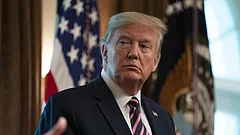
The US has laid out a list of maximalist demands, including the complete dismantling of Iran’s nuclear and ballistic missile programmes. Washington’s goal posts have been shifting. It began with the demand that the regime stop killing protesters on the streets. Trump promised protesters that he had their back by posting in Truth Social that ``help is on the way.’’
Despite the fact that Iran has ruthlessly put down the protests, killing between 6000 and 10,000 protestors, Trump is no longer focused on those he encouraged to come out and join the protests. Instead, he has shifted to nuclear and missile matters and the negotiations appear to be all about that.
Iran insists that its nuclear enrichment is for peaceful use and it has no intention of producing nuclear weapons. It points to the fatwa issued by the Supreme Leader that the production, stockpiling and use of nuclear weapons are forbidden under Islam and that Iran shall never acquire these weapons. But Iran insists that as a sovereign nation it has a right to use nuclear power for its development.
Giving up its ballistic missiles is another red line for Iran. During last year’s 12-day war, Iran’s ballistic missiles were able to reach Israel and inflicted substantial damage. So Prime Minister Benjamin Netanyahu is keen that Tehran give up its missile programme. The negotiations will be tough and extremely difficult for Ayatollah Khamenei to sell to his supporters. Yet Iran knows that it is at the moment extremely vulnerable and with its proxies-Hamas, Hezbollah, and many of the militia in Iraq -- now broken and ineffective, a war with the world’s most well-equipped military will be a difficult proposition. For the regime’s survival Iran will need to make substantial concessions.
Iran’s neighbours in the region Saudi Arabia, Qatar, the United Arab Emirates, Oman and Turkiye are working hard to avoid war, through back-channel diplomacy. Talks are on.
Israel, America’s closest ally, would like nothing better than regime change, destruction of Iran’s nuclear and its ballistic missile capability and Benjamin Netanyahu has often succeeded in getting what he wants from the US.
Despite Trump’s reassuring words that a deal is in the making, the region is on edge as the US leaders take a final call.