
Israeli political leaders have begun naming Türkiye directly.
If Tehran can be struck today, and Ankara is openly described as tomorrow’s strategic concern, then the region’s capitals begin to feel like points on a rotating list.
Ordinary people sense that geography no longer protects. Precision missiles and drones compress distance.
Back from late-night Ramadan prayers, Mere Gululu, who runs a small provision store in the Matepe locality of Ankara, sits inches away from his television screen. The flicker of explosions over Tehran lights up his small shop. His wife, Yasmin, says they woke up to the news in disbelief. “It is only a matter of time,” she murmurs, “before another capital is hit.”
Hossein, an Iranian student at Ankara University, has been calling his parents all day. No one answers. By evening, a cousin confirms what he feared. The family apartment in Tehran’s Narmak neighbourhood has been reduced to rubble.

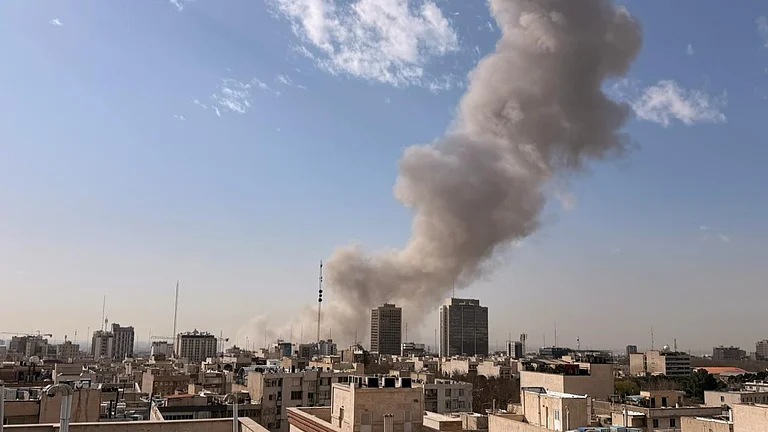
He scrolls through images of plumes of smoke rising from central Tehran, from streets near Jomhouri and Pasteur, not far from the presidential office and the residence of the supreme leader. Iranian media report strikes in Qom, Karaj, Isfahan, Kermanshah, and Ilam. Buildings have collapsed. Sirens fill the night.


In the cafés of Ankara city centre, Kizilay, students gather in uneasy clusters. Some argue that Iran invited confrontation. Others fear the opposite, that the attack will widen the war. Many agree on one point: the Middle East has entered a new and dangerous phase.
Professor Vali Nasr has described the moment as a “once-in-a-generation rupture.” In interviews on Turkish television, he warned that this is not simply a military operation but a geopolitical earthquake that could reshape the region for decades. For Nasr, Israel’s strategic horizon is shifting. Iran and the Shia arc that troubled Israel for a long time, he suggests, is seen as a declining challenge. The emerging concern is the broader Sunni bloc that includes Türkiye, Saudi Arabia, Egypt, and Qatar.
That assessment has landed heavily in Ankara, particularly because it is no longer confined to academic debate. Israeli political leaders have begun naming Türkiye directly.
Former Israeli Prime Minister Naftali Bennett, widely expected to re-enter national politics, has publicly labelled Türkiye a growing strategic threat. Speaking at a conference in Jerusalem, he described President Recep Tayyip Erdogan as “a sophisticated and dangerous adversary” who seeks to “surround Israel.”
He warned that Israel must not “turn a blind eye again,” and argued that the country must act “simultaneously” against threats from Tehran and what he called hostility from Ankara.
Bennett went further, sketching what he portrayed as an emerging regional axis linking Türkiye and Qatar, and invoking concerns about broader alignments in the Muslim world.
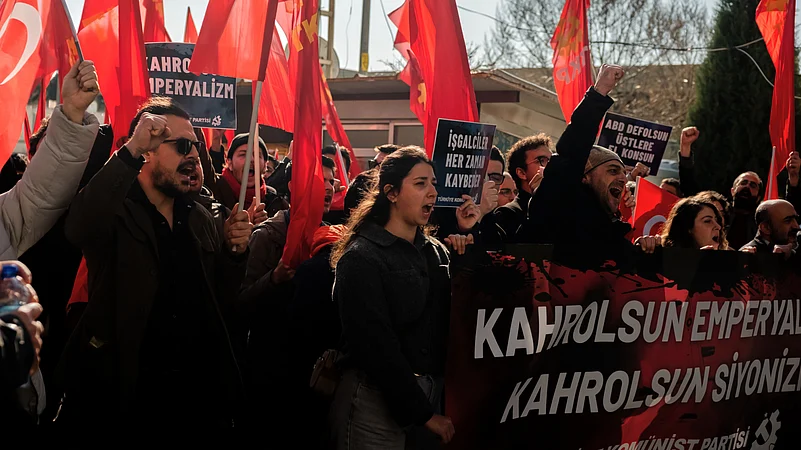
The timing of such rhetoric has unsettled many in Türkiye. Even as Iran remains the immediate battlefield, the language of future confrontation is being normalised. In Turkish living rooms, these statements are not dismissed as campaign theatrics. They are heard as strategic signalling.

Prime Minister Benjamin Netanyahu has reinforced this tone. In recent remarks, he spoke of building new alliances, including with Greece and the Greek Cypriot administration, in what many analysts interpret as an effort to counterbalance Türkiye’s regional posture. Against the backdrop of expanding military operations in Gaza, Lebanon, Syria, and now Iran, talk of additional strategic rivalries feels less hypothetical and more sequential.
In the streets of Ankara, taxi drivers replay these clips on their phones. Shopkeepers debate what it means. The idea that a NATO member could be cast as a potential adversary adds another layer of anxiety. If Tehran can be struck today, and Ankara is openly described as tomorrow’s strategic concern, then the region’s capitals begin to feel like points on a rotating list.
US Ambassador to Israel Mike Huckabee has added to that unease. His remarks suggesting that Israel would be justified in taking all of the biblical land of Israel were heard across the Middle East not as theological musing but as policy-adjacent rhetoric. When such language comes from a private preacher, it remains a sermon. When it comes from a US ambassador, it becomes a signal.
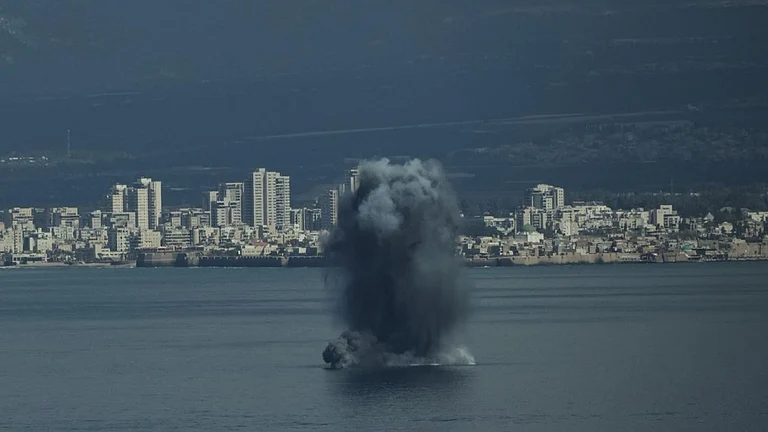
For many in the region, the convergence of military escalation and maximalist language suggests that deterrence is eroding. The old logic was brutal but stable: adversaries threatened one another, but escalation was contained by mutual risk. Now, the containment feels thinner.
In Amman, a Jordanian journalist writes that the region feels wired for escalation. In Beirut, a businessman has begun moving savings abroad. In Doha, conversations return to the June 2025 strike on Al Udeid Air Base, when Iranian retaliation sent shockwaves through the Gulf.
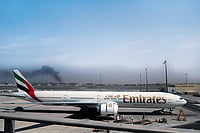
The fear is layered. Iran has repeatedly signalled that US bases in the region are legitimate targets. Bahrain, Kuwait, the United Arab Emirates, and Qatar host American forces. Saudi oil facilities were crippled in 2019 by a strike widely attributed to Iran. The message then was unmistakable: infrastructure is vulnerable.
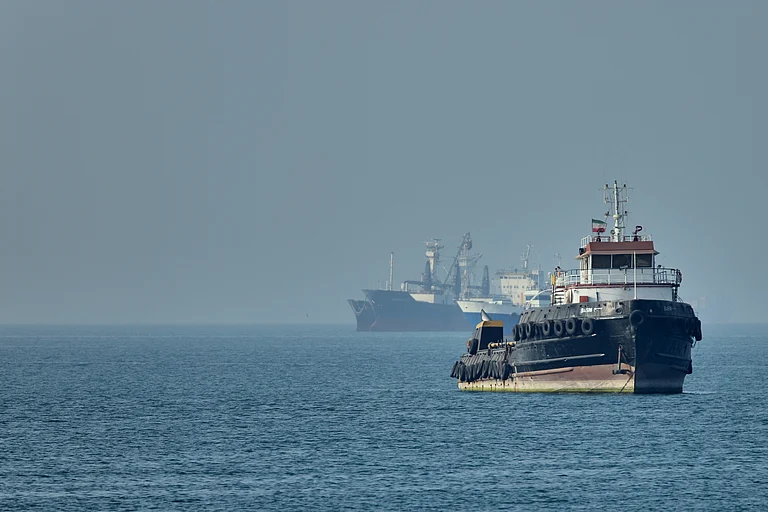
There is also the spectre of economic shock. One-fifth of the world’s oil passes through the Strait of Hormuz. Iranian officials have hinted that, in the event of sustained war, all options remain open. Even selective disruption would send insurance premiums soaring and energy markets into panic.
Yet beyond strategy lies something more intimate. Ordinary people sense that geography no longer protects. Precision missiles and drones compress distance. The map has become a grid of potential targets.
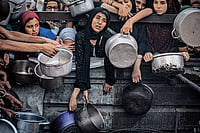
In Istanbul’s Fatih district, Syrian refugees who fled one war now watch another unfold. Türkiye, still grappling with the social and economic strain of hosting millions displaced by Syria’s conflict, fears the ripple effects of Iranian instability. A new migration wave would test public patience and state capacity.
Nasr has warned that Iran’s weakening or collapse would also reshuffle Kurdish politics. Türkiye already manages complex Kurdish dynamics linked to Iraq and Syria. A shift in the status of Kurds in Iran could regionalise the issue further, creating a third front in an already delicate equation.
In Tehran, Israeli and American leaders have framed the strikes as an opportunity for Iranians to rise against their rulers. But the spectre of state collapse frightens many citizens. Iraq in 2003 and Libya in 2011 are cautionary precedents. Removing a regime does not guarantee stability. It can unleash fragmentation and prolonged violence.
Iran is not a hollow state. It has layered institutions and a deeply embedded security apparatus. Even previous limited confrontations failed to eliminate its retaliatory capacity. The assumption that external force would produce a swift political transformation is widely questioned.
In Baghdad, officials are desperate to stay out of the conflict. Smaller hardline groups may feel compelled to attack American assets in solidarity with Tehran. Yet major political blocs view a US-Iran conflagration on Iraqi soil as an existential threat to fragile sovereignty.
In Riyadh and Abu Dhabi, leaders have publicly called for de-escalation. They calculate that a destabilised Iran could produce chaos that benefits no one and potentially elevate Israel’s dominance in ways that alter the regional balance.
What unsettles many is the timing. US and Iranian negotiators had recently met in Geneva in talks described as serious and constructive. Mediators spoke of unprecedented openness. Proposals reportedly included down-blending enriched uranium and intrusive verification mechanisms. A framework appeared within reach.
Then came the strikes.
For observers on the street, the message is blunt. If diplomacy can collapse at the moment of visible progress, what confidence remains in negotiation? The bridge to peace seemed to be under construction. It was shattered mid-span.
Donald Trump built his political identity opposing “forever wars.” Yet his address announcing major combat operations carried echoes of past American interventions framed as reluctant necessities. Liberation rhetoric mingled with strategic objectives. For a region long accustomed to intervention, the language feels familiar.
In Ankara’s Matepe locality, Mere Gululu finally turns down the volume. Analysts on screen debate next moves. Retired generals draw arrows across maps. His wife prepares tea. They speak quietly about their safety, in case their city becomes the target.
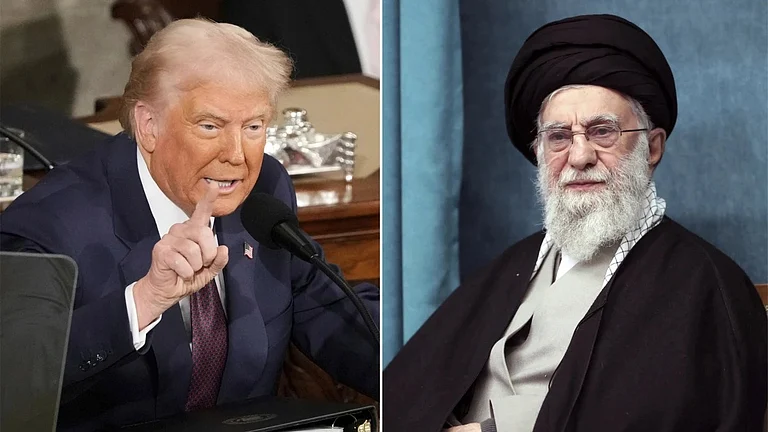
Every city now feels closer to the front line. The old distinction between battlefield and home front is fading. Missiles ignore distance. Drones cross borders.
The Middle East has long lived with the logic of deterrence. But deterrence requires credibility and restraint. When restraint falters, escalation becomes the default language of power.
In Jerusalem, Netanyahu says Israel is changing the Middle East. In Washington, officials describe strikes as necessary to eliminate gathering threats. In Tehran, leaders vow retaliation. Each capital speaks with conviction. On the streets from Ankara to Amman, from Doha to Beirut, conviction is overshadowed by vulnerability.
The question no longer asked in whispers is whether the region will change. It already has. The question now is how far the tremors will travel, and whether any capital can still assume it stands beyond the arc of the next strike.