President Maduro and his wife captured in a US operation, sparking regional shock.
Trump plans to oversee Venezuela’s transition and reopen oil to American companies.
Analysts warn the move undermines international law and risks destabilising Latin America.
In a stunning overnight operation, the US special forces arrested and captured President Nicolas Maduro and his wife from their bedroom in Caracas and flew them out of the country, effectively demonstrating the might and reach of the US military. The move sends a warning to to regional actors like Cuba and Colombia, as well as countries across the world like Iran.
The US action is a clear violation of the rules-based international order that Washington had promoted since the end of the World War II. But it fits into Trump’s long-held belief that the Western Hemisphere must remain firmly under US dominance even if that means reviving an interventionist playbook.
Trump did not rule out more military intervention. “We’re not afraid of boots on the ground,” Trump said.

“And we are ready to stage a second and much larger attack, if we need to do so.”
Regime change and the capture of Venezuela’s vast oil wealth is at the heart of President Donald Trump’s action in Venezuela. Last October he had authorised the CIA to begin covert operations to overthrow the Leftist leader. At the news conference held at his Mar-a-Lago resort in Florida, he repeatedly claimed that Venezuela had deprived American companies of their investments. Between 1976 and 1999 presidents Carlos Andres Perez and Hugo Chávez nationalised the oil industry.
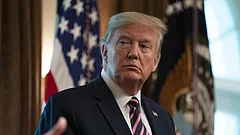



Many US companies suffered huge losses because of this. Now Trump is bent on sending US oil companies back to Venezuela to recover their loss. “We’re going to have our very large United States oil companies, the biggest anywhere in the world, go in, spend billions of dollars, fix the badly broken infrastructure, the oil infrastructure and start making money for the country,” the President declared.
Trump also announced that the US would run Venezuela. “We're going to run the country until such time as we can do a safe, proper and judicious transition.” However, it appeared that the administration had not given much thought to how exactly that could be done. "We can't take a chance that someone else takes over Venezuela who doesn't have the interests of Venezuelans in mind."
The US is dealing with regime insiders and sidelining the opposition. While Washington would remain in control, the administration would be left to local political leaders.
US Secretary of State Marco Rubio had been in touch with Venezuelan Vice President Delcy Rodriguez who, reportedly, is willing to go along with the US, is being sworn in as President. “We’ll do whatever you need,” Trump quoted Rodriguez as saying.
“The Trump administration’s action, though predictable, constitutes a major and highly destabilising shock for the region and indeed for the rest of the world,’’ says analyst Philip Golub of The American University of Paris (AUP).

“The intervention will likely set into motion both powerful anti-US feelings as well as fears of US meddling in domestic affairs. For the rest of the world it confirms US unilateralism and disregard for international law: the US is tearing down what little was left of the law based international order,’’ he adds.
The announcement that the US would be in charge till an election threw up a new leadership, revives memories of earlier disastrous US interventions in Afghanistan and Iraq. Democrats were quick to point this out. “Clearly, they are not being straight with Americans. The idea that Trump plans to now run Venezuela should strike fear in the hearts of all Americans. The American people have seen this before and paid the devastating price,” Chuck Schumer, the Senate Minority leader said.
“The promotion of security and stability in a region requires more than just military force as we painfully discovered in Iraq and Afghanistan,” said Hakeem Jeffries, House Minority Leader.
Trump was always critical of such misadventures and his MAGA base is opposed to foreign intervention that not only cost American lives but also wasted tax payers money. Trump, however, claimed that no US funds would be wasted. Everything would be paid by Venezuela.
Trump’s decision to be in control in Venezuela goes against his well-known stand against wasting America’s strength and energy on foreign shores. But he defended his interference in Venezuela saying, “We want to surround ourselves with good neighbors. We want to surround ourselves with stability. We want to surround ourselves with energy.”

Trump’s news conference had raised more questions than it answered and what is in store for both Venezuela and the region.