Bad Bunny’s Super Bowl Halftime Show has stirred controversy in the USA due to its heavy Latin American symbolism amid the political crackdown on immigrants
Conservatives organised an “All-American” halftime show opposing Bad Bunny’s performance with the claim that he is not American
US President Trump slammed the primarily Spanish performance, calling it “a slap in the face”.
For decades, the American identity has been associated with the Super Bowl. The National Football League is woven deeply into American culture, as inseparable from the national imagination as red, white, and blue. However, the 60th edition of the cultural phenomenon challenged that very understanding of the American identity.
Headlining the iconic half-time performance was Puerto Rico native artist, Bad Bunny. With over 135 million people streaming the live showdown of the American football match, Bad Bunny performed primarily in Spanish.
While the performance became one of the most-watched halftime shows in Super Bowl history, it was also one of the most controversial. Conservatives across the United States did not deem it “American.”
“The only thing stronger than hate is love,” were the words that lit up the stadium’s mega screens—a message missed by many conservatives, including US President Donald Trump, who termed the performance “one of the worst ever” and “an affront to the greatness of America.”


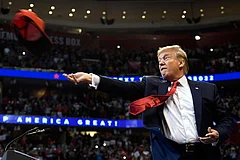
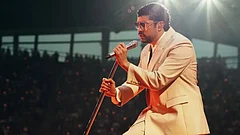
The NFL’s decision to feature Bad Bunny as the main performer amid the recent immigration crisis and the increasingly violent ICE crackdowns in the USA serves as an example that politics is no longer merely a backdrop. It is now centre stage.

The Performance
From the opening frame, Bad Bunny made clear that his halftime show would be firmly rooted in Latin American culture.
The performance began in a sugarcane field—an homage to Puerto Rico’s historic cash crop and a reminder of the island’s transformation into a US territory at the end of the 19th century. The set then unfolded into a familiar Latino streetscape: a coconut stall, a piragua (shaved ice) stand, plastic chairs scattered across the ground, and elderly men playing cards. The scene eased viewers into everyday life in Latin America.
As the performance progressed, the symbolism became bolder and more overtly political. Bad Bunny and dancers dressed as jíbaros—Puerto Rican farmers—climbed electric poles that formed part of the set, highlighting the island’s long-standing frustration with its crumbling power infrastructure. Perched atop a damaged pole, Bad Bunny performed El Apagón (The Blackout), his 2022 protest song about Puerto Rico’s chronic power outages—an issue deeply entangled with climate change and privatisation.
The message culminated in the use of the illegal Puerto Rican flag in red, white, and light blue. This version of the flag, illegal until 1952 under Law 53 of 1948—the so-called Gag Law—is a symbol of the island’s independence movement. Waving it during El Apagón, Bad Bunny underscored a history of political suppression and ongoing resistance to US control.

ICE Out
Predating the Super Bowl halftime show, Bad Bunny had been outspoken about the political climate in the United States. Most recently, after winning Album of the Year at the 2026 Grammy Awards, he opened his acceptance speech by saying, “Before I say thanks to God, I will say ICE out.”
The artist has also notably excluded the US from his world tour, citing fears that ICE could raid his concert venues.
In the same Grammy speech, Bad Bunny echoed the message of love later displayed during the Super Bowl, declaring, “We are not savage, we are not animals, we are not aliens. We are humans, and we are Americans.”

That speech reappears during the halftime show, where a Latino family is shown watching Bad Bunny’s Grammy acceptance. The artist then hands his Grammy to a young boy who bears a striking resemblance to Liam Conejo Ramos, the five-year-old detained alongside his father by immigration officials in Minnesota.
While fact-checkers have confirmed that the boy actor is not Ramos, the similarity of the two and the timing of Bad Bunny’s ICE out speech suggest a deliberate critique of immigration enforcement and ICE arrests in the United States.
The Alternate Halftime Show
Conservative backlash to Bad Bunny headlining the halftime show quickly spiralled into controversy, with some falsely claiming that the Puerto Rican artist is not a US citizen. The outrage on the American right even led to the creation of an “alternate halftime show,” aired simultaneously with Bad Bunny’s performance. Striking on the musicians' Latin American roots, the alternative halftime show was titled “The All-American Halftime Show”.
The event was organised by Turning Point USA, the conservative nonprofit founded by Charlie Kirk, and was promoted as a celebration of “Faith, Family and Freedom.” US Defence Secretary Pete Hegseth made a video appearance during the YouTube livestream.
Trump slandered Bad Bunny’s performance as a “slap in the face,” calling it “absolutely terrible” and complaining that “nobody understands a word this guy is saying,” referring to the predominantly Spanish-language set. He also criticised the dancing, calling it inappropriate for children and “disgusting.”

Ironically, American singer Kid Rock—who headlined The All-American Halftime Show—has faced renewed scrutiny over past lyrics referencing underage girls: “Young ladies, young ladies, I like ’em underage, see. Some say that’s statutory. But I say it’s mandatory.”
While Bad Bunny’s performance posed an expansive answer to who gets to be American, the right-wing All-American alternative answered it narrowly while promoting a version of “faith, family, and freedom” that appeared to cater only to the right. In its very name, the show defined American identity through exclusion—beginning with Bad Bunny himself.

Who is American?
Bad Bunny’s halftime performance continues to provoke intense debate across the United States. As conservatives move to deny the artist his American identity—echoing Donald Trump’s claim that the show was a “slap in the face” to the nation—global audiences have responded differently. Since the Super Bowl, Bad Bunny’s Spotify streams worldwide have surged by 470 per cent.
At the heart of one of the most adored American events, this Puerto Rican addressed a question that has increasingly unsettled the United States under its current political climate: who gets to be American?
Among the few English words Bad Bunny sang was the familiar refrain “God Bless America.” He then followed it by naming all the countries across North, Central, and South America, before closing the show by spiking a football with the words, “Together, we are America.”
If Trump views the performance as a “slap in the face,” it is worth asking whether it was a “slap” well deserved.