US efforts to remove Venezuela’s leftist governments span four major attempts.
Motives range from securing oil to curbing Cuban influence and restoring US-friendly rule.
Sanctions, covert ops and political interference have deepened Venezuela’s economic and political collapse.
It is like a Netflix serial. Location shootings and subtitles change. But the main plot through the episodes is the same; regime change to remove leftist governments and install pro-US regimes to promote American business and hegemony.
The wars are given different titles such as war on communism, war on drugs, war on terrorism and war on corruption. The last one was used to bring down the government of the Workers’ Party In Brazil and some leftist presidents in the region.
The stories of some of the wars could be as fantastic as in Netflix films. The Americans would even add music to their real wars. They invaded Panama in 1989 to oust President Noriega, who was actually in the CIA payroll but went out of control. When Noriega took refuge in the residence of the Papal Nuncio, the American troops played extremely loud rock and heavy-metal music around the building nonstop for ten days to smoke out the fugitive. The operation was nicknamed “Operation Nifty Package.” One of the songs played was Alice Cooper’s “No more Mr Nice guy”. Unable to sleep and bear the torture of American music weapon, Noriega surrendered. The Americans took him and put him in a jail in US.
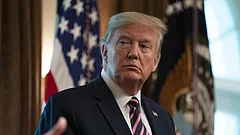


In 2019, when President Trump and National Security Advisor Bolton were issuing threats to oust President Maduro, a large music concert was organized by Richard Branson and company across Venezuela’s border in Colombia. It was called as Venezuela Aid Live but its purpose was to provide background music for the regime change operation.
In the current campaign to oust President Maduro, the Americans started with the title “war on drugs” but changed it to 'war on terrorism' to get more bang for the buck. Venezuela is not a main source of drugs nor is it a terrorist threat to the US. The real objectives of Americans are to remove the leftist government of Maduro, install a pro-American rightist regime, get their hands on the Venezuelan oil fields and settle some old scores.

The ongoing regime change operation in Venezuela is the fourth attempt by the US in the last three decades. The first attempt was made in 2002, when there was a US-inspired coup in which the Leftist icon, President Chavez, was removed from power. But the coup failed and Chavez returned to power after two days. Before the coup, the ground was prepared by a devastating strike by the pro-US staff of PDVSA, the national oil company. They stopped the production, domestic distribution and exports of oil, paralyzing the economy and daily life. President Lula had to send oil shipments to help Chavez with the shortage of petrol. After the coup, Chavez sacked 15000 employees of the company and gave it to his political loyalists to run it.
The second attempt was in 2019, when the Trump administration refused to recognize Maduro as the elected President alleging that the election was rigged. The US picked Juan Guaido, the president of the legislative assembly, and anointed him as the real president. The US forced about 50 countries including EU and some rightist Latin American presidents to follow its decision. But this project also failed as Guaido got discredited when he and his cronies including some American lawyers stole millions of dollars from the Venezuelan funds in US banks in the name of running a government in exile.
The third attempt was made by the American private sector. A group of ex-marine mercenaries hatched a plan code named “Operation Gideon”. They attempted a sea borne raid through boats to land in Venezuela, capture President Maduro, take him to the US and claim the 15 million dollar bounty which was the going rate announced by Washington DC at that time. The mercenaries were caught and some were killed and others jailed by Venezuelan authorities. While the Trump administration claimed that it was not an official operation, they had got these criminals released through quiet negotiations and got them back to the US.
The fourth attempt now has another subplot, scripted by Secretary of State Marco Rubio whose parents had fled from the Cuban revolution. He has a personal anti-Cuba and anti-Venezuela agenda. The Cubans have been receiving oil from Venezuela in return for their intelligence and security support to President Maduro. Having survived numerous American attempts of invasion, coup and assassination attempts, the Cubans have been passing their trade secrets to the Venezuelan government. Rubio wants to hurt both Cuba and Venezuela. He is also using this opportunity to become a hero among the large number of voters of Cuban and Venezuelan origin in his constituency.

Venezuela has the world’s largest oil reserves of about 303 billion barrels, which are more than that of Saudi Arabia’s 267 billion. Venezuela used to export 90 per cent of its oil to the US till the leftist Chavez came to power in 1998. He wanted to reduce the overdependence on US market and diversified to other such as China and India. He kicked out the American oil companies when they did not agree to his terms and conditions. The US retaliated by imposing sanctions and has crippled Venezuelan oil production and exports. However, the American oil company Chevron, with its strong lobbying power, has got its license renewed and is still producing oil in Venezuela and exporting quietly to the US.
As a militant leftist, Chavez had used strong rhetoric against US imperialism and neoliberalism. When the Latin Americans were trying regional integration process through regional groups such as MERCOSUR, UNASUR and CELAC, the US wanted to stop them with its counter proposal of FTAA (Free Trade Area of Americas) in 1995. The US argued that Latin American regional and subregional groups should be dissolved to clear the way for FTAA implementation. Chavez killed the FTAA project in collaboration with other leftist presidents such as Lula of Brazil and Kirchner of Argentina. Chavez created ALBA, an alternative to FTAA with other leftist presidents. He gave subsidized oil to small Latin American and Caribbean countries in return for their political support. As an admirer of Fidel Castro, Chavez went out of his way to help Cuba with oil and funds. Since Chavez was strong internally and regionally, the US did not made any frontal attacks on him after the failed coup in 2002. But now Venezuela is weak internally and externally and the US thinks that now is the pay back time. Maduro has unwisely lost the support of even President Lula which could have been crucial as it was in the case of Chavez. Neither China nor Russia find it worthwhile to stand up for Venezuela against the US.
Chavez had charisma, leadership skills and grass root support with which he won several elections, based on his popularity. But Maduro does not have the skills nor popularity. It is rumored that Maduro’s name was recommended by the Cubans to succeed Chavez during his final days in a Cuban hospital. Maduro is not a typical Latino Caudillo (strong man). His government is not a one-man dictatorship. He is just a figure head of the collective leadership of other Chavista leaders and the military. If he is killed or removed, Diosdado Cabello, the interior minister who is a strong man of the regime would take over.
The US has accused President Maduro and his colleagues of involvement in drug trafficking to the US. This is a false accusation. Even according to American official sources, Venezuela accounts for an insignificant portion of drugs which go to the US.
Secondly, drug is not a supply side problem. Drug is a demand and consumer-driven multibillion dollar US business. Millions of Americans pay top dollars willingly and happily to get high on drugs from wherever they can get them. Some years back, an American firm, Purdue Pharma, had aggressively marketed its opioid Oxycontin and made billion of dollars while thousands of Americans became addicts and ended up dead. The DEA did not do a drug war against the company. The Justice Department did a deal with it and the company got away with some fines. As long American consumers continue to demand and pay for the drugs, the business will go on.The drug consumption in US has not decreased after the killing of Pablo Escobar or the long-running drug war. Drug is simply and clearly an American domestic issue. But the US has created a false narrative blaming other countries and the Hollywood has propagated this falsehood through films and the Netflix serial “Narcos”.
The Latin American drug cartels have been empowered by American guns. US is the main source of illegal supply of guns to the cartels. Mexico has only two gun shops for the whole country. These are run by the Mexican military which has rigorous checking and control procedures. But there are nearly 10,000 (yes, Ten Thousand) American gun shops in the border with Mexico. About 200,000 American guns are supplied illegally to Mexico every year. These guns cause more Latin American deaths than the drugs in the US. The Americans refuse to recognize this issue and take any action to stop the gun trafficking.

The drug war has created a multibillion dollar business empire within the US for DEA and their contractors for profit and power. Obviously, these vested interests want to perpetuate the war for ever. Also, the drug war is used by US to infiltrate the intelligence agencies and security services of Latin American governments.
It is true that the reelection of President Maduro in 2024 was done through rigging of the process and counting. But there is a life and death reason for that. The US has announced a bounty of 50 million dollars on the head of Maduro and over hundred million dollars on other Venezuelan leaders, judges and generals. If there were free and fair elections, Maduro would have clearly lost and the pro-American opposition would have come to power. Immediately, the new government would have handed over Maduro and hundreds of others to the US authorities to be put in American jails. The US has already prepared the ground with conviction and sentences in absentia of many Venezuelan leaders on trumped up charges in the American courts.
This is what had happened to the ex-President of Honduras Juan Hernandez. He was in power for two terms from 2014 to 2022 and was hailed as a 'Nice Guy' by the Americans. As soon as he finished his term, the DEA surrounded his house, captured him, took him to US, convicted him on drug charges and jailed him for forty years. Fortunately, he was able to grease the palms of Trump who has pardoned and released him last week.
So why would the Venezuelan leadership commit mass suicide by letting the pro-US opposition come to power? So it is the US which has become the obstacle for free and fair elections and democratic change in Venezuela.
Latin Americans say that there has been no military coup in the US because there is no American embassy in Washington DC. Pity, the Americans had foolishly closed their embassy in Caracas. If there was one, they could have cultivated some colonels and used them to divide the army and bring about a coup in the classical American style. Till the coup in 2002, the American defense attaches did not work out of their embassy building in Caracas. They had their offices within the Venezuelan army headquarters. That’s how they arranged the 2002 coup easily. President Chavez kicked them out after the coup.
The people of Venezuela are the unfortunate victims caught between the Chavista mismanagement and the US sanctions and interventions. The Venezuelan economy is in ruins for over a decade. Inflation is running high. There is shortage of food and essential items since the government does not have enough foreign exchange for imports. Oil exports and production have been severely crippled by the American sanctions. Chavez had destroyed private sector business systematically and ruthlessly since the pro-US business oligarchs had supported the coup against him. Several million Venezuelans have fled the chaos and taken refuge in other countries.
Venezuela is crying out for relief from the misery. But the change has to come from within. Not from the US warships or missiles. The Venezuelan opposition leader Maria Corina Machado is actively seeking US military intervention for regime change in Caracas. Of course, this is not new. She is simply following the play book of her predecessors in the last two decades who had done the same thing. The two main oligarchic and corrupt political parties who were ruling Venezuela alternately for about five decades before Chavez were wiped out in the elections in 1998. Seeing the landslide victory of Chavez and his unbeatable grass root support among the masses, the opposition leaders refused to participate in the next elections. Chavez used this opportunity to get super majority in the Congress to change the constitution and accumulate power. In the absence of opposition, he became authoritarian. He had coopted the military by giving them civilian jobs and letting them become corrupt and stake holders. Maduro has simply inherited this legacy.
As long as the US holds the sword of bounties and retribution over the heads of the top leadership of Venezuela, there is no possibility for free and fair elections and democratic change of government. The Venezuelan opposition should fight and negotiate directly with the Maduro government leaders and guarantee their safety. There has to be a compromise with give and take from both sides. The political parties of Argentina, Brazil and Chile had restored democracy from brutal military dictatorships by fighting and direct negotiations with the regimes themselves, without seeking any external intervention. The cruel Chilean dictator Pinochet agreed to hand over power to a civilian government in 1990 only after securing a package of constitutional, legal, military, and personal immunities and guarantees designed to protect him, the armed forces, and the officers involved in human-rights abuses. He continued as senator for life and the Chilean armed forces got 10 per cent of Chile’s annual copper export revenue.
Ambassador Viswanathan, a Latin America expert, was ambassador to Venezuela in 2000-03.