The Venezuelan Op met with limited international backlash and has encouraged the US to consider further unilateral interventions.
China, Russia, and European nations have condemned actions verbally, there is little expectation of concrete opposition
Cuba, Colombia, Mexico, Iran, and even Greenland are now on Washington’s radar, may be potential targets
Emboldened by the stunning success of the Venezuela operation and the muted reaction it provoked internationally, the Trump administration is widening its strategic net, signalling a renewed and more muscular assertion of US power across Latin America and beyond.
The unprecedented seizure of a sitting president of a sovereign state has not triggered the global backlash many expected. In fact, much of the criticism has come from within the US, and Democrats in the US Congress are enraged that they were neither consulted nor informed of the Venezuelan operation. Congressional approval is the norm when America goes to war.
European leaders scathing in their criticism of Russian action on Ukraine, have not dared to strongly condemn the US action, worried about angering the unpredictable American leader.
Venezuela’s allies China and Russia have both condemned Washington’s military action against a country that posed no threat to the US. However, neither Moscow or Beijing is expected to do more than issue statements. This has reinforced Washington’s belief that the costs of unilateral action are manageable. Having demonstrated its willingness to act decisively in Venezuela, the White House has now turned its gaze to long-standing adversaries and its Latin American neighbours. Donald Trump is seeking to reassert American dominance over the Western Hemisphere and to remind US rivals that restraint is no longer a guiding principle of his foreign policy.


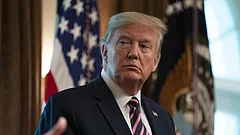

President Trump as well as his team have made it clear that all nations that do not fall in line with Washington’s wishes can face similar treatment. Cuba and Colombia and Mexico are much on the White House radar. So is Iran.
Speaking of Colombia’s Gustavo Petro, Trump said to reporters. “Colombia is very sick too,” Trump said. “It’s run by a sick man who likes making cocaine and selling it to the United States. He’s not going to be doing it very long, let me tell you.” Asked whether that meant we could see U.S. military operations in Colombia, Trump replied: “That sounds good to me.”
Cuba, the country that had long been the sentinel of Communism had withstood US assault in America’s background. The Bay of Pigs was a much publicised incident during John F Kennedy’s tenure when the US and the former Soviet Union were ready for a nuclear war. But while that was avoided, successive US Presidents, egged on by Cuban exiles living in America have long tried to overthrow the Communist regime. Marco Rubio, the US secretary of state, himself the son of Cuban immigrants is virulently anti-Communist and is said to be one of the most ardent supporters of regime change in Havana. He is also said to be a strong influence on action against Maduro.
“Cuba only survives because of Venezuela,” Trump said. “Now they won’t have that money coming in … Cuba is ready to fall … I don’t know how they can hold out … I don’t think we need any action.” What that means is open to question, but Washington believes that the Communist regime there will collapse.

Mexico is again a country that has irritated the US President. “Mexico has to get their act together. Because [drugs] are pouring through Mexico and we’re going to have to do something. We’d love Mexico to do it. They're capable of doing it. But unfortunately the cartels are very strong in Mexico … The cartels are running Mexico.”
President Claudia Sheinbaum rebuffed last week’s U.S. military action in Venezuela and reaffirmed her country’s sovereignty, pushing back against President Trump’s threats of intervention. “We categorically reject intervention in the internal affairs of other countries. The history of Latin America is clear and compelling: intervention has never brought democracy, never generated well-being, nor lasting stability,” Sheinbaum said in a statement after the fall of Maduro. She had earlier steered a country well against the Trump tariffs, but now has to face a more aggressive Washington that believes in asserting its superiority in its backyard.
The truth is Latin American nations realise that neither Moscow in the middle of a war, or China will do more than issue statements at the UN. Anti-American forces in South America cannot look to Europe or the rest of the world to come to its aid.
Iran’s Supreme Leader Ayatollah Ali Khamenei is on notice. With the anti-regime protests continuing in Iran Trump had warned even before the Venezuelan attack that “If they start killing people like they have in the past,” Trump said, “they are going to get hit very hard by the United States.” With Israel’s Benjamin Netanyahu waiting to topple the regime, Trump, a friend of the Israeli leader could once again be enticed to take out the Iranian leadership.

Greenland is not far from Trump’s mind either. He had been eyeing Greenland since his first term. But an emboldened US may just act now.
We need Greenland from a national security situation,” Trump said. “It’s so strategic. Right now, Greenland is covered with Russian and Chinese ships all over the place. We need Greenland from the standpoint of national security. And Denmark is not going to be able to do it, I can tell you.”
European leaders, as well as the British Prime Minister pushed back quickly on Trump’s Greenland remarks. So did the foreign ministers of France and Germany. Yet so far neither NATO or EU have commented. Denmark is a member of NATO.
The smooth action in Venezuela has given Trump the bandwidth to go against perceived enemies with vigor. As the saying goes, success begets success. For a President who had been critical of America’s foreign wars, the turnaround is remarkable. Casual remarks on foreign governments, once dismissed as Trump’s usual bluster, will now be taken seriously.