CMG secured long-term rights for the next two men's and women's World Cups, with 2026 costing approximately $60 million
A $100 million valuation gap and unfavorable midnight-to-dawn kickoff times have left India without a confirmed broadcaster
With the tournament weeks away, legal intervention and digital-only bids are being explored to prevent a total blackout
On May 15, 2026, China Media Group (CMG)—the parent body of state broadcaster CCTV—formally announced a comprehensive media rights agreement with FIFA. Ending months of uncertainty, the deal ensures that fans across mainland China will have full access to the 2026 and 2030 FIFA World Cups.
The partnership extends beyond the men's game, securing the broadcast rights for the FIFA Women's World Cup 2027 and 2031 as well. CMG will utilize its massive network, spanning free-to-air television, digital platforms, and mobile apps, to provide 4K and 8K coverage of the expanded 48-team tournament.
This late-hour breakthrough followed intense negotiations, where FIFA reportedly lowered its initial $250 million valuation to meet the shifting economic realities of the Chinese media landscape.
CMG will utilize its massive network, spanning free-to-air television, digital platforms, and mobile apps, to provide 4K and 8K coverage of the expanded 48-team tournament.
While the full value of the four-tournament cycle was not officially disclosed, reports from state-backed outlet The Paper indicate that the rights for the 2026 tournament alone cost approximately $60 million. This reflects a significant adjustment to meet the shifting economic realities of the Chinese media landscape.
Rights For Broadcast In India Still In Limbo
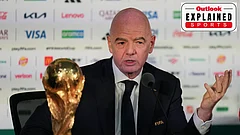


In stark contrast, India remains the only major global markets without a confirmed broadcaster for the 2026 edition, set to kick off in North America on June 11. Despite India’s growing appetite for football, a significant financial and tactical impasse has stalled any deal.
FIFA initially sought a combined $100 million for the 2026 and 2030 cycles. Major Indian players like JioStar (the Reliance-Disney merger) reportedly offered around $20 million for 2026 alone, a figure FIFA deemed insufficient.
Unlike the prime-time slots of Qatar 2022, the 2026 matches in the US, Canada, and Mexico will largely occur between 12:00 AM and 8:00 AM IST. Broadcasters are hesitant to pay premium prices for slots that offer diminished advertising revenue.
The Delhi High Court recently issued notices to the Center and Prasar Bharati following a petition seeking a mandatory free-to-air broadcast on DD Sports to prevent a total blackout.
With private giants like Sony and Viacom18 remaining cautious, rumors are swirling that digital platforms like Amazon Prime or YouTube Premium could emerge as last-minute contenders. For now, however, Indian fans are left watching the clock as the world’s biggest sporting event looms just weeks away.
While the broadcast landscape in China has finally found its footing, the atmosphere in India remains thick with anxiety as the clock ticks down toward the world's biggest sporting spectacle.
While Chinese fans can now mark their calendars with certainty, their Indian counterparts are left in a state of high-stakes limbo, caught between soaring global valuations and a domestic market hesitant to commit.