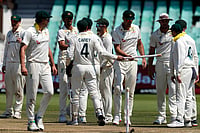
From barely noticed tournaments to sold-out stadiums and record TV audiences, women’s cricket in India has moved firmly into the mainstream, powered by the 2017 World Cup and cemented by the WPL.
Central contracts, equal match fees, the WPL, and rising endorsements have allowed players to train full-time, lifting standards, strike rates and belief, culminating in the 2025 World Cup win.
While pay, visibility and ambition have surged, gaps remain in contracts, leadership roles and safety from abuse; the next decade will test whether today’s momentum builds lasting dominance.
In the summer of 2017, Smriti Mandhana was a 20-year-old who was fighting to recover from a knee injury in time for the Women’s World Cup in England that year. Taking a break from her rehab at the National Cricket Academy in Bengaluru, she joined the hordes to watch the Indian Premier League (IPL) matches at the M. Chinnaswamy Stadium next door. The atmosphere was unlike anything she had experienced before. Smriti’s mother, who accompanied her, voiced her daughter’s thoughts when she wondered when such crowds, such adulation, such theatre would ever grace women’s cricket. Smriti, used to the anonymity of empty stands, patchy TV coverage and passing mentions in the media, dismissed such notions as fanciful.
Cut to 2024. Smriti was again at the Chinnaswamy Stadium, this time in the middle for her first toss as captain of the Royal Challengers Bengaluru (RCB) women’s team at their home ground. Her voice was drowned out by cheers from the RCB faithful. The near-capacity crowd was electric. In its second edition, the Women’s Premier League (WPL) had begun to establish itself as prime time entertainment. Smriti, the most expensive player at the first WPL auction, was a popular face on billboards and in ads. That February evening, she was visibly emotional at how far her sport had come.

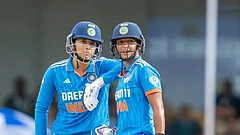

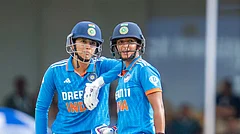
The joy again flowed on November 2, 2025, when there was a moment that not only reflected how much women’s cricket in India has grown, on and off the field, but also served as an accelerator for the next decade of growth: India lifted their first senior women’s World Cup trophy. A sold-out crowd of 45,000 stayed back past midnight at the D. Y. Patil Stadium in Navi Mumbai to vociferously celebrate a team that had become “our girls”. Record audiences tuned in on TVs and mobile devices. A new generation of sportspersons was inspired. Women’s sport in India will never be the same again.

In fact, if women’s cricket in India got onto the 2016 v 2026 meme trending these days, its transformation would beggar belief. Even until a decade ago, the sport was held back by indifference and apathy, if not outright hostility and institutionalised gender bias.
For instance, as recently as in 2013, when the 50-over Women’s World Cup was hosted in India, the tournament was played in front of mostly empty stands. Ten days before its start, all matches were shifted out of the Wankhede to accommodate the men’s Ranji final. The 2016 T20 World Cup, held in parallel to the men’s event, was similarly poorly marketed. But by 2025, when the one-day World Cup returned to India (and Sri Lanka), nearly three lakh fans were welcomed to the stadia, breaking the record for tournament attendance for any women’s cricket event. The digital audience for the final matched that for the men’s T20 World Cup final that India won the previous year.

BY late 2015, India started offering its women international players full-time contracts. The highest of those was worth Rs 15 lakh. Endorsements were rare.
Today, India’s women’s internationals are among the best paid in the world. They earn the same match fees as their male counterparts. They go for big bucks in WPL auctions. The recent World Cup win saw their endorsement deals going up 25-100 per cent, with top stars commanding up to Rs 1.5 crore per deal, according to industry reports. But even a decade ago, this wasn’t the case. Only in late 2015 did India become the last of the main cricketing nations to offer its women international players full-time contracts. The highest of those was worth Rs 15 lakh. Endorsements were rare.
Five years ago, there was no women’s IPL. Its absence was acutely felt as the Indian team slipped up in pressure moments on the big stage, especially when facing opponents such as Australia, who have well-established pathway tournaments. In 2018, a T20 match meant to be an exhibition of the women’s game before the IPL play-off that day, unfolded in Mumbai’s afternoon heat with no audience—far from the bright lights and packed stands the women had been waiting for. But once the Board of Control for Cricket in India (BCCI) belatedly started the WPL, it was an immediate success. The franchises were bought for record valuations in women’s sport. In just three years, the WPL has established itself on screens and in chai-time conversations. Knock-offs of Smriti’s No. 18 jersey easily mingle with the usual Kohlis and Rohits that swarm any Indian stadium.
Indian women have been playing international cricket for 50 years. Women’s cricket has been administered by the BCCI for the last 20 of those years. So what was it about the past decade that sparked such dramatic change? Just as with anything in cricket, success reflected many factors coming together.

A catalyst was the 2017 World Cup. That was the first women’s cricket tournament to be telecast in its entirety. Social media broadcasts were at a high. So when Harmanpreet Kaur smashed an astonishing 171 not out against the mighty Australians in the semi-final, more people than ever before were suddenly watching, talking and tweeting about women’s cricket. And feeling proud about India’s achievements. Stereotypes about women’s ability to play the sport were challenged on live TV. India missed out on the trophy by a heartbreaking nine runs that edition, but their campaign captured the imagination of the nation and they returned as heroes.
The increasing eyeballs came at a time when the early impacts of professionalism in the game were being felt. For years, women were forced to support their passion for cricket with other paying jobs. But with playing contracts and opportunities in professional leagues, more women than before could dedicate themselves solely to their sport. They had the funds, the mental bandwidth and the knowledge to optimise their fitness, training, nutrition and skill development. The results very quickly told: After the 2017 World Cup, run-rates and strike-rates were dramatically higher. The power game has taken another leap in the past couple of years: Since 2024, India has made 12 of their 15 highest team totals in one-day internationals (ODIs).
The WPL, described by top players as the “missing piece of the puzzle”, came into being in 2023. The cricket was good; its cultural and economic relevance was better. They say ‘you can’t be what you can’t see’; so once young girls and their parents saw women playing cricket every evening and making a living out of it, the sport got an influx of new talent and support. Domestic players understood what it took to compete with the best in the world, and quickly upped their game. Brands quickly found a perfect vehicle for their reach and storytelling. The lesson was that the market for women’s sport was always there, it only needed someone to build it.

The BCCI, for its part, has been historically criticised for its apathy to women’s cricket. During the COVID-19 pandemic, for instance, the women didn’t play for nearly a year, even as men’s games were scheduled. But in recent years, especially under Jay Shah, with the evident blessing of the government at the centre, the body has actively embraced women’s cricket and wants to be seen doing so.
With the administration, the market and the talent all clicking at the same time, the proof of the pudding was the 2025 World Cup trophy.
The revolution isn’t complete just because the new queens of cricket have been coronated. The team is clear that it now wants to dominate world cricket. Giving added impetus to this conviction, the BCCI, in December, more than doubled match fees for state-level female cricketers. This means that a senior player can get Rs 50,000 for a one-day match. (A far cry from the approximately Rs 30,000 she would make for the full year in 2017.) Thus, more women can now make a living from the sport, and invest in themselves and their skills.
There are, of course, battles still to be fought. The top women’s central contracts are still less than the lowest men’s ones, women are drastically underrepresented in cricket’s corridors of power, and sexist abuse, especially online, can reach dangerous proportions. The true fruits of the recent revolution will be seen in the next few years when young girls inspired to flock to academies and training centres today will stand tall in their India blue. And respect, of the boys padding up next to them and of society outside the maidans, is a given.
(Views expressed are personal)




Karunya Keshav is a sports writer and co-author of the Fire Burns Blue, A History Of Women’s Cricket In India
This article is part of the Magazine issue titled No More A Gentleman's Game dated February 11, 2026 which explores the rise of women's cricket in India, and the stories of numerous women who defeated all odds to make a mark in what has always been a man's ballgame.