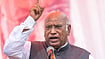
Rahul Gandhi questioned the government on how the India-US trade deal affects India’s data sovereignty and localisation rules.
He demanded clarity on whether health, financial and government data will stay in India for building domestic AI.
The government stated that regulatory autonomy in data governance has been preserved in the negotiations.
Rahul Gandhi, Congress leader and Leader of Opposition in the Lok Sabha, on Monday raised concerns over India's data sovereignty and asserted that the country should be leading the global tech race, but instead it is being kept in the dark about how its data will be protected.
According to PTI, Gandhi said India's data belongs to its people and in the AI economy, it can be one of its biggest strengths - to build AI, grow companies, and create jobs.
"So I asked the government some important questions about the recent trade deal with the US:- What does 'reducing barriers' with the United States mean for our data? Will our health data, financial data, and government databases stay in India? Can India still require foreign companies to store data here and use it to build our own AI?" Gandhi said in a post on his WhatsApp channel.
"Every question on our data sovereignty, health data, AI, and local data storage gets the same treatment: 'framework', 'balance', 'autonomy' - big words, zero specifics," the former Congress president said.
The government refuses to tell the country what it is negotiating away, he alleged, PTI reported.


"We should be leading the global tech race, but instead we are kept in the dark about how India's data will be protected," Gandhi said.
People deserve transparency and accountability regarding country's data, he asserted.
"We deserve to own and use our data to build a better future," Gandhi said.
In his question to the Minister of Electronics and Information Technology in the Lok Sabha on April 1, Gandhi had asked about the manner in which the government reconciles its commitment under the United States-India Joint Statement to reduce barriers to digital trade with India's data localisation rules, cross-border data regulations and broader digital framework.
He had also asked whether any policy changes are proposed to protect regulatory autonomy; if so, whether these commitments could restrict India's ability to mandate local storage of critical data, limit foreign access to sensitive digital infrastructure or regulate Artificial Intelligence (AI) now or in the future.
Gandhi also asked if the details of critical infrastructure such as financial systems, digital identity, health and welfare databases, telecom networks and AI datasets, are affected and to what extent and if not, the reasons therefore.
He also enquired about the details of the safeguards ensuring these commitments do not weaken India's ability to use domestic data for indigenous Al development, domestic value creation and strategic digital autonomy particularly regarding data localisation, market access conditions, cross-border restrictions and technology transfer.
According to PTI, the Minister of State in the Ministry of Electronics and Information Technology Jitin Prasada said India has a vibrant IT ecosystem with revenues exceeding 280 billion US Dollars and exports of 225 billion US Dollars in FY 2024-25.
It employs more than 60 lakh people and therefore, digital trade is an important component of India's economy, he said.
"India's Free Trade Agreements: Government of India is firmly committed to fostering and expanding digital trade partnerships with potential nations across the world. India has concluded three Free Trade Agreements with United Arab Emirates, United Kingdom, and the European Union, each of which includes a Digital Trade Chapter as a key component," Prasada said.
In these agreements, India has effectively safeguarded its interests while securing market access, he said.
Prasada further said the India-US Bilateral Trade Agreement (BTA), currently under negotiations, seeks to foster a free, fair, and dynamic digital environment, enabling deeper collaboration in the field of Digital Trade.
"India and the United States have established a framework for an interim agreement that reflects both nations' shared commitment to fostering an open, and equitable digital trade environment," the minister said.
This interim framework charts a pathway toward achieving reciprocal and mutually beneficial digital trade guidelines as a vital component of the India-US BTA, he said.
India has preserved its regulatory autonomy in data governance, while striking a careful balance between advancing emerging technologies and promoting cross-border cooperation, Prasada said.
In no way, such agreements restricts India's ability to take measures for managing India's own data within the established legal framework, he asserted.
(With inputs from PTI)