Over the past decade, Bollywood dissent has shifted from dialogue to punishment, with artists labelled anti-national for voicing discomfort.
Incidents involving AR Rahman, Shah Rukh Khan, Aamir Khan, and others reveal a Hindi film industry intolerance where identity and loyalty override nuance.
Social media outrage culture in India has narrowed creative freedom, making silence a survival tactic rather than a choice for artists.
Earlier this month, AR Rahman found himself at the centre of a public backlash, following his interview with BBC Asian Network, in which he spoke about experiencing subtle communal bias within the Hindi film industry and described the Vicky Kaushal-starrer Chhaava (2025) as a divisive film. The remarks have rapidly polarised opinion among industry figures and now, even politicians, with some criticising his take even as others extend their support.
Rahman's experience did not emerge in isolation. Over the past decade, particularly since 2015, Hindi cinema has seen a recurring pattern in which artists who speak about social exclusion or religious intolerance are drawn into public controversies that turn punitive. What follows is not a list of scandals, but a record of moments where expression collided with a hardening national mood.
In contemporary Bollywood, public speech by artists is no longer judged on intent or nuance. It is measured against loyalty. Discomfort is treated as dissent. Dissent is framed as defiance.
Rahman's experience is not an exception. It is part of a growing archive.
1. Award Wapsi and a significant cultural rupture (2015)
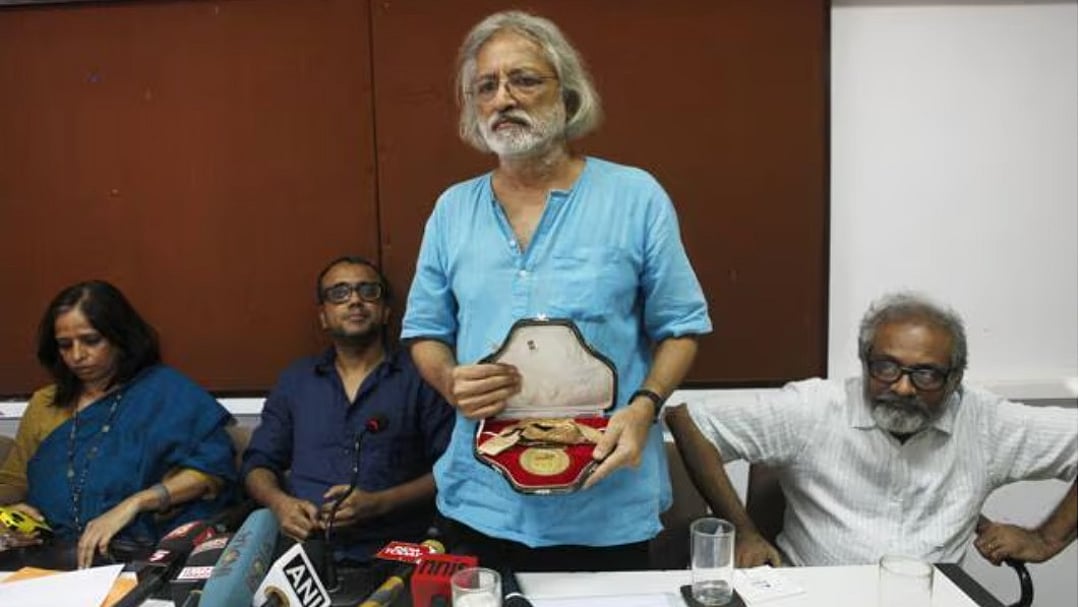

Long before individual statements began triggering personal backlash, the Hindi film industry witnessed a collective act of dissent in 2015 through the Award Wapsi movement. Several filmmakers returned government honours to protest what they described as a growing atmosphere of intolerance, a moment shaped by the FTII students' agitation against institutional interference and by incidents of communal violence, including the lynching of Mohammad Akhlaq in Dadri. The gesture was intended as a symbolic defence of artistic freedom and free expression.
Instead of opening space for debate, the move sharply divided the industry. While some artists framed it as a principled protest, others publicly criticised the decision as disrespectful to institutions and craft, accusing participants of politicising honours for attention. The reaction marked an early fault line in Bollywood, where dissent itself became controversial. The episode signalled a shift that would deepen in the years to follow: collective protest gave way to individual scrutiny, and speaking out, even symbolically, began to carry reputational and professional risk.
2. Aamir Khan and the moment fear became "anti-national" (2015)
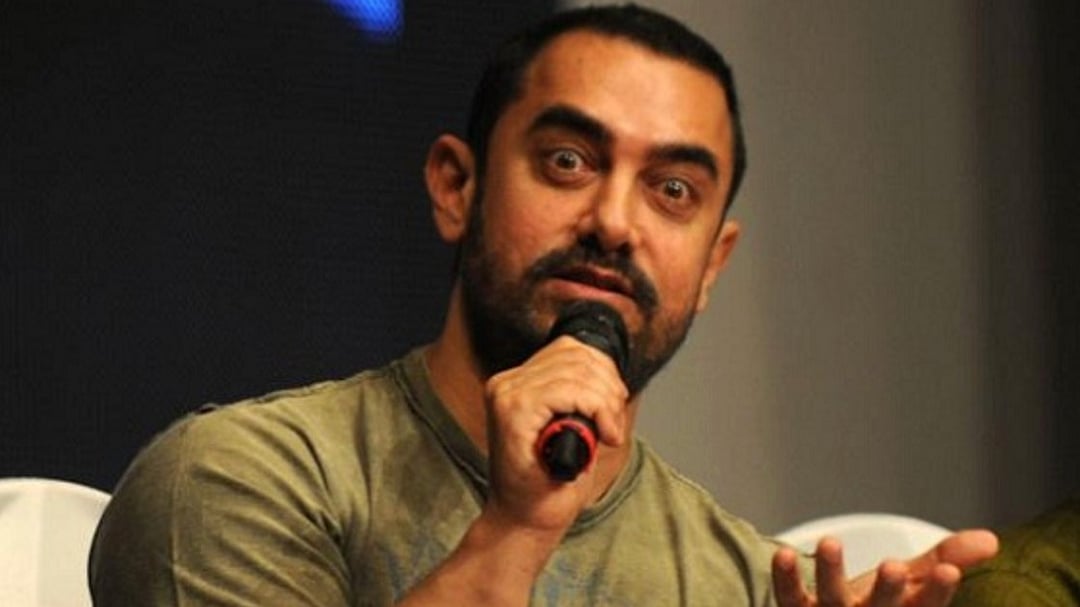
In November 2015, Aamir Khan became a flashpoint in the national debate on intolerance after speaking at the Ramnath Goenka Excellence in Journalism Awards in New Delhi. He said he felt unsettled by a growing sense of insecurity in the country and revealed that his wife, filmmaker Kiran Rao, had expressed concern about raising their child in such an atmosphere. The remark was framed as a personal reflection, but it was quickly recast as a political provocation.
The reaction was immediate and severe. Boycott calls followed, political leaders and industry peers criticised him publicly, and brands distanced themselves from the actor. The conversation shifted away from the substance of what he said to questioning his patriotism and his right to continue working in India. Khan later clarified that neither he nor his wife had ever intended to leave the country and reaffirmed his commitment to India, but the episode marked a turning point.
What lingered was not the comment itself but its afterlife. It established a warning: personal expression of thought could be recast as a lack of faith in the nation.
3. Shah Rukh Khan and the burden of explanation (2015)
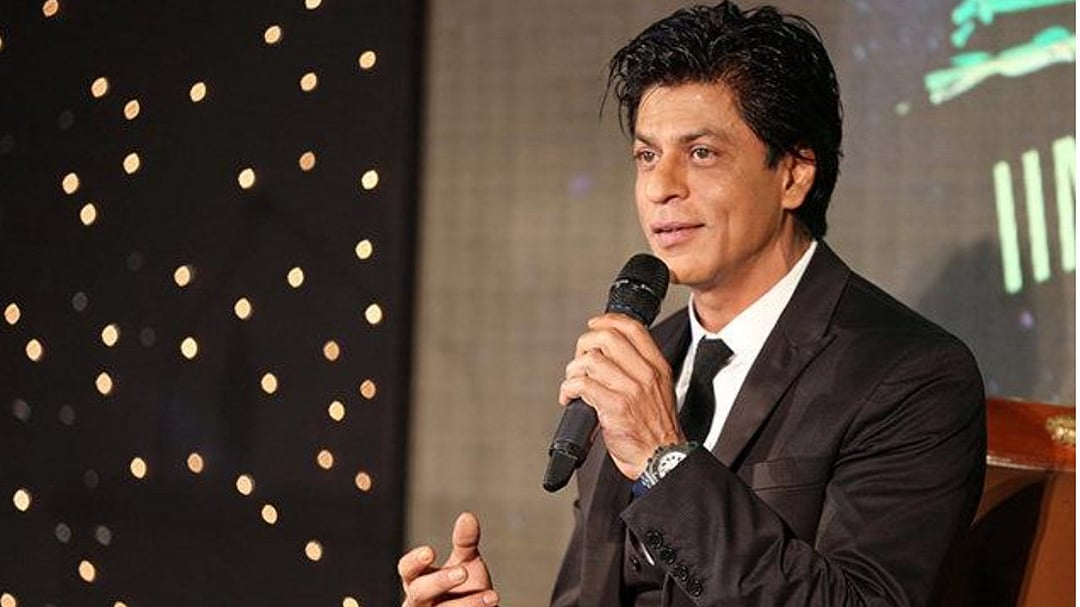
The controversy surrounding Shah Rukh Khan began in November 2015, when he spoke at a public event organised by the Sahitya Akademi in New Delhi. Asked about the national atmosphere, he referred to a growing sense of intolerance and emphasised the importance of dialogue and openness in a diverse society. He did not criticise the government, nor did he single out any political group or community. Yet the response was immediate. Sections of right-wing groups and commentators branded him anti-national, questioned his patriotism, and called for boycotts of his films. The discussion quickly moved away from intolerance as a social concern to a more pointed question: whether a Muslim superstar had the right to express discomfort about the country at all.
What followed was the long afterlife of that moment. Unlike most controversies, this one never fully faded. In 2015 itself, Shah Rukh Khan faced aggressive backlash from right-wing groups, including public calls telling him to "go back to Pakistan", and protests that disrupted screenings of his film Dilwale in parts of the country. The message was clear: the comment had crossed a line, and consequences would follow.
That pattern resurfaced years later. In 2021, when his son Aryan Khan was arrested in a drugs case, public discourse quickly drifted beyond the legal process, reviving old suspicions about Shah Rukh Khan’s values and loyalty. Even after the case collapsed, the association lingered. Later, when his IPL team signed a Bangladeshi player, a ruling party leader publicly labelled him a traitor, drawing once again on the same narrative first activated in 2015. The episode illustrates how dissent in Bollywood does not expire. Speaking once was enough to mark him, and every subsequent action was read through that memory. Silence did not undo it, and success did not shield him from it.
After 2015, Khan largely retreated from expressing his opinion on contemporary political issues.
4. Anurag Kashyap and the shrinking space for creative disagreement (2018- 2025)
Anurag Kashyap's clashes with power did not erupt overnight. Between roughly 2018 and the early 2020s, he emerged as one of the few mainstream filmmakers willing to publicly criticise censorship, ideological pressure on storytelling, and the narrowing space for dissent in cinema. He spoke repeatedly against the functioning of the Central Board of Film Certification, supported student movements, and condemned incidents of mob violence. Unlike many of his peers, he refused to retreat into ambiguity or soften his position, choosing instead to remain visibly oppositional.
The consequences were cumulative. His films increasingly became political flashpoints rather than artistic works, with projects facing scrutiny, delays, and heightened suspicion. Online abuse escalated into direct threats, including attacks aimed at his family. By his own admission, the hostility became exhausting. At one point, Kashyap spoke openly about wanting to leave Mumbai, citing a sense of creative suffocation and an industry climate where disagreement had begun to feel professionally dangerous.
What Kashyap's experience ultimately revealed was not just intolerance for one filmmaker's views, but a broader shift in how dissent is handled within Bollywood. In this environment, creative disagreement, once central to the evolution of Hindi cinema, increasingly registers as liability rather than necessity.
5. Deepika Padukone and the crime of presence (2020)
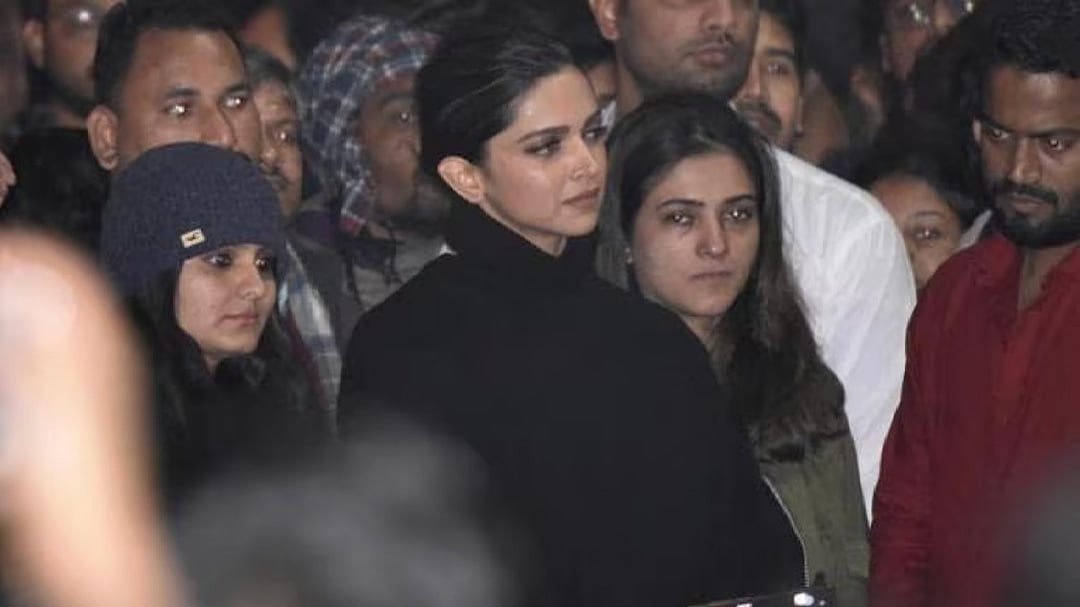
In January 2020, Deepika Padukone visited Jawaharlal Nehru University (JNU) in Delhi after masked attackers stormed the campus and assaulted students. She did not address the media, did not chant slogans, and did not make any public statement. She simply stood with the students for a short time and left. The intention was clear: to show solidarity without turning the moment into a spectacle.
But the response was immediate and harsh. Her presence was framed as a political act, and online commentators treated her silence as proof of alignment. Calls for a boycott of her film Chhapaak began trending within hours, and the debate shifted away from the campus attack to her perceived ideology. The episode showed how, in a deeply polarised environment, even a wordless gesture can be read as a statement, and how neutrality no longer offers protection.
6. Naseeruddin Shah and the outsider treatment (2018)
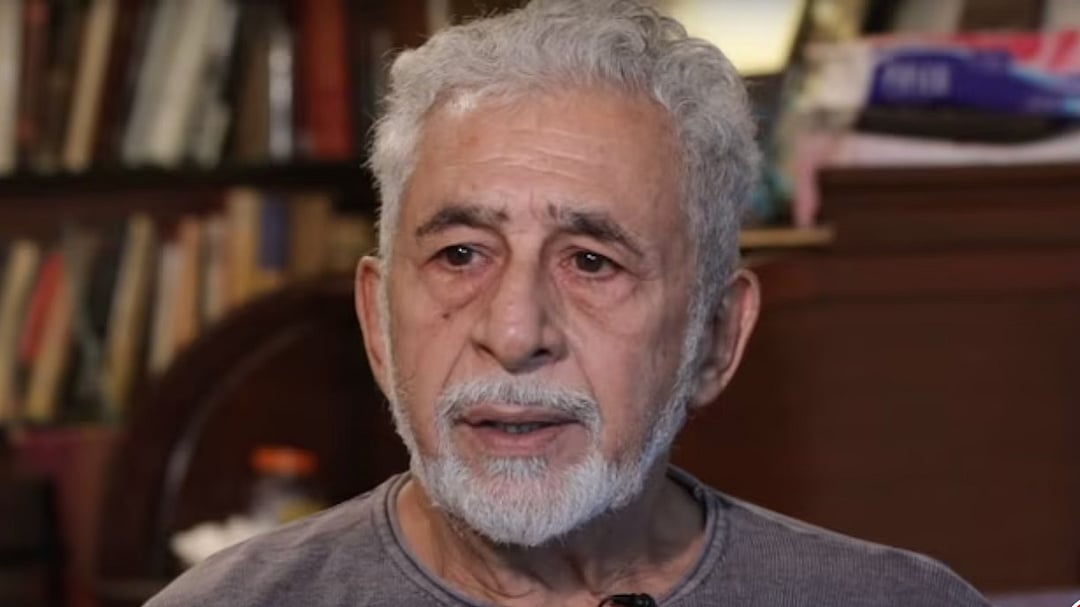
In December 2018, Naseeruddin Shah spoke publicly about feeling anxious for his children in an atmosphere where incidents of mob violence and hate crimes were becoming more visible. His comment was framed as a personal concern rather than a political accusation, but it quickly triggered a fierce backlash. Political figures and right-wing groups accused him of exaggeration, questioned his loyalty and suggested he should leave the country if he felt unsafe.
The response turned sharply personal. Instead of engaging with the issue he raised, critics targeted his identity and motives, portraying his remarks as ungrateful and anti-national. Threats were issued, protests were announced, and his long-standing reputation as one of India's most respected actors offered little protection.
Shah's decades of contribution to Indian cinema and theatre did not translate into credibility when he voiced discomfort. It revealed a climate in which speaking about fear invites suspicion and in which the right to express concern is increasingly treated as conditional rather than fundamental.
The quiet cost of speaking up in Bollywood
Taken together, these episodes point to a deeper shift in the cultural ecosystem around Hindi cinema. Artists’ words are no longer weighed for intent or nuance. They are interpreted through a lens of loyalty and identity, and the public response is often shaped more by outrage than by understanding. Social media, with its rapid amplification, has become the first court of judgment. In this climate, silence is no longer neutral, and self-censorship becomes a survival strategy rather than a choice.
The pressure is rarely only direct. It works quietly through boycotts, online harassment, stalled projects and the absence of support from within the industry. Artists begin to anticipate backlash before they speak. Producers start avoiding risk before it even appears. Over time, this anticipation shapes creative choices, narrowing the kinds of stories that feel safe to tell. Cinema, which once allowed for contradiction and discomfort, starts mirroring the very anxieties it once challenged.
AR Rahman’s recent experience fits into this pattern because it shows how quickly even measured, personal remarks can be reframed as disloyalty. His interview was not a political speech; it was a reflection on his own experiences within the industry. Yet, it was treated as an attack on the nation itself. That is what makes this moment significant. It suggests that the debate is no longer about individual statements, but about who is allowed to belong without constantly proving their loyalty. And if even Rahman, one of the most globally respected figures in Indian culture, can be pulled into this cycle, it raises a larger question: what kind of creative freedom remains when honesty itself is treated as a provocation?