Sonia Gandhi and the Congress have invoked Indira Gandhi's 1984 meeting with Sonam Wangyal to contrast the party's record of engagement with the BJP government's handling of Sonam Wangchuk's ongoing hunger strike.
The comparison revives the history of Ladakh's long-standing demands for constitutional safeguards, from Scheduled Tribe status in the 1980s to Sixth Schedule protection and statehood today.
While Congress argues that it engaged with Ladakhi leaders, its own governments also failed to fully implement key constitutional demands, raising questions about whether the current invocation is policy, politics, or both.
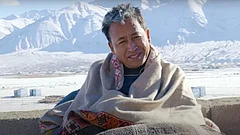
On the 20th day of Sonam Wangchuk's indefinite hunger strike at Jantar Mantar, Sonia Gandhi made a call. According to media reports, she recalled that 42 years ago, Indira Gandhi had personally met Wangchuk's father, Sonam Wangyal, during his hunger strike over Ladakh's Scheduled Tribe status in 1984, and ended the fast. She also called upon Congress leaders to show support to the protests.
Later, Congress spokesperson Pawan Khera visited Wangchuk at Jantar Mantar, appealing to him to call off the fast due to his deteriorating health, and drew an explicit comparison: 'Indira Gandhi and Manmohan Singh governments engaged with protesters; the Centre has chosen indifference.' The statement was aimed squarely at the Modi government.
What Was Indira Gandhi's 1984 Ladakh Policy?
Sonam Wangchuk's father, Sonam Wangyal, was a prominent politician associated with the National Conference and later the Congress. He became a Cabinet Minister in the J&K government in 1975. In 1984, he went on a hunger strike twice to press Ladakhis' demand for Scheduled Tribe status. The demand, if granted, would have given Ladakh's population constitutional protections under Articles 342 and 15(4) in education and employment.


The demand for Scheduled Tribe recognition was not a fringe ask. Ladakh's Buddhist and Muslim communities, living in a high-altitude desert with extreme climatic conditions and limited economic opportunities, sought the same protective classification that tribal populations across India's mountainous and forest regions had received. Indira Gandhi's personal meeting with Wangyal — and her intervention that ended his fast — did not in itself deliver Scheduled Tribe status.
Indira Gandhi's broader Ladakh policy was shaped by the imperatives of the time: the 1971 war had recently clarified Ladakh's strategic importance, J&K's complex federal relationship with the Centre was a permanent political preoccupation, and Ladakh's own identity as distinct from the Kashmir Valley, Buddhist and culturally Tibetan in its core.

What Did Manmohan Singh's Government Do?
The Congress invocation of Manmohan Singh alongside Indira Gandhi is specific in intent. Between 2004 and 2014, the Manmohan Singh governments maintained dialogue with Ladakhi political groupings through the framework of the Ladakh Autonomous Hill Development Councils — bodies created in 1995 to give Leh and Kargil limited self-governance without disturbing J&K's constitutional position. The councils were Congress's institutional answer to the demand for autonomous governance.
They were not, however, what Ladakhi leaders were asking for. The LAB and KDA — the Leh Apex Body and Kargil Democratic Alliance, which are at the centre of the current agitation — have consistently demanded Sixth Schedule status, which would give Ladakh's tribal areas constitutional protection comparable to the northeast's tribal zones. The Manmohan Singh government did not grant this. It maintained engagement without resolution — a style that Khera now offers as a positive contrast to Modi's silence, but which Ladakhi activists saw at the time as deferral without delivery.
What Are The Current Demands — And How Do They Compare?
The current agitation, led by the Leh Apex Body and Kargil Democratic Alliance, demands statehood for Ladakh, separate Lok Sabha seats for Leh and Kargil districts, and inclusion under the Sixth Schedule of the Constitution. These demands existed in some form under every previous central government.
The Sixth Schedule demand is constitutionally significant. The Sixth Schedule protects tribal areas in the northeast from unilateral land acquisition and provides for autonomous district councils with legislative, judicial, and administrative functions. For Ladakh — a Union Territory since the 2019 abrogation of Article 370, with no elected legislature — Sixth Schedule status would provide the kind of constitutional protection that J&K's special status, however imperfect, had previously offered.
The removal of Article 370 and the reorganisation of J&K into two Union Territories created a fundamentally new situation: Ladakh is now directly administered from New Delhi, with the Lieutenant Governor as its de facto government. Demands for statehood and Sixth Schedule status are therefore demands for the restoration of a democratic voice.

Genuine Policy Or Political Strategy?
The honest answer is that it is both — and the distinction matters less than it might seem. Sonia Gandhi's recall of the 1984 meeting is historically accurate: Indira Gandhi did meet Sonam Wangyal, and the precedent of prime ministerial engagement with a Ladakhi hunger striker is real. Pawan Khera's contrast between Congress-era engagement and BJP-era silence is also substantively defensible: the Modi government has not held direct ministerial talks with the LAB and KDA for extended periods, even as the agitation has intensified through 2024, 2025, and now 2026.
What the invocation forgets is that Congress's own record on Ladakh's specific constitutional demands was one of engagement without resolution across two decades in power. Indira Gandhi met Sonam Wangyal but did not deliver Scheduled Tribe status in 1984. Manmohan Singh maintained dialogue with Ladakhi bodies but did not grant Sixth Schedule protection in a decade. The model Congress is now offering as an alternative to BJP indifference is, examined closely, a model of responsiveness that historically produced conversation rather than constitutional change.