Explores how the term “Comrade” is distorted through memes, slurs and stereotypes.
Shows how solidarity in protests and crises defines the real meaning of being a Comrade.
Reveals how commitment to collective struggle shapes Left identity beyond labels.
Who Is A Comrade?
“ConReds”. “Sharia Bolsheviks”. “Lol Salaam”. “Commie Pigs”.
These are just some of the colourful pejoratives that inundate social media platforms everyday on the accounts of anyone who has the audacity to publicly associate themselves with Left politics. Funnily enough, a visual archetype—which Bollywood has long patronised—has also emerged caricaturing the ‘Comrade’, to add to the existing meme repository of ridicule. The figure is usually dishevelled-looking (perhaps unbathed), dressed in a worn-out kurta, with a jhola (bag) adorning one shoulder, while one hand rests on the waist—unless of course, it is holding a dafli (tambourine). Occasionally, the eyes are red and droopy; but the mouth is always open, yelling what it ought to hold inside.
But then, if not this, the question persists—who is a Comrade? A friend? A brother-in- arms? A mentor or a guide?

The Markers
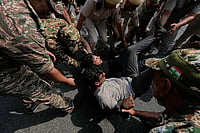
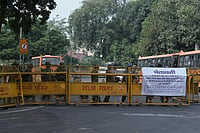
Imagine you’re sitting alone in the middle of a road. Both sides are blocked with police barricades, so there’s no exit. Everyone you know is cowering, as police batons rain like there’s no tomorrow. You are shivering, because you’re confronted by a water cannon, ready to unleash a piercing gush of murky water for the gathering to disperse. It inches towards you as the driver shouts out that you step aside, lest you’re run over. You shut your eyes and hold yourself in stubborn refusal, waiting for the worst to happen. Out of nowhere, a pair of hands appears and shields you, just as the rushing water begins to hit your body. You don’t know who those hands belong to, but you hold on so that both of you are not swept away by the force. That’s a Comrade.


You are called for an inquiry into your university’s administrative office. As these inquiries go, anyone who has been identified by those in charge of security at a protest is likely to be subjected to punitive action. You were putting up posters, which has now been identified as a crime by the authorities. So, you step inside, as you must, if your academic life is to continue.
A video is played before you, while you’re asked to identify people. “If you aren’t at fault, you will be allowed to go,” you’re told. “But give us these names, so we know who to blame.”

You see your Union President’s face floating before the camera. You mouth slogans with them every other day. “I’d really like to help you, but I’ve never seen this guy!” you say. They sigh and let you go. You are punished anyway. Lo and behold, you are a Comrade!
You are protesting a massive fee hike at your institution. If it’s implemented, some of your classmates may not be able to see you next semester anymore. Nothing seems to affect the administration and there’s a need to escalate your demands. As the end-of-semester exams approach, students unanimously decide that they must be boycotted. The administration is not happy. Threats are issued to students and consequences appear grave. Suddenly, everyone’s phones begin to vibrate. A news article seems to be doing the rounds. Your teachers have extended their support to the students’ boycott. “Advancing this struggle is as important to us, as it is to our students,” they say. “We cannot participate in this mockery.” You sigh with relief. They too, after all, are Comrades.
All for the Cause
Being a Comrade may entail many things—you may have read a little bit of Marx, skimmed through Engels, heard of Lenin and sworn off Mao; you may know how to play the dafli, albeit offbeat; you may not be sure of the order in which Tebhaga, Telangana, Naxalbari and Nandigram are uttered in a slogan, before you say “Lal Salaam!”; your spelling of “bourgeoisie” may not quite be there in letter, even if it is fine in spirit; you may hide at the back of a protest, lest you be asked to address the crowd; you may still be figuring out just how one Left party is different from the next.
But if you have in your heart and mind the clarity that if someone on your side of the fight is banking on you to stand by them during a crisis and you cannot abandon the cause at any cost, no matter what the consequence, then you, my friend, are a true blue Comrade.
Apeksha Priyadarshini is Senior Assistant Editor, Outlook. She writes on cinema, art, politics, gender & social justice
MORE FROM THIS ISSUE


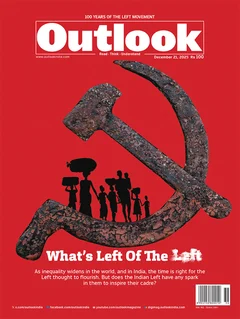
This article appeared as One Word Diary in Outlook’s December 21, 2025, issue 'What's Left of the Left', which explores the challenging crossroads the Left finds itself at and how they need to adapt. And perhaps it will do so.