Every party adopts its own definition of terrorism, and exploits it for narrow political interests
If the killing of civilians constitutes terrorism, then this principle must be applied universally
It is imperative to ensure that no one exploits human tragedy or manipulates it for selfish political gain
In our lives, we; both as individuals and as groups; have always classified each other. This has occurred throughout history and will likely continue, as it is a natural human tendency. There is no inherent harm in this, as long as such classification is not used to delegitimize or dehumanize others, to erase them from history, or to create a ticking time bomb for future conflict; one that seriously threatens global peace and stability. The danger is especially acute when classifications are based on race, nationality, or religion.
One of the most alarming examples of this misuse of classification is the approach of colonisers and foreign occupying powers toward the resistance of occupied peoples. They routinely label all forms of resistance to their brutal occupation; an occupation and colonisation against which international law explicitly grants peoples the right to resist; as acts of ingratitude, anarchy, and terrorism. This applies regardless of whether the resistance is military or peaceful; all forms are uniformly branded as terrorism, and treated as justification for the killing and annihilation of occupied and oppressed peoples.
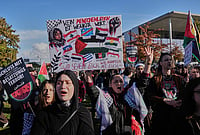
One of the most alarming examples of this misuse of classification is Israel’s, backed by its allies, labelling the Palestinian resistance as acts of terrorism. This applies regardless of whether the resistance is military or peaceful; all such acts are treated as justification for killing and annihilation.



In this narrative, terrorism is portrayed as being committed exclusively by Palestinians. Meanwhile, the real terror carried out daily by Israeli soldiers and settlers across the occupied Palestinian territories is, at best, described as “adherence to the rules of engagement” or mere “rioting,” and is rarely, if ever, prosecuted in Israeli courts.
From the Israeli perspective, the killing of more than seventy thousand Palestinians, the famine that has claimed the lives of hundreds of children, the total blockade of Gaza, the daily settler attacks fully backed by the occupation army, the mass arrests of thousands without trial, the deliberate killing of detainees in prisons, and the withholding of Palestinian bodies as bargaining chips; acts that are well documented and represent only the tip of the iceberg; are all justified as “self-defence.”
This reality highlights a fundamental problem: every party adopts its own definition of terrorism, and exploits it for narrow political interests. This should serve as a serious alarm bell, demanding collective attention. The international community must urgently work toward a unified, clear, and universally accepted definition of terrorism. This is in the interest of all, because what one side labels “terrorism,” another may describe as “patriotism,” and the reverse is equally true.
For example, from our perspective, the so-called “Hilltop Youth” constitutes a violent and extremist Jewish terrorist organisation, responsible for numerous acts of terror. Yet this designation is not recognised within Israel. Menachem Begin was internationally wanted as a terrorist prior to 1948, only to later be transformed into a national hero, with public spaces and institutions bearing his name, before becoming Prime Minister in 1977. The same trajectory applies to Yitzhak Shamir, who later also served as Prime Minister.
Another crucial issue is the selective application of standards. If the killing of civilians constitutes terrorism, then this principle must be applied universally and without exception. It cannot be enforced against certain peoples while others are exempted or justified.
Under current double standards, throwing a stone at an armoured military vehicle is labelled terrorism, while the burning of Palestinian homes, assaults on residents, and the killing of civilians by settlers are dismissed as mere “riots,” rather than recognised for what they are; organised terror.
History demonstrates that all occupying powers label resistance movements as anarchist, lawless, violent, and terrorist. The great martyr Bhagat Singh was condemned and executed under the same accusation. Countless similar examples can be found across the world.
Today, even H.E. President Mahmoud Abbas is labelled a terrorist, or a “terrorist diplomat,” by Israeli officials, with some openly calling for his arrest. This further illustrates how the term “terrorism” is routinely weaponised to delegitimize lawful resistance and political leadership under occupation.

As long as the international community lacks a unified and clearly defined understanding of terrorism and terrorist acts, every party will continue to claim the right to label others at will. The problem lies not only in the absence of clear definitions, but also in the deepening of divisions among peoples, as well as in the malicious exploitation that such ambiguity enables.
The Zionist movement, through its well-established media arms around the globe, spares no effort to equate Islam as a religion with terrorism worldwide. Many of the movement’s outspoken advocates and amplifiers preach this malicious narrative day and night. Unfortunately, to some extent, they have succeeded, particularly among socialist leaders. This will have a global effect that will spare no one in the future, and could destroy coexistence and the social fabric of many nations around the world.
For the sake of our shared human future, and as long as we believe that the world is one family and that no one is safe until everyone is safe, it is imperative to ensure that no one exploits human tragedy or manipulates it for selfish political gain. It is time for all of us to come together with one loud and clear voice to call for a unified, internationally agreed definition of terror, terrorism, and terrorist acts. Any act or individual falling within the scope and parameters of such a definition must be held accountable.
Leaving the definition of terrorism and terrorists to the discretion of each party is a recipe for the deliberate distortion of terms in the service of narrow and selfish political agendas.
The author is Ambassador of the State of Palestine to India
Views expressed are personal