Born on December 29, 1942, Rajesh Khanna was a legendary Hindi film actor, widely celebrated as Indian cinema’s first superstar.
He defined an era with iconic performances in films like Aradhana (1969), Anand (1971), Amar Prem (1972), and Bawarchi (1972).
On his birth anniversary, we honour a star whose emotional depth and lasting charm continue to shape Hindi cinema’s memory.
Late photographer Gautam Rajadhyaksha once recounted how, in answer to his query, “How would you describe yourself as an actor?”, Rajesh Khanna had stated loftily, “The intensity of Dilip Kumar; the lovable quality of Raj Kapoor; and the spontaneity and voice of Motilal.”
The man was not just a larger-than-life superstar; his no-holds-barred and never off-the-record quotes were also the reason journalists chased after him. I did too and despite being fobbed off by a string of excuses—from an unavoidable shoot and a sudden trip to Delhi for a political meeting to a friend who had just dropped by—I religiously called him every few days for almost three months. Then, one day, I was told, “Saab ghar pe nahin hai (Sir, is not at home).” By then I knew his voice too well to mistake him for the house help, and it broke my heart that he couldn’t even be bothered to think of a bahana (excuse). So, I also didn’t bother to ask when I should call back knowing I never would.


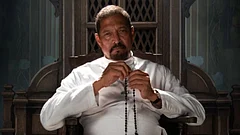
Today, I regret the youthful impetuousness which made me break off the tenuous connection. As I told Ananth Narayan Mahadevan, had I been older and wiser, I might not have abandoned my quest for an interview so easily. The National Award-winning actor-filmmaker remembers meeting Kaka—as he was fondly known in the film fraternity—at his office to plan the launch of Batwara, the 2001-2002 Hindi drama series, which marked his debut on television. “It was a grand launch at Mumbai’s Taj Mahal Hotel where I introduced Kaka to the media,” Mahadevan flashbacks.

Thereafter, Khanna featured in other TV serials too, including Apne Paraye, Ittefaq and Raghukul Reet Sada Chali Aayi. He also produced Aadha Sach Aadha Jhoot for Doordarshan, for which Mahadevan was signed, but their interaction then didn’t go beyond the occasional “Hello” when the superstar dropped by in his distinctive sedan, an Impala Chevrolet.
“But one day, when we were shooting a pilot episode at Mumbai’s Film City Studio, he drove up in his Fiat, sat down beside me, and started reminiscing about the ‘60s when Jeetendra had excitedly come with the good news that he had been signed for a spy thriller. Kaka told me frankly that he would have never accepted Farz, but was happy for his friend,” narrates Mahadevan, pointing out that Farz was a blockbuster and turned Jeetendra’s fortunes after his lacklustre debut in Geet Gaaya Patharon Ne while Aradhana which came two years later, made Khanna an overnight superstar.
That day, the KBC shoot was also attracting a lot of attention with fans flocking to the studio for Amitabh Bachchan’s autograph. On learning that Khanna was at the same floor, they came running to him too. “While happily obliging them, Kaka pointed out that while Mr Bachchan signed simply as ‘Amitabh Bachchan’, he always wrote, ‘Love Rajesh Khanna’. I thought it was apt because while one distinguished himself as Hindi cinema’s ‘angry, young man’, the other will always be remembered as the romantic hero of Aradhana, Amar Prem and Kati Patang,” Mahadevan reasons.

Khanna and Bachchan shared the screen for the first time in Anand. The former was quickly acquiring a reputation for being difficult, but he had promised Hrishikesh Mukherjee that he would give him all the dates he wanted, and after the first schedule, actually asked the director when he wanted to shoot with him next. “Hrishida was busy with another film and told him he would get back. Soon after, when shooting at Mohan Studio, he spotted Kaka’s Impala entering and told his unit to run, ‘Rajesh Khanna dates dene aaya hai, (Rajesh Khanna has come to give his dates),’” Mahadevan chuckles at the memory.
While Anand remains one of Khanna’s best performances, the actor was reported to be visibly upset after watching the preview show. He told Javed Akhtar and Honey Irani that the ‘tall man’ had the power to wipe them all out, perhaps remembering that when he had wondered why Mukherjee would cast a newcomer in the all-important role of Anand’s Babumoshai, the filmmaker had warned this, “Yeh naya ladka tum sabko kha jayega”. Gautam writes in his book, Faces, that when he asked about the rumour during a joint photo session with Bachchan, he confirmed it, saying, “Yes, it’s true. I saw a great talent in Amit. And today, I can say that two of our best films are those in which we have acted together.”
The second film, Namak Haraam, Mahadevan reminds, is an adaptation of the 1964 Hollywood classic Becket. Director Mukherjee however had turned the religious conflict into an economic and ideological clash, setting the story against the backdrop of textile mills and unions, Bachchan taking the blame for his friend Khanna’s untimely end. “Interestingly, in the original too, Peter O’Toole had overshadowed Richard Burtan, the bigger star with the sympathetic and more challenging role, and in this film too, after watching the preview show, even Kaka acknowledged that a new superstar was born,” he maintains.
Khanna’s downfall was as dramatic as his rise to the top. Perhaps he was a victim of his own image or perhaps he was carried away by all the adulation. Whatever the reason, he was dethroned before he was ready to abdicate. Politics brought him back into the limelight, briefly, but acting remained his first love and eventually, he returned to it, rueing the lack of meaningful roles.
During one of his visits to Ashirwad—Khanna’s iconic bungalow—Mahadevan narrated a story he had read in a New York newspaper, about a couple who had reconnected after their partners had passed on and their children had left, deciding to pick up from where they had left off and see where life takes them. “I wanted to make it as a mature love story with him and he excitedly said we should talk to Sharmilaji (Tagore) for the role opposite him. For me, it was Aradhana and Amar Prem all over again,” Mahadevan recounts.
While leaving, as they were chatting on the porch of Ashirwad, he noticed a truck stop and the driver wave. He pointed him out to Khanna and as he smiled and waved back, Mahadevan recalled how at the peak of his stardom, he would deliberately park his Impala across the street from his home, running across the street to the car, knowing it would create a traffic jam and adoring fans would cover the bonnet with lipstick kisses.

Back in his own apartment, Mahadevan immediately started writing, but before he could complete the script, Khanna’s health took a turn for the worse. “The dream ended and I had to be content with watching reruns of Aradhana and Amar Prem,”he sighs.
Which is the one Rajesh Khanna film he can watch anytime? “Well, I really like Bawarchi, with him in a de-glam avatar as a symbol of positivity and happiness. But my favourite film is undoubtedly Khamoshi,” he says, and you are reminded of Waheeda Rehman as a nurse in the psychiatric ward, who makes the mistake of falling in love with two of her patients, Dharmendra and Khanna, and eventually losing her mental balance. “The last scene where she tells the doctor, ‘Maine kabhi acting nahin ki, I don’t know how to act’ with Kaka vowing to wait all his life for her to get better, breaks my heart every time,” admits Mahadevan.
Such was the impact of the film, that while doing a serial, Chamatkar, he convinced Farooq Shaikh to go with him to Kolkata and sail down the Hooghly, the boat going below the Howrah Bridge like you see in that iconic shot in Khamoshi, just so he could recapture the magic of the song “Woh shaam kuch ajeeb thi, yeh shaam bhi ajeeb hai, woh kal bhi paas paas thi, woh aaj bhi kareeb hai.”