Iran frames the war as an unprovoked assault, asserting that peace is preferable, but not at the cost of independence and dignity.
From Iraq to Lebanon, the interview highlights what is seen as a pattern of silence and double standards in global responses to violence.
Drawing from the legacy of Imam Hussain, the narrative positions moral defiance and sacrifice as central to Iran’s resilience.
Iran is facing one of the most consequential moments in its modern history. On February 28, the world woke to news that Supreme Leader Ayatollah Ali Khamenei, the architect of Iran’s Islamic Republic for over three decades, had been killed in a coordinated US-Israeli military strike. Iran’s retaliation was swift. It struck American bases and allied nations, and closed the Strait of Hormuz. US President Donald Trump’s torrent of social media posts, taunting, threatening, and culminating in a chilling warning of the possible annihilation of an entire civilisation, brought the world to a moment of collective, breathless dread. At the edge of catastrophe, a fragile ceasefire was brokered by Pakistan.
The guns have fallen largely silent, for now. Yet the pause remains deeply tenuous, contested in its terms, violated in its spirit, and shadowed by Israel’s continuing strikes in Lebanon. Iran did not fracture and its people did not yield. If anything, the scale of the assault appears to have hardened national resolve in ways its architects may not have anticipated.
Tehran has framed the strikes as unprovoked and illegitimate, an act of aggression dressed in the language of security. Its leadership has been unequivocal: This was not a war of Iran’s choosing, but one imposed upon it, and one it is prepared to endure for as long as necessary.
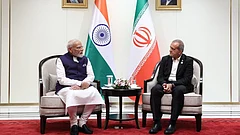


A new Supreme Leader, Mojtaba Khamenei, has assumed his father’s mantle. In India, powerful scenes of mourning and solidarity unfolded. Those not orchestrated by the state, but driven by individuals across faiths and communities. It is within this charged and still-unresolved moment that Dr. Abdul Majid Hakeem Ilahi, Representative of the Supreme Leader of Iran in India, speaks to Outlook.
His words are an indictment of what he sees as a deeply selective global conscience. From Iraq to Lebanon, Sudan to Libya, he traces a recurring pattern: violence visited upon Muslim nations, and met with silence, or worse, justification. “Till the mentality of the world is to stay quiet against oppressors, these wars will keep happening,” he says.Iran’s message, as he articulates it, is unambiguous. This war was never sought. But dignity, once challenged, cannot be negotiated away. “We did not want this war. It was imposed on us. But we are not ready to sell our dignity or our freedom.”
And where, in the face of overwhelming military force, does such resolve come from? His answer reaches beyond politics into the deepest reserves of faith and history, invoking the eternal lesson of Imam Hussain and the conviction that moral resistance, even against insurmountable odds, is a form of victory. “In our faith, in our values, and in the eternal lesson that no force on earth is worth surrendering your soul to.”
Excerpts from the interview follow:
People are trying to understand the bigger picture behind this war… a connection between what is happening in Iran and the broader moral crisis the world is facing.
Look at the timing of the war. Everyone has read and heard about the Jeffrey Epstein files. What was the reaction of many countries? They said nothing. Why? These people were bringing kids and doing terrible things to them. I cannot even bring myself to describe it, because I could not bear to look at the photos. Unfortunately, those responsible raised their heads without shame, as though they believed it was their right to do such things…But I am certain that in the near future, everything will be resolved. We will witness justice. We will witness equality.
You mention justice and equality. But do you believe the current world order is capable of delivering that, given how powerful nations have historically treated others?
Consider India, up until around the year 2000, there were hundreds of unjust sanctions against the country, including after the atomic test they conducted in 1998, for no legitimate reason. But eventually, the world understood it was making a mistake. They realised they had to work with India. Now they will come to the same understanding with other countries as well.
You recently met with a delegation of academics from different universities. What did they tell you that struck you most deeply
Academics from a delegation representing different universities told us something quite significant. They said: some years ago, a war was initiated against Afghanistan. Then against Iraq, where five million innocent people were killed. Then against Syria. Then against Libya. And currently, wars are ongoing against Sudan, Lebanon, Iran, and Somalia. We do not know which country will be next. As long as the world maintains the mentality of staying silent in the face of injustice and oppression, this will continue. But if we adopt the mentality that powerful countries do not have the right to kill other people, to remove their leaders, or to attack and target civilians, then peace and justice will cover the entire world. Until 1943, hundreds of countries were colonised by European powers. They believed they had the right to colonise any country, to take their resources, their wealth, and to kill their people, while the colonised had no right to speak. That was the mentality that drove occupation. Today we do not hold that same mentality openly, yet somehow it still exists.
You speak of double standards in how the world responds to suffering…
If what happened in Iran had happened in a European country, what would the reaction of the world have been? A primary school was attacked twice, and 170 innocent girls, aged between 7 and 12, were killed. Many countries said nothing. Absolutely nothing. But if the same thing had happened in a European country, the reaction would have been very different.Let me share another example. Two or three days ago, an American aircraft was shot down by Iran’s air defense and the pilot was captured. Immediately, many European countries issued statements saying, ‘This is a matter of human rights. You must look after him. You must care for him. This is international law.’ They cited more than 100 articles demanding the pilot’s protection, the same pilot who had killed more than 100 people just minutes before. My question to them is: when 170 young girls, aged 7 to 12, were killed intentionally, where were you? Where was your statement? Is international law only for the powerful? Do the oppressed have no right to its protection?
With so much pain and loss around you, how do you counsel your people to respond through grief, anger, and reason?
We must not lose our rationality. When the Prophet’s son Ibrahim passed away, the Prophet wept. People came to him and asked, ‘Are you not satisfied with what Allah has decreed?’ He replied, ‘I am satisfied. But these tears are from my feelings, from my emotions, yet my heart is with Allah.’In the same way, we carry great sadness. But sadness does not mean the end. We have a future to build, and we must not let decisions be driven purely by emotion. There must be a balance between rationality and faith. They are not opposites. Reason and religion can and should coexist. According to Islamic doctrine, we must maintain very good relations with all people, regardless of religion, country, ethnicity, or color. Allah says in the Holy Quran: ‘We created you from man and woman’, meaning you are all the same. The verse continues: the most honoured among you before Allah is the one with the most taqwa, the deepest God-consciousness. That distinction belongs to Allah. But as human beings, we must regard all people equally and extend our love to everyone.
How should nations conduct themselves in relation to one another, particularly smaller nations in the face of powerful ones?
We should have very good, even close, relationships with all nations, except those who seek to impose their will upon us and reduce us to slaves. For all others, we should strive not merely for relations, but for genuine friendship.We are human beings, and it is important to know on which side of history our names will be written. I once told a minister: ‘I am not asking you to make any particular decision. That is for you to decide. But in the future, when your grandchildren evaluate you and ask where you stood, what will your answer be?’ Some people praised Hitler during his time. But history now curses him. The same with Yazid. Nations need to know on what side of history you want to side.
How do you explain Iran’s position to those who simply ask: why not stand down and end the suffering?
This war was unexpected and unwanted. We never sought it. If we could stop it immediately, we would, because every second of peace saves an innocent life. But there is something we will not surrender: our independence, our humanity, our dignity.I do not know if you are familiar with Imam Hussain, peace be upon him. At the Battle of Karbala, he said: ‘I will not pledge allegiance to Yazid. I am ready to be killed. My sons, my brothers, all may be killed. I accept that my family will be taken captive. But I will not bow my head. I will not submit.” That is something deeply human.
Some say this conflict is about ideology. Others say it is simply about resources and power. What is your answer to that?
Some of our enemies have openly stated they want only our oil. That they are willing to kill Iranians for it. Where is humanity? Where is morality? Where is justice? One of them was even asked why he killed 100 innocent people. His answer: ‘For fun.’ How can you submit yourself to that kind of mentality? Never. The Prophet said in a hadith: the one who defends his wealth and is killed by a thief or enemy is a shaheed, a martyr. Islam does not permit us to humiliate ourselves. We must protect our dignity.Yes, we are suffering greatly. Many innocent lives have been lost. But living under oppression without dignity is worse than dying with dignity.
The outpouring of love and solidarity from the people of India has been extraordinary. How do you explain it, and what does it mean to you personally?
As for the sympathy and solidarity shown by people in India, this came from their humanity, their dignity, their wisdom. Indians have always been drawn to the oppressed, to justice, to spirituality. These are not coincidental qualities. They are part of the Indian nature: humanity, loyalty, wisdom, morality, spirituality.I have received many delegations here, all weeping, all grieving. They said: ‘We are of a different religion. But we are human beings, and we have feelings.’
For those who never had the chance to know him, who was Ayatollah Khamenei beyond the title, beyond the politics? Who was this man truly?
I recall visiting his home once, and his son, the current Ayatollah, who was my friend, told me this story: one night, they received a call that his mother had suffered a heart attack. They took her to the nearest hospital, which was quite modest. The following weekend, the hospital director recounted: ‘They told me the Supreme Leader intended to visit. I asked why this hospital, it is a very ordinary one. They said: his wife has been here for a week. I went to see her, and she was in a shared ward, no private room.’There was also a general doctor who once received a young mother with a sick baby. When he learned the child was the Supreme Leader's son, he was speechless. She simply said: ‘Agha does not allow us to have anything special. A leader must be with his people.’When they proposed building him a bunker, he replied: ‘Iran has 90 million people. Build 90 million bunkers, and then come back for mine.’ When there was an electricity shortage, he ordered the lights in his own home turned off: ‘If my people have no electricity, neither should I.’ He never once used a private aircraft, he always flew with the general public.Imam Ali, peace be upon him, once said: ‘All people are of two kinds, either they share your faith, or they share your humanity. There should be no difference in how you treat them.’ This man lived by those words, in his dress, his food, his conduct. Once, I was his guest for lunch. They brought bread and tomatoes. I waited for the main meal. Nothing else came. I said, ‘I am still hungry, where is the food?’ That was the food. That was his life.