When the CJI made the remark comparing unemployed youth to cockroaches and parasites, I was on my phone like everyone else. I tweeted: ‘What if all the cockroaches came together?’
The Instagram account crossed three million followers within 78 hours. By day five, it had crossed 10 million.
The crackdown, threats and political reactions, he says, prove the anger behind CJP is real.
It started as a satire. A Google Form invited India’s unemployed, lazy and “chronically online” youth to join a fictional political party with a cockroach as its symbol. The manifesto was assembled using AI tools. Within days, however, it was no longer a joke. Millions followed the Cockroach Janata Party (CJP) online, opposition leaders began invoking it publicly and its founder found himself navigating hacked accounts, threats against his family and allegations of running a foreign-backed influence operation.
The CJP was founded recently, after remarks by Chief Justice of India (CJI) Surya Kant about unemployed youth triggered outrage on social media. The CJI has since clarified that he was referring to youth with fake degrees and expressed pride in India’s youth.
Abhijeet Dipke, a 30-year-old political communications strategist pursuing a master’s degree at Boston University, responded with a tweet and within hours, the Instagram account had more than a million followers. By day 10, the CJP claimed more than 23 million followers across platforms, one million registered members and hundreds of thousands of signatures demanding accountability over the National Eligibility cum Entrance Test (Undergraduate) (NEET-UG) 2026 paper leak. Dipke spoke to Fozia Yasin. Edited excerpts from the interview.


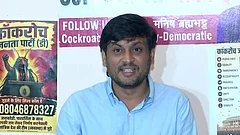
How did the CJP begin?
When the CJI made the remark comparing unemployed youth to cockroaches and parasites, I was on my phone like everyone else. I tweeted: ‘What if all the cockroaches came together?’ It immediately started circulating among Gen Z users and college students, and people began to respond as to what we should do. That’s when I created the Google Form. The eligibility criteria were deliberately absurd, tongue-in-cheek. At that point, I genuinely thought this would remain an internet joke among a few friends and strangers. There was no political strategy or infrastructure to support us. It was completely impulsive. I built the website and manifesto myself using Claude and ChatGPT―one person in a Boston apartment with a laptop.
When did you realise that the CJP was no longer a joke?
The Instagram account crossed three million followers within 78 hours. By day five, it had crossed 10 million. That was the moment I realised people were no longer engaging with this sarcastically. I could barely sleep. I was fielding questions, media requests, technical issues, messages from students, personal stories and threats―combined with support. The numbers did not feel real. The website crashed due to traffic. Then the accounts started going down, and things became even more chaotic. We were trying to restore access while simultaneously trying to figure out how to handle something that had far outgrown one person. The focus now is on stabilising things and bringing in the small team that was already helping me informally.
Who joined the CJP and why do you think it connected with audiences?
Most members are between 17 and 28, largely from metropolitan cities, and many had never been politically active before. That is the most important part. These are people who were raised to focus on exams, work hard, trust the system and they did exactly that. Then NEET-UG exam papers leaked and jobs became harder to find. People describe this generation as apolitical, but I do not think that is accurate. Politics becomes impossible to ignore when it determines whether your exam is fair, whether you can find work, whether you can afford to live in the city you studied in. The frustration already existed. The CJP simply gave it a language and a symbol.
Does your connection with the Aam Aadmi Party (AAP) matter here?
Between 2020 and 2023, I volunteered with AAP’s social media and central teams, mainly during the Delhi elections, working on their digital campaigns, meme content and youth outreach. I don’t hide that. But that chapter ended well before the CJP started. I wanted to focus on my own life, applied to universities and moved to the US for my Master’s degree. The CJP is not tied to the AAP or any political formation. The crackdown, threats and political reactions, he says, prove the anger behind CJP is real.
Why did the cockroach become the symbol?
It was instinctive initially, but the symbolism holds up. The cockroach survives. You try to crush it, poison it, drive it out and it comes back. Cockroaches do not appear in clean, functioning places. When unemployed youth are described as cockroaches and parasites, there is something powerful about reclaiming that identity rather than feeling ashamed of it. The symbol says: we are still here.
What do you make of the crackdown?
Students lost a year of their lives to an exam that was compromised and the system was largely silent. When a satirical party with a cockroach symbol started asking uncomfortable questions about that silence, there was urgency, accounts were withheld, we were pressurised and there were allegations of foreign conspiracies. That tells you something about what is considered a genuine threat. The problem is that noise was never the source of the anger. If you shut it down, the anger will find another outlet. The conditions that created the CJP have not been addressed. They have barely been acknowledged.
How do you respond to allegations of foreign funding or opposition backing?
No evidence has been produced because there is no evidence. I was one exhausted person in a Boston apartment, using AI tools and scrambling to keep a crashing website alive. A coordinated foreign-backed ‘influence operation’ does not look like that. It does not involve frantically pulling together seven or eight volunteers because the response had become impossible to manage alone.
On the allegation of foreign influence, I shared a live screen recording of the Instagram analytics. The numbers showed 94.7 per cent of the audience was from India. The US was second at one per cent. These allegations are designed to shift the conversation away from the real question, which is why are so many young people connected with us.
Why have you refused to engage with most media platforms in India?
A large part of the Indian media no longer feels independent to many young people, and honestly, I share that concern. Serious questions are already being raised about its credibility. We repeatedly see retired judges receiving government appointments. People naturally begin to wonder whether there is a quid pro quo. The same pattern plays out in the media: organisations closely tied to political and corporate interests stop representing citizens and start representing power. I am willing to speak to journalists genuinely interested in understanding why this movement resonated. There are outlets that will only engage if they can find a conspiracy angle. I have no interest in being a spectacle for that kind of coverage.
What next?
I cannot simply walk away. Too many people wrote saying they saw their frustrations reflected in the CJP and wanted it to continue in some form. I owe them more than a tweet and a crashed website. The immediate next step is listening and understanding what members actually care about and what kind of politics they want to see. We are still working out whether the CJP will eventually become a political party or remain a digital pressure platform. What I can say is that this has become a movement and the conditions that produced it have not disappeared.

MORE FROM THIS ISSUE




Have you always been political?
I studied journalism in Pune and was always drawn to how narratives are built, how power communicates and how media shapes public perception. Working on political campaigns deepened that understanding. But I also think that many young Indians become political through experience rather than ideology. An exam leak makes you political. Unemployment makes you political. Institutional failure makes you political. At some point, the system forces itself into your life, whether you were looking for politics or not.