Modi told Putin that India is “not neutral” on the Ukraine conflict and is firmly “on the side of peace”, backing all global efforts to end the war.
The Ukraine issue dominated the annual India–Russia summit, where both leaders discussed defence ties, trade imbalances, energy cooperation and the wider geopolitical climate.
Prime Minister Narendra Modi on Friday reiterated India’s strong backing for ongoing initiatives to end the war in Ukraine, telling Russian President Vladimir Putin that India will stand “shoulder-to-shoulder” with all peace efforts aimed at finding an amicable resolution to the conflict.
The Ukraine crisis featured prominently during the annual summit between the two leaders.
In his televised opening remarks, Modi said India is not neutral, emphasising that it is aligned with peace. “We have been holding discussions following the start of the Ukraine conflict. As a close friend, you have been regularly apprising us on the situation. I think trust is a major strength,” he said.
“We all should find the path of peace. I am aware of the latest efforts and I am confident that the world will turn to peace,” he said. “I have always said that India is not neutral; India has a side and that side is peace. We support all peace efforts and we are standing shoulder-to-shoulder in all peace efforts,” he added.


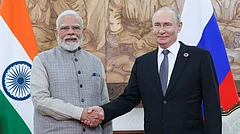
Putin said Moscow is working towards a peaceful resolution to the conflict.
The Russian president received a red-carpet welcome on Thursday evening during his first visit to India in four years, and his first since the Ukraine war began in February 2022. Modi personally welcomed him with a hug at Palam airport before the two travelled together in a white SUV to the prime minister’s residence for a private dinner.
The conversation over the meal is understood to have set the tone for the 23rd India–Russia summit, which is expected to yield several concrete outcomes to broaden the long-standing relationship.

Key areas of focus include strengthening defence cooperation, shielding bilateral trade from external pressures and exploring collaboration on small modular reactors. The visit comes at a time when India–US relations are experiencing a downturn, furthering the significance of Putin’s visit to New Delhi.
Following talks between the two leaders, both sides are expected to sign a series of agreements, including one enabling the movement of Indian workers to Russia and another covering logistical support under a wider defence cooperation framework.

India is also aiming to expand its exports of pharmaceuticals, agricultural goods, food products and consumer items to Russia, amid growing concerns over a large trade imbalance. India imports around USD 65 billion worth of goods and services from Russia annually, while Russian imports from India total roughly USD 5 billion.
“We know our Indian friends are concerned about imbalance in trade. We want to buy more from India. We are looking for joint efforts,’’ Dmitry Peskov, the Kremlin’s press secretary, told reporters ahead of the visit.
Officials said cooperation in the fertiliser sector is set to be discussed, with Russia currently supplying India with three to four million tonnes annually. Talks are also likely to cover India’s proposed free trade agreement with the Eurasian Economic Union.
Defence relations have been the bed-rock of India-Russia ties but this year’s summit shifts the focus to the economy. There will be discussions around defence equipment, but no major announcements are expected.
Despite warm political relations and excellent government to government co-operation, the economic ties, especially private investments remain the weakest link.
Read More at: Vladimir Putin India Visit LIVE