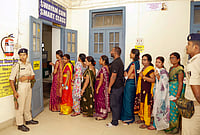
The rustication of members, present and past, of the JNU Students’ Union followed the protests against a Facial Recognition Technology System installed by the JNU Administration at the JNU Central Library.
A Long March to the Ministry of Education, scheduled on February 26 demanding the JNU Vice Chancellor’s resignation and the enactment of UGC Regulations along with the Rohith Act, was met with police action, after which 14 students were arrested.
These students spent three days in Tihar prison, before being released on bail.
I have been a student of political studies since my school days. Long before I stepped into the university, I had encountered the foundational idea that dissent is not a disruption of democracy, but its lifeblood, that the act of questioning power is what keeps it accountable. These were not merely abstract principles confined to textbooks; they found deeper meaning during my years at JNU. As a postgraduate student of Political Studies, and equally as an activist, I came to understand that theory and praxis cannot exist in isolation from one another. To study power without confronting it, to analyse injustice without resisting it, is to abdicate the very responsibility that scholarship demands. We protest, therefore, not out of impulse, but out of a deeply felt obligation, as citizens who refuse to be silent spectators.
And yet, when we were being taken to Tihar, I was not shocked. There was no rupture between expectation and reality, no moment of disbelief. This regime has, with calculated precision, normalised the criminalisation of dissent. What should have been extraordinary had long since become routine.
Perhaps, then, it is necessary to recount the chain of events that led the JNU 14 to Tihar.

On August 20, 2025, I started receiving phone calls and messages about the installation of some machine at the gate of B.R. Ambedkar Central Library, JNU. I was the President of the JNU Students’ Union at that time. I reached the gate and asked the workers to stop the work until we could speak to the Acting Librarian. She did not meet us that day. After a protest, the work was stopped for the day.


Immediately, we sent some queries to the Acting Librarian regarding the Facial Recognition Technology System; at that time we did not even know that it was FRT. We asked about the decision-making procedure, the minutes of the Academic Council/Executive Council meetings, the cost of the machine and the rationale behind it. Instead of having a dialogue, she chose to deploy Delhi Police on the campus and forcefully install the system.
After a protest and the announcement of an indefinite sit-in, the JNU administration issued a notice under the signature of the Registrar, stating that they would form a committee which would talk and deliberate with all stakeholders and that the status quo regarding the installation would be maintained. However, the JNU administration betrayed this assurance and, without even forming a committee, tried again to install it during the JNUSU elections, when the Model Code of Conduct was applicable.
When the new union came with Aditi as its President, they protested once more. The FRT was uninstalled by the union and the administration rusticated all the four office bearers and me. But this rustication came a day before the union had announced a march for the Rohith Act on February 3.
From February 3, students in the campus rose against the rustication and the Chief Proctor Office Manual and for the implementation of the Rohith Act. Multiple strikes, dharna, marches and juloos happened but the administration did not say anything. However, Vice Chancellor Shantishree D. Pandit went on to state in a podcast that “Dalits are drugged with permanent victimhood just like Blacks.” This was intolerable. She disrespected hundreds of years of struggle and movements for our dignity.
When she failed to apologise and resign even after multiple protests and marches on campus, JNUSU announced the ‘Long March to the Ministry of Education’ on February 26 for her resignation and the enactment of UGC Regulations along with the Rohith Act. However, a peaceful march that started from Sabarmati T-Point was met with violence. The Delhi Police locked the university’s North Gate and carried out heavy barricading. A large police force—including the Rapid Action Force, tear gas units, rifles, and a riot control vehicle—was deployed. We later came to know through a police officer that forces from 12 police stations had been deployed that day.
Why such heavy force? The simple answer is that we were demanding accountability from the Vice Chancellor of a university known worldwide for its public education model. The Delhi Police assaulted many of our friends. The Police dragged President Aditi, Joint Secretary Danish, Vice President Gopika and dozens of students from the University gate and sent them to Kapashera police station. One of the policemen, seen everywhere in the videos from the day, came close to a person who was holding the portrait of Baba Saheb Ambedkar, snatched it and broke it. The government of India later asked all social media handles to take down this video from everywhere.
I stepped out of the gate to secure medical assistance for one of the detainees, a PwD student who was in urgent need of care. In that moment, the instinct was simple and human, to ensure that someone in distress was attended to. But even this act was treated as transgression. The Delhi Police detained me as well and took me to Jafarpur Kalan Police Station. By midnight, we were shifted to Kapashera Police Station, where the night unfolded in a slow, grinding sequence of bureaucratic cruelty. Time lost its rhythm as we were made to wait, questioned, processed, and held in a state of deliberate uncertainty. It was only in the morning, after hours of this procedural ordeal, that we were informed of what had already been decided. Fourteen students would be formally arrested and produced before the magistrate. The language of law was invoked, but the intent was unmistakably punitive. Due process, in that moment, felt less like a safeguard and more like an instrument of exhaustion.
This was not an isolated act of repression. It was part of a larger and coordinated crackdown on a movement that had begun to take shape across the country. The protests had intensified following the stay on the UGC Equity Regulations by the Honourable Supreme Court, a decision that had triggered widespread concern about the future of social justice in higher education. What we experienced was, in many ways, the state’s response to that collective unrest, an attempt to contain, discipline, and ultimately deter a generation that had chosen to speak.

When we first entered Prison No. 4 of Tihar, a police officer asked us to sit down and said, “Neeche baith ja.” He was sitting on a very high chair and we were told to sit on the floor on our legs. This was shocking and humiliating. I was reminded of the movie Maamannan (2023) by Mari Selvaraj, where a Dalit man was asked to sit on the floor when he went to meet an upper-caste feudal landlord in his area. The prison is not a democratic set up but a replica of feudal orders in the modern city. One of our friends tried to sit on a stool that was there, but one of the police officers shouted at him in a very high pitch.
Later, when we were waiting in the lobby for verification, I was sitting with one leg over the other, the way I usually sit. Again, someone shouted in a high pitch, “Pair ko neeche rakh, jail aaya hai tu.” We were not even allowed to put our hands in our pockets or on our waist, or to stand upright with both our hands folded.
The first thing we heard inside the jail was the sheer normalisation of abuses and slurs by both police officials and inmates. These slurs were always involved mothers and sisters and their body parts. It was shameful and disturbing that even police officials spoke like this. If we stood anywhere in the prison for even two minutes, we would hear dozens of abuses and slurs in that time frame. Violence does not always come in physical form. Listening to abuses and slurs directed at anyone is an insult to our mothers and sisters. The ecosystem of the prison institutionalises this, when the very people responsible for reform use such language as if it were their official language.
I was allotted Barrack No. 1 of Ward No. 1. Except for one, all eight male students among the arrested were sent to different wards. Only Comrade Varkey was in Ward 1, but in Barrack No. 5. The separation was immediate and effective. Prison, in this sense, is not only about confinement, but also about isolation.
The space itself was profoundly alienating. Each morning, after waking up, I would look for Comrade Varkey. The act was almost instinctive. His presence, even at a distance, felt like a fragile thread connecting me to a world outside these walls, a reminder that I was not entirely alone.
When I first entered the ward, the inmates who were on duty asked us, after learning that we were from JNU, “Kyon karte ho ye sab protest?” They had just beaten and abused one inmate who had been released for breaking the queue. The prison had mixed reactions when people heard about JNU. Some praised what we do and cursed the government for suppressing dissent and protest, while others sympathised with our cause but advised us not to indulge in all this.

When they came to know that we were JNU students during a scanning procedure, we were treated like criminals, as if there was no need for enquiry, trial, or a chargesheet. The officers did not say anything personally to me about JNU, but our friends were questioned with remarks such as: “Desh ke khilaf narebaazi kiye ho?” “Anti-national ho kya tum log?”
When I was leaving the prison, someone asked me again why I had come. I said we had protested against the casteist remarks of the VC and demanded her resignation. He asked, “Did you find the jail good? Do you want to come again?” I replied that we only protest for our rights; who would want to come to jail? We protest, and the government puts us in jail. He said in affirmation, “Yes, you are right.” I asked him if he needed any help or if he wanted to send any message outside to his family. He replied, “No, no.”
Along with other inmates who were on their first day, I was called at 3 PM for cleaning duty. I picked up a broom and started cleaning the ground. I also cleaned the dustbin by picking it up and placing it in a wheel cart. Personally, I do not have any objection to doing such work, but the question is about health and safety. Prison inmates are treated as if they can be pushed into these jobs without any safety mechanisms such as gloves and masks. None of us were provided with gloves or masks while doing these tasks. I do not know who was responsible for cleaning the toilets, but I am quite sure they were not provided gloves either.
The barrack where I was staying had around 150 people. This ward is also known as Mulaiza, which means first-timers. Most of the people in our barrack and ward were those who had come to prison for the first time. Even inside the prison, older inmates had better space, while newer ones got the “highway”—the middle area where there was space to sleep only on one side. You could not lie on your back.
On the second night, which was Saturday, there were 165 prisoners in our cell. Even though the state claims that Tihar is the world’s largest prison complex, the Central Jail website of the Government of Delhi itself acknowledges that around 9,000 people are staying beyond the sanctioned capacity. If you try to find a place to sit and study, you will definitely not get one.
At one point, I was given access to a one-time phone call. The first attempt went unanswered. In that moment, it felt as if the last thread connecting me to the outside world had snapped. The silence on the other end was heavier than the walls around me. I tried again, and this time the call went through. It was a small relief, but a significant one. I did not have my glasses with me, and the inability to see clearly made everything more disorienting, more uncertain.
Inside the prison, a pattern slowly became visible. The overwhelming presence of Muslims, Dalits, Adivasis, and Bahujans was not coincidental. In the daily announcements, it was almost predictable that one out of every five names would belong to a Muslim man. The communities that remain underrepresented in positions of power outside seemed to be overrepresented here. It was a stark reflection of structural inequalities. One inmate I met had been picked up by the police and sent directly to Tihar from the court. His phone had been confiscated, and he was not even given an opportunity to inform his family. He had been granted bail, but with no one to stand surety for him, he remained inside for five days, waiting for access to a one-time call through his PID number.

When we appeared before the court, the judge said that we had been granted bail but the police would first verify our addresses. After that, we were sent to Tihar.
Each of us was assigned one police officer to hold our hand so that we could not run away. When we entered Tihar, we thought we would come out in a day or the next. However, we stayed there for two nights and were preparing for a third. While in jail, whenever the pain became unbearable, I would remind myself of the struggles of Umar Khalid, Sharjeel Imam, Khalid Saifi, Gulfisha, Hem Mishra and Prof. G.N. Saibaba. Some of them have spent years and years in prison. Inside the jail, I would recall the diary written by Khalid. Their struggles were certainly a source of inspiration, but when I think about the extremely long time they have spent in prison, my body shudders. No words and no form of solidarity can truly compensate for their courage and resolve.
On the night of third day, I was shifted from inside the barrack to the verandah. Before sleeping, I took mustard oil from one of the inmates. We were sure we would not be released on Sunday. I started talking to a person who had come in a drug case. He asked, “Kya Modi sarkar achha kar rahi hai?” I realised he does not like PM Modi, but he was fearful while asking this question of a backlash, in case I was Modi supporter. I said, “Main yahan hun kyonki maine Modi ke dwara chuni hui Vice Chancellor ka virodh kiya tha.” He got relaxed. We had just started talking when I heard the announcement: “Ek ki ek se Nitish Kumar.” I quickly got up and stood near the gate. The older inmates called me, asked about my experience in prison, and some asked me to send messages outside.
While leaving the prison, I took some soil from Tihar with me. When I returned to JNU after my release, I placed that soil there and said to the corrupt and casteist VC in a solidarity gathering, “Madam Vice Chancellor, we will remember that you sent us to jail because we were demanding your resignation over your casteist statement. You sent us to jail because we were demanding that the UGC regulations be implemented along the lines of the Rohith Act. You sent us to jail because we were fighting against the rustication of our union. You sent us to jail because we were fighting against the surveillance system on the library. But remember one thing, now JNU has the soil of Tihar, you may break our heads, break our legs, or send us to jail; we were not afraid, and we will not be afraid. We will seize our rights and claim them.”
Nitish Kumar is a PhD scholar at the Centre for Political Studies, JNU. He is a former JNUSU president and one of the five students who were rusticated by JNU, as well as one of the 14 students who were sent to Tihar for taking part in a Long March to the Ministry of Education in support of the Rohith Vemula Act.
Views expressed are personal