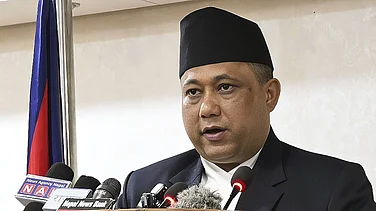
In an interview with The Hindu, Francesca Albanese said India could be breaching international obligations by maintaining defence and political ties with Israel, citing rulings of the International Court of Justice.
Albanese warned that India’s continued engagement risks enabling a broader system of violence.
She argued that torture is “central” to this system and contributes to what she described as the erosion of the international legal order.
In an interview with The Hindu, Francesca Albanese, UN Special Rapporteur on the Occupied Palestinian, criticised India’s engagement with Israel, arguing that New Delhi could be in violation of its obligations under international law. Referring to findings linked to the International Court of Justice, she said the ICJ imposed an obligation on states “not to trade, not to transfer weapons, not to buy weapons from the state which is accused of maintaining an illegal occupation.”
Albanese presented the findings of her report, “Torture and Genocide”, submitted to the UN Human Rights Council, alleging that Israel has employed systematic torture against Palestinians since October 2023. The report describes detention facilities and conditions in Gaza as a “vast torture camp”, documenting over 18,500 arrests, including 1,500 children, and more than 4,000 enforced disappearances.
As for India, she added that when Benjamin Netanyahu is accused of war crimes and crimes against humanity “India is violating its obligations under international law and might even be facing responsibility.”

Albanese also argued that India’s continued political and defence ties with Israel risk enabling the broader system of violence outlined in her report, warning that such associations contribute to what she described as the erosion of the international legal order.
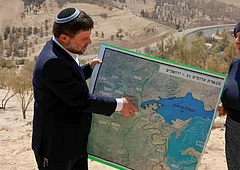


She said that India has its own contradictions to resolve . “Two days before the current war with Iran, Prime Minister Modi visited Israel, upgraded ties to a “Special Strategic Partnership,” and described Israel as the “fatherland” for Indian‑origin Jews,” she said.
In the interview, Albanese drew parallels between India and Israel and historical Palestine, noting that both have roots in British colonial rule and emerged from that legacy. She argued that as members of the United Nations, both countries carry responsibilities within the international system. “It seems to me that in the present, India and Israel are contributing to the decay of the international system that our forefathers or foremothers painfully built,” she said.
Further in the report, Albanese argued that torture is not incidental but central to what she described as a broader system of violence. “Torture is not incidental. It is central to a system, a broader system of violence aiming to destroy the Palestinians as individuals and as a people, as body and mind, as capacity to exist in the future, and even to have a decent memory of their past.”
Addressing policies linked to Itamar Ben-Gvir, she said that “he is the face of this policy institutionalising torture. And torture is the hallmark of this genocide.” The report also highlights allegations of starvation, medical neglect, and sexual violence in detention, which she said have been “normalised”.

On the scale of arrests and disappearances, Albanese said it reflects “the vindictiveness that Israelis have been allowed to unleash against defenceless people behind prison walls”, alleging a pattern of abuse that extends beyond isolated incidents into a systemic practice.
The report further argues that such practices are not confined to prisons but extend across Palestinian territories through surveillance, checkpoints, and restrictions on movement, effectively controlling daily life. According to Albanese, these measures create conditions where Palestinians live under constant coercion both “behind bars and beyond bars”.
Albanese argued that the cumulative evidence of torture, both in detention and in wider society, contributes to establishing intent under international law. “There are countries that criminalise torture, and therefore the victims can sue their perpetrators.Israel has no legal authority to detain the Palestinians,” she said.
Calling for accountability, she noted that avenues remain available for states willing to act, pointing to countries like Colombia, South Africa, Spain, Slovenia, Malaysia, and many other states that have taken legal or diplomatic steps. However, she said that these states are “fighting against a global apartheid mentality, where there is a group of predatory elites having more influence in our democracies than the electorate.”