Telangana has banned cash wage payments and made electronic transfers mandatory for employers.
Gig and platform workers, including those in e-commerce and courier services, are now covered by minimum wage protections.
The state has revised minimum wages, introduced a uniform wage framework and mandated double pay for overtime work.
Telangana has prohibited cash wage payments and extended minimum wage protections to gig and platform workers under a new labour governance framework that came into force on Monday, reshaping how wages are regulated across the state.
The changes, introduced through Government Order (GO) No. 6, operationalise provisions of the Centre's Code on Wages, 2019, and replace the Minimum Wages Act, 1948, in Telangana. According to PTI, the notification introduces a uniform wage structure across sectors, mandates electronic wage payments, revises minimum wages by skill level and location, and expands protections to categories of workers that were previously outside the minimum wage net.
A government statement said, "Payouts via paper cash are explicitly banned. Employers must disburse wages through direct electronic transfer (NEFT/RTGS/IMPS) or bank check, building an unalterable trail for labour inspectors and protecting vulnerable workgroups." By bridging structural business requirements with social protections, the GO (No 6) achieves an "elegant legal balance," it said.

Reported PTI, the notification does away with hundreds of industry-specific schedules and instead classifies all non-agricultural, commercial and industrial establishments under four skill categories — unskilled, semi-skilled, skilled and highly skilled.
For the purpose of fixing minimum wages, the state has been divided into three zones. Zone I comprises Municipal Corporations, Zone II covers Municipalities and Zone III includes rural areas.




Under the revised structure, minimum wages in Zone I have increased across all skill categories. The minimum wage for unskilled labour has risen from Rs 12,750 to Rs 16,000, while semi-skilled workers will receive at least Rs 17,000, up from Rs 13,152. For skilled workers, the minimum wage has increased from Rs 13,772 to Rs 18,500, while highly skilled workers will receive Rs 20,000, up from Rs 14,607.
The order also mandates that any work performed beyond the standard eight-hour shift, or on public holidays and weekly rest days, must be compensated at twice the normal wage rate.
According to PTI, establishments and industrial clusters already paying wages above the new minimum rates will be exempt from the revised wage floors. However, workers in such units will be entitled to an additional mandatory increase of 10 per cent over their existing wages.
The government said the new framework simplifies compliance requirements by replacing hundreds of sector-specific schedules with a single wage matrix, reducing administrative and legal burdens on employers.
It also said the zoning system would allow companies to plan labour-intensive operations, including textiles and manufacturing projects, in lower-cost rural areas while maintaining corporate operations in urban centres.
The government further claimed the GO would "position" Telangana ahead of regional competitors such as Karnataka and Maharashtra through a number of new provisions.
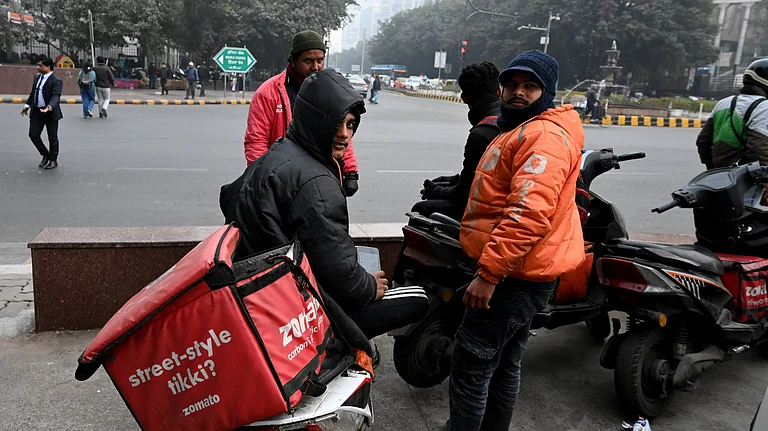
Among them is the formal extension of minimum wage protections to workers engaged in e-commerce, courier services and LPG distribution. PTI reported that the notification also recognises specialised roles such as Drone Technology Pesticide Sprayers under the highly skilled category, ensuring higher minimum wages for such occupations.
The order mandates equal minimum wage rates for male, female, transgender and physically challenged employees performing the same or equivalent work.
It also seeks to close subcontracting-related loopholes by making principal employers directly liable for wage payments if third-party agencies fail to pay workers, ensuring immediate settlement of wages under the law.
(With inputs from PTI)