Donald Trump signals talks, delays strikes within hours after new attacks on Iran.
Trump's threats to “obliterate” Iran contrast with his recent claims of “productive conversations” and de-escalation.
So far, Iranian officials haven’t made any statements, confirming or denying talks between Washington and Tehran. Few Iranian media outlets denied Trump’s claims citing sources.
US President Donald Trump’s recent statements on X on the Iran war have oscillated between aggressive military threats and signals of diplomatic engagement, reflecting an inconsistent messaging strategy amid escalating tensions in West Asia.
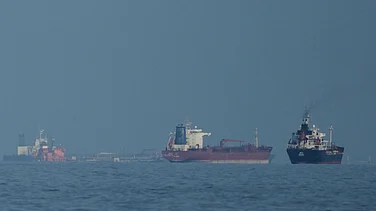
Trump’s earlier 48-hour deadline to Iran to reopen the Strait of Hormuz, or face intensified military attacks, was about to end on Tuesday morning, March 24. Amid this, he has now declared that military strikes on Iran have been postponed for five days.
Trump also said that there had been “very good and productive conversations” and expressed hope for “a complete and total resolution of our hostilities in the Middle East,” even as reports indicated a temporary pause in planned US strikes on Iran’s energy infrastructure.
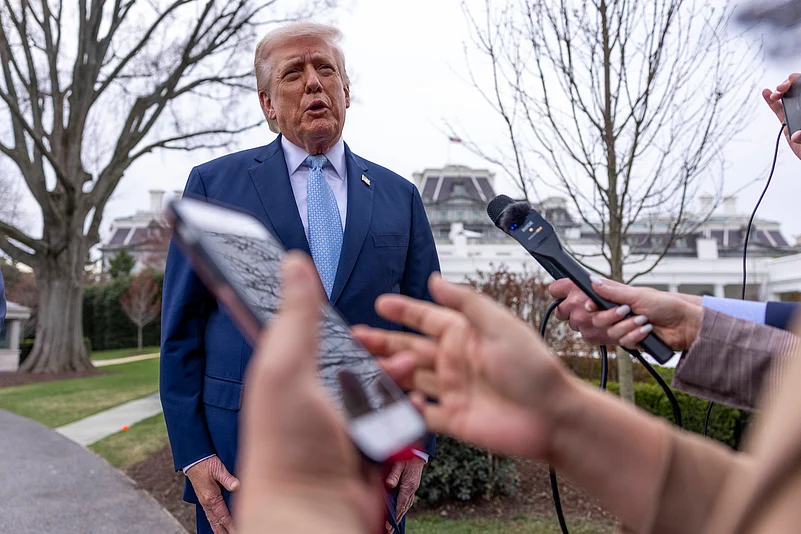
“I am pleased to report that the United States of America and the country of Iran have, over the last two days, had very good and productive conversations regarding a complete and total resolution of our hostilities in the Middle East. Based on the tenor and tone of these in-depth, detailed, and constructive conversations, which will continue throughout the week, I have instructed the Department of War to postpone any and all military strikes against Iranian power plants and energy infrastructure for a five-day period, subject to the success of ongoing meetings and discussions,” Trump said in his statement on X on March 23, 2026.


However, later on March 23, around 4 pm IST, he said, “U.S. and Israel have launched a new wave of major strikes on Iran,” contradicting his own statement shared a day earlier (March 22) on X in which he said, “Peace through strength, to put it mildly.”
Three days earlier, Trump had warned of severe retaliation, threatening to “obliterate” Iran’s power plants if key maritime routes, including the Strait of Hormuz, were not reopened.
His earlier posts during the conflict projected a posture of dominance, claiming, “Their air defence, Air Force, Navy, and leadership are gone,” and dismissing potential negotiations with the remark: “They want to talk. I said, ‘Too late!’”
Trump also issued direct warnings to Iranian forces, urging them to surrender with assurances of “total immunity,” while cautioning that refusal would result in “absolutely guaranteed death.”
The contrasting tone of these statements underscores a volatile communication strategy, blending coercive threats with intermittent overtures toward negotiation. It raises questions about the negotiations and creates confusion among the public.
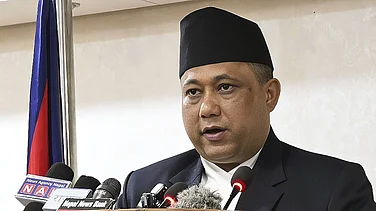
However, Iran’s Fars News Agency, citing a source, denied any contact with the US president, Al Jazeera reported.
Iran’s semi-official Mehr News Agency carried a statement from Iran’s Foreign Ministry saying that there is no dialogue between Tehran and Washington.
Iran’s Foreign Affairs Minister, Abbas Araghchi, has not made any statement supporting or denying claims made by the White House regarding de-escalation.
According to media reports, Iran’s Foreign Ministry suggested that Trump’s comments aim to reduce energy prices and buy time to implement military plans, the statement said. It added that there are “initiatives” by regional countries to reduce tensions, but that their concerns should be referred to Washington, “the party that started this war.”
The claims could not be independently verified, and there has been no immediate comment from Iranian officials.