George Orwell feared that governments would control us through harsh censorship and constant surveillance
Aldous Huxley predicted that we would be dulled by mindless consumption and endless distractions
Big Brother is watching, Orwell warned us. Big Tech is watching, we now know
The two chief oracles of modern dystopia—Aldous Huxley who wrote ‘Brave New World’ in 1931 and George Orwell, whose classic ‘1984’, was published 17 years after Huxley’s novel—got plenty of things right about our present. In Huxley’s imagined future, the powers that be control people by dulling them with distractions, drowning out the truth in a barrage of trivial information, and encouraging endless consumption. Forget freedom.
Forget speaking truth to power. Here’s social stability and prosperity instead. “And that is the secret of happiness and virtue,” declares ‘Brave New World’s’ Mustapha Mond. “Liking what you’ve got to do.” Orwell looked through the glass darkly and foresaw a future in which governments control citizens through constant surveillance, censorship, and denial of individual freedoms. He famously predicted, “If you want a picture of the future, imagine a boot stamping on a human face—forever.”
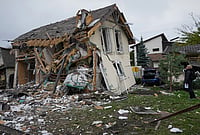
And so, here we are, decades later, face-to-face with a reality that mirrors both Orwell and Huxley’s fictional futures. A few nights ago, as the US-Israel-Iran war was rocking West Asia and news of every blast and every bombing was being broadcast across the world, a reel starring some American teenagers popped up on social media. The 19-year-olds were all set for Spring break. The reel-maker had just one question for them: what’s the most important thing on your mind right now? Their answers wouldn’t have surprised Aldous Huxley. In his ‘Brave New World’, everyone is drunk on ‘soma’, the drug that keeps the citizens of the World State comfortably insulated from reality. Huxley’s futuristic novel is set in 2540 CE. What ‘soma’ did, the internet, smartphones and a barrage of digital distractions seem to be doing today. In the above-mentioned reel, as missiles streaked across war-torn skies and buildings crumbled into dust, the teenagers rattled off their topmost concerns: ‘My bikini tan’. ‘How much alcohol am I gonna drink?’ ‘Why can’t Spring break be longer?’ Makes you think the future Huxley foresaw wasn’t all that fictional!


Big Brother is watching, Orwell warned us. Big Tech is watching, we now know. Propagandistic ‘Newspeak’ will corral our vocabulary and our capacity for free thought, Orwell predicted. Political language designed to make “lies sound truthful and murder respectable”, will flow freely. The Party, a.k.a. the powers that be, will use doublespeak. ‘War is peace’. ‘Freedom is slavery’. ‘Ignorance is strength’. Dissent will be policed to the point of extinction. A few almighty entities will control the media landscape, propaganda will drown out free speech and throttle critical thought, unconventional ideas will be brutally stamped out by the state.
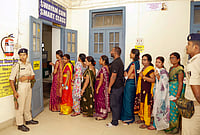
“Security has become surveillance and surveillance is rampant in India today,” says social scientist and academic Shiv Visvanathan. “Individuals are monitored; dissent is monitored; democracy is turned into a surveillance society. And it is becoming more tyrannical,” he warns. Intolerance to criticism of those in power has peaked. Activists, academics, lawyers, students, journalists, doctors—anyone who raises questions about politicians or mighty corporates—faces threats, harassment, and jail sentences without trial or bail in some instances. ‘Orwellian’, the word that lodged itself in the public imagination since ‘1984’ was published, has become an apt descriptor of life in our time.
In Huxley’s imagined future, citizens are conditioned from birth to accept their position in the social hierarchy. Technology, productivity and efficiency triumph over emotions and individual freedom. Children are created at the Central London Hatchery and Conditioning Centre. Cloning guarantees population growth. People’s yearning for freedom is smothered using the promise of instant gratification and pleasurable distractions. Keeping everyone docile and drugged with ‘soma’ ensures that no uncomfortable questions are raised against the regime. In Orwell’s futuristic universe, books are banned, information withheld, language itself made a prisoner of the powerful. In Huxley’s World State, there is no call to ban books because people have no interest in reading them. The World State society is flooded with information. Wave after wave of information washes over them, but the residents are too distracted to pay attention or to parse through it. Dulled by ‘soma’ and distracted to death by trivia, they stay complacent, ever willing to serve the status quo.
Governments who practice thought control, inflict pain, punish dissent, enforce violent disciplinary measures: that’s Orwell’s nightmare; “the boot in the face” scenario he so convincingly conjured in ‘1984’. The Party which heads the totalitarian state of Oceania in ‘1984’ aggressively rewrites history, distorting the past to align with its current doctrine. The Party claims it controls ‘all records’ and ‘all memories’. Employees of the Ministry of Truth ‘revise and update’ historical records, archived speeches, photos and newspaper reports at Big Brother’s command. The Party’s motto guides their every move: ‘Who controls the past controls the future. Who controls the present controls the past.’ Whatever the Party says about the past and the present is passed off as the truth.
Rulers who use “infant conditioning and narco-hypnosis” as tools of governance, governments who find effective ways to condition people into loving their servitude: that’s Huxley’s nightmare.
In cultural critic Neil Postman’s book, ‘Amusing Ourselves to Death’ (1985), he wrote, “Orwell feared we would become a captive culture. Huxley feared we would become a trivial culture…” So, who got it right: Huxley or Orwell? It’s not a winner-takes-it-all contest. We hear echoes of the futures the two writers predicted—one, in between the two Worlds Wars; the other, in a post-War world ravaged by Nazism and Stalin’s state terror excesses—ringing out loud and clear in the present.
Overreliance on technology, the spectre Huxley railed against, is a pressing concern now. Academic and novelist Saikat Majumdar says, “Artificial intelligence (AI) and genetic engineering have the power to play God and to try and create a perfect world.” But machines, which have no subjectivity, end up weeding out surprises and homogenising everything. “That perfection is the ultimate dystopia,” Majumdar points out.
The drive of the powerful to flatten differences and to suppress minority voices runs deep in the current climate. In the United States, PEN America’s records show that around 23,000 books have been banned in public schools across the country since 2021. In the 2024-25 school year alone, 6,870 instances of book bans were recorded. Conservative groups mainly target books featuring people of colour, LGBTQ+ people and issues, and books that delve into race and racism. Some books for adult readers with sexual references also come under fire.
When governments start to sanitise language and are hellbent on distorting it to suit their agenda, citizens must watch out, cautions Visvanathan. “Media freedom is a myth today,” he says. “Corporatisation of the Indian media has led to the banalisation of serious issues.” He sees Huxley’s imagined future come to life in front of our eyes: mainstream media narratives that only serve the power elite, passive consumers of news who unquestioning swallow them, and the ‘ironic transformation of democracy’ into a dictatorship that foretells a bleak future. Majumdar harks back to Orwell’s ‘Newspeak’ and the assault on the realm of language he predicted. “Orwell was talking about governments systemically impoverishing the vocabulary of citizens,” Majumdar says. “He painted a chilling picture of the shrinkage of vocabulary. If words like independence and free speech are removed from our vocabulary, if we lose the words, we lose the ability to think about freedom itself.”