BJP and CPI(M) leaders requested the Election Commission to hold the Assembly elections in one or two phases
The Trinamool Congress delegation expressed dissatisfaction after the meeting but said its priority was raising public concerns
Political parties also urged the EC to ensure strong security measures, prevent voter intimidation and curb the use of illegal weapons
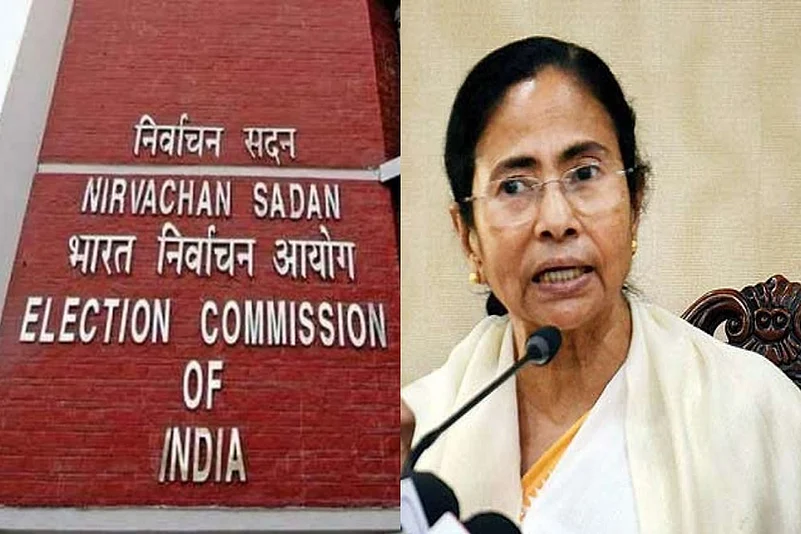
The Election Commission met representatives from various political parties in West Bengal where the leaders from various parties have requested the Election Commission to hold the upcoming Assembly polls in no more than two phases.
The representatives from the BJP and CPI(M) have urged the Election Commission to hold the polls in either one or at most two phases. The representatives from the BJP and CPI(M) have expressed their choice to hold the polls in no more than two phases while meeting with the Election Commission, led by Chief Election Commissioner Gyanesh Kumar.
Apart from this, the full bench of the EC has scheduled meetings with the election officials and the top administrative and police officials of the state on Monday and Tuesday.
The delegation of the Trinamool Congress, comprising the state ministers Chandrima Bhattacharya and Firhad Hakim, along with the former DGP and Rajya Sabha nominee Rajeev Kumar, expressed their displeasure over the meeting.
"We are not satisfied at all," said Chandrima Bhattacharya. "The Chief Election Commissioner raised his voice during the meeting. How can he speak in that way to a minister, especially a woman?"
The TMC leaders did not comment on whether the polls would be conducted in one or two phases. Bhattacharya said that the party was focused on raising issues that the public was interested in rather than the number of days for the polls.


For over a decade, elections in West Bengal are conducted in multiple phases. Still, there have been some cases of violence both before and after the polls. The Lok Sabha elections held in West Bengal in 2014 took place in five phases.
The Assembly elections held in West Bengal in 2016 took place over two days in the first phase, followed by five other phases. The Lok Sabha elections held in West Bengal in 2019 and 2024 took place over seven phases, whereas the Assembly elections held in the state in 2021 took place over eight phases, the highest number of phases so far.
Pradip Bhattacharya, a leader of the State Congress party, however, asserted that the main concern for the Congress party was to conduct the elections in a peaceful manner. “We are not particular about whether the voting takes place in one, two, or three days. Our only concern is that the elections must be peaceful.”
BJP leader Shishir Bajoria reaffirmed the party’s previous assertion that the elections must be over in a single phase for all the 294 Assembly seats, or must not extend to more than two phases. He also expressed the party’s dissatisfaction over the deployment of the Central Armed Police Forces in the previous elections.
Mohammad Salim, the state secretary of CPI(M), also agreed with the assertion that the elections must be over in a single phase or two phases. He asserted that the prolonged period for the elections allowed the administration as well as the strongmen in the area to influence the elections.
He referred to the death of a child during the counting process in the previous Lok Sabha elections, questioning whether any election officials had filed a formal complaint. Salim also criticised the Special Intensive Revision (SIR) of the electoral rolls in the state, describing it as an anti-people exercise.
The meeting was attended by representatives of several parties, including the TMC, BJP, CPI(M), Congress, AAP, NPP and the Forward Bloc. Chief Election Commissioner Gyanesh Kumar was accompanied by Election Commissioners Sukhbir Singh Sandhu and Vivek Joshi, along with West Bengal Chief Electoral Officer Manoj Agarwal. The discussions took place at a hotel in New Town near Kolkata.
An EC official said that a wide range of election-related issues were raised during the discussions. Several parties recommended limiting the election to one or two phases and assured the commission of their cooperation in maintaining peace during the polls.
Political representatives also called for strict action against anti-social elements and measures to prevent intimidation of voters. They emphasised the importance of robust security arrangements, including the adequate deployment of Central Armed Police Forces, to ensure that voters can cast their ballots without fear.
Some parties also expressed concerns about the possible use of crude bombs, illegal firearms and the influence of money or muscle power during the elections.
During the meeting, Kumar assured the parties that the elections would be conducted strictly in accordance with the law and that all necessary steps would be taken to ensure a free, fair and transparent process.
“The Election Commission has zero tolerance for violence. We will take every possible step to guarantee impartial, transparent and peaceful elections,” he said.
He also maintained that the SIR exercise had been carried out in a transparent and unbiased manner, adding that Forms 6, 7 and 8 could still be submitted for the inclusion, deletion or correction of entries in the electoral rolls.