






Youth aged 21–40 who have passed Class 10 will receive ₹1,500 per month starting 7 March.
The payment date was advanced from 1 April as a gesture ahead of International Women's Day.
Banerjee claimed unemployment in West Bengal has fallen by 40% and highlighted ongoing skill training programmes.
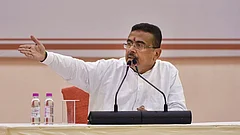
West Bengal Chief Minister Mamata Banerjee has announced a monthly allowance of ₹1,500 for unemployed young people in the state, saying the measure is intended to support them in becoming self-reliant.
The announcement was made on the eve of International Women's Day (8 March) during her address at a sit-in protest against what she described as the large-scale removal of voters’ names by the Election Commission of India during the Special Intensive Revision of electoral rolls in West Bengal. The decision is politically significant as it comes ahead of the state’s upcoming Assembly elections.
Eligibility for the allowance
Banerjee said the scheme will benefit young men and women aged between 21 and 40 who have passed the secondary examination (Class 10). Eligible individuals will receive ₹1,500 each month starting from 7 March.
She explained that the payment was initially scheduled to begin on 1 April but was brought forward as a gesture marking International Women’s Day. According to the chief minister, applicants must not be receiving benefits from other government schemes, except scholarships. Around one crore people in the 21–40 age group have reportedly applied for the programme.
Claims on employment and training
Banerjee stated that the unemployment rate in West Bengal has fallen by about 40 per cent under her government. She said approximately 40 lakh people have received skill training, with nearly 10 lakh already finding employment.



The state government has linked job seekers trained under the Utkarsha Bangla programme with industrial employers through integrated digital platforms, she added. Opportunities are also expected to extend to migrant workers, including trainees in the jute industry, where about 10,000 people are currently undergoing training and are likely to be absorbed into jobs.
The chief minister also highlighted financial support for landless farmers, noting that they now receive ₹4,000 under state schemes. She further claimed that West Bengal leads the country in small and medium-scale industries, with about 1.5 crore people employed in that sector.
Remarks on governance and political developments
During the protest, Banerjee also commented on recent political developments following the resignation of West Bengal Governor C. V. Ananda Bose from Lok Bhavan. She alleged that the move came under pressure from the central government and suggested that the Governor’s residence might be used as a political base ahead of the elections.
She also criticised the appointment of R. N. Ravi, currently serving as Governor of Tamil Nadu, as Bose’s successor in West Bengal. Banerjee argued that political strategies applied in other states would not necessarily succeed in West Bengal.
The chief minister further accused the central government of undermining constitutional institutions by frequently replacing Governors before the completion of their terms. She referred to former West Bengal Governor Jagdeep Dhankhar, who later became Vice-President of India, as an example of this pattern.
In a pointed remark, Banerjee compared the Centre’s functioning to the rule of Muhammad bin Tughlaq, a historical figure often invoked in political debate to criticise erratic decision-making. She warned that attempts to pressure political opponents would be resisted and could ultimately weaken the ruling party at the national level.
















