US Vice President JD Vance said no agreement was reached and said Iran rejected Washington’s terms, particularly on nuclear guarantees.
Iran said progress depended on US good faith, sanctions relief, and recognition of Tehran’s legitimate rights and interests.
Pakistan was praised by both delegations for hosting and attempting to bridge differences during the talks.
Negotiations between the United States and Iran ended without a breakthrough after 21 hours, despite intensive discussions mediated by Pakistan. The two sides failed to reach an agreement after marathon talks that stretched into a second day.
US Vice President JD Vance said: “We have been at it now for 21 hours, and we have had a number of substantive discussions, that’s the good news. The bad news is that we have not reached an agreement.” He added that Washington had made its position clear, but Iran had “chosen not to accept our terms”.
US Position
Vance said the US delegation remained in regular contact with President Donald Trump throughout the talks.
“We were talking to the president consistently. I don’t know how many times we talked to him, a half dozen times, a dozen times over the past 21 hours,” he said.
“The president told us, ‘You need to come here in good faith and make your best effort to get a deal’. We did that, and unfortunately, we weren’t able to make headway.”
When pressed for the reason why Iran refused to agree, Vance did not reveal the exact details. However, it became clear that the US administration expected definite assurances from Tehran that they would not produce any nuclear weapons.



“The bottom line is that we must receive a positive assurance that they will not attempt to develop nuclear weapons and that they will not develop the capacity to develop nuclear weapons,” Vance said. “That is the core goal of the president of the United States, and that’s what we’ve tried to achieve through these negotiations.”

Iran’s position
According to Tehran, the negotiations lasted long and covered many important aspects. The spokesperson for the Iranian Foreign Ministry, Esmaeil Baqaei, appreciated Pakistan’s hospitality and stated, “Today has been a busy day for the delegation of the Islamic Republic of Iran in Islamabad.”
As he explained, the negotiations started at Saturday morning and lasted uninterrupted, with “many text messages” being sent between the two delegations.
According to Baqaei, the topics under discussion included the Strait of Hormuz, the issue of Iran’s nuclear program, war compensation, lifting of sanctions, and the conclusion of the war against Iran in general.
He added that the Iranian team was using all its “capabilities, experience, and knowledge” to safeguard the country’s rights and interests.
Baqaei said progress would depend on the other side showing seriousness and good faith, avoiding excessive demands and unlawful requests, and recognising Iran’s legitimate rights and interests.
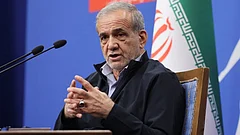
Iranian President Masoud Pezeshkian said the delegation remained “fully committed” to defending national interests and hoped it would “negotiate courageously”. He added that whatever the outcome, the government would “stand by its people”.
Both sides praised Pakistan’s role in hosting the talks, thanking Prime Minister Shehbaz Sharif and army chief Field Marshal Asim Munir, with Vance describing them as “incredible hosts”.
“We express our appreciation to the government and the warm-hearted and noble people of the Islamic Republic of Pakistan for hosting the negotiations and their benevolent efforts in advancing this process,” wrote Baqaei on X.
“Whatever shortcomings of the negotiation, it wasn’t because of the Pakistanis, who did an amazing job and really tried to help us and the Iranians bridge the gap and get to a deal,” said Vance.