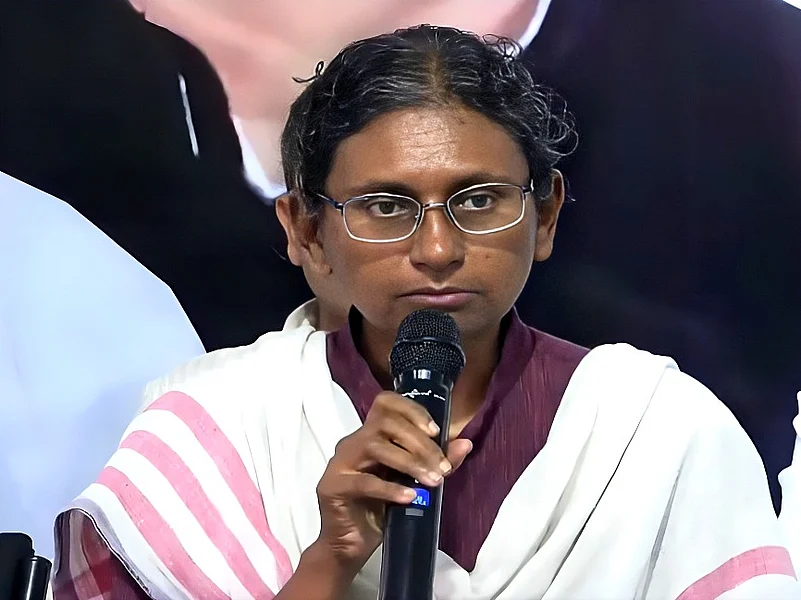
Supreme Court dismissed Meenakshi Natarajan's plea against the rejection of her Rajya Sabha nomination papers.
The court held that election-related disputes must ordinarily be challenged through an election petition.
Natarajan remains free to raise her challenge before the competent High Court under election law.
The Supreme Court on Friday dismissed Congress leader Meenakshi Natarajan’s plea challenging the rejection of her nomination papers for the Rajya Sabha election from Madhya Pradesh, holding that she can pursue the matter through an election petition after the election process.
According to PTI, the court reiterated that Article 329 of the Constitution bars judicial interference in electoral matters during the election process and that disputes arising from elections must ordinarily be addressed through the remedies provided under election law.
According to PTI, a bench of Justices Prashant Kumar Mishra and Atul S Chandurkar rejected submissions by senior advocate Abhishek Singhvi, appearing for Natarajan, that Article 32 of the Constitution could be invoked to cure "glaring and manifest" errors in the rejection of her nomination.
The bench said that whenever attempts have been made to invoke the jurisdiction of the Supreme Court under Article 32 or that of High Courts under Article 226 during the election process, courts have repeatedly declined interference because of the constitutional mandate contained in Article 329(b).
"If the court accepts arguments to find out glaring cases which are required to be interfered under Article 32/226, and the other sets of cases, where the rejection is not so improper prima facie to relegate them to election petitions, this court would be reading some principle which is not provided for under Article 329.



"We are afraid, that any such interpretation that in some of the matters this court can interfere while leaving some others to avail the remedy of election tribunal cannot be encouraged," the bench said.
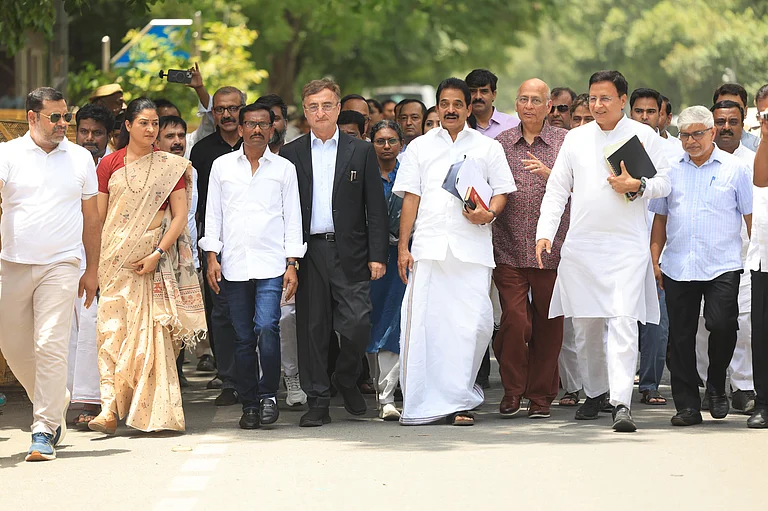
Article 329 of the Constitution bars courts from interfering in electoral matters, ensuring elections proceed without judicial delays.
The apex court also declined to accept Singhvi’s submission that it should intervene where the rejection of a nomination is ex facie illegal, manifestly arbitrary and demonstrably erroneous.
"To accept the petitioner's submission would amount to reading into the constitutional scheme an exception which has not been provided by the Constitution itself," it said.
The court clarified that any observations made in its order regarding the basis of rejection of Natarajan’s nomination were only for the purpose of considering the maintainability of the proceedings.
"Nothing stated herein shall affect the rights and contentions of the petitioner, or of any other person, in any election petition that may be filed before the competent High Court in accordance with law," the bench said.
At the outset, Singhvi submitted that the returning officer had acted completely arbitrarily. Referring to Section 33A of the Representation of the People Act, he argued that only criminal cases in which charges have been framed by a trial court are required to be disclosed in nomination papers.
PTI reported that Singhvi also referred to Section 223 of the Bharatiya Nagarika Suraksha Sanhita and submitted that a prospective accused must be served notice before a court takes cognisance of a private complaint.
He argued that Natarajan had only received a notice under Section 223 and that the court had neither taken cognisance of the complaint nor framed charges against her.
Without cognisance, there is no criminal proceeding in the eyes of law, he said.
At this juncture, the bench observed that a court issues summons only after applying its mind and finding a prima facie case.
Singhvi further submitted that good governance requires electoral processes to function according to law.
"The Election Commission's role is to facilitate elections, not to frustrate them. Equally, judicial review of an order passed by the Election Commission should facilitate the democratic process rather than impede it," he said.
Senior advocate Mukul Rohatgi, appearing for the successful candidate, submitted that the right to contest an election has consistently been held by the Supreme Court to be a statutory right and not a fundamental right.
Questioning the maintainability of the plea under Article 32, Rohatgi argued that Article 329 creates a constitutional bar.
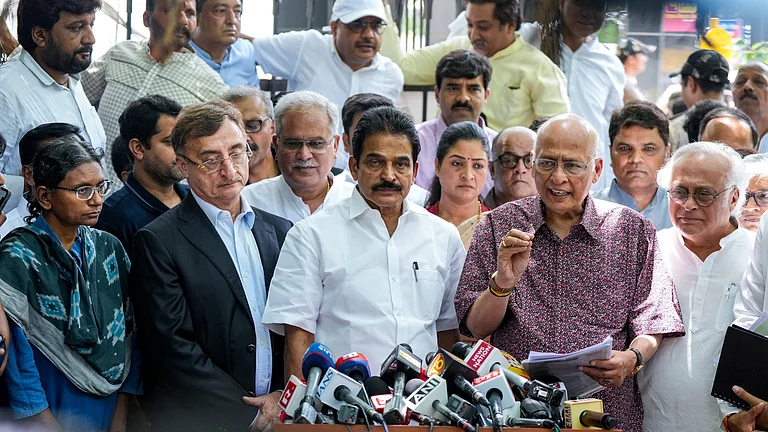
"The effect of Article 329 is that the remedies under Articles 32 and 226 stand excluded in matters relating to elections," he said.
Rohatgi further submitted that the constitutional scheme requires any challenge to ordinarily await the completion of the election process and be raised through the election law mechanism.
According to PTI, Solicitor General Tushar Mehta, appearing for the Madhya Pradesh government, told the court that the state government was supporting the other contesting candidate.
Senior advocate D S Naidu, appearing for the Election Commission, referred to Section 100 of the Representation of the People Act, 1951, and submitted that the Election Tribunal has exclusive jurisdiction to deal with election disputes.
He argued that non-disclosure of information required under Clause 5 of Form 26 would render the affidavit incomplete and justify rejection of a nomination.
An order issued by Rajya Sabha election returning officer Arvind Sharma stated that, after examining the available documents, it was found that Natarajan had submitted an incomplete affidavit by omitting details of a court complaint in Form 26 filed along with her nomination papers.
PTI reported that a Madhya Pradesh Assembly official said BJP candidate Mahesh Kewat had filed a complaint before the returning officer alleging that Natarajan had failed to mention in her affidavit a case registered against her in Telangana.
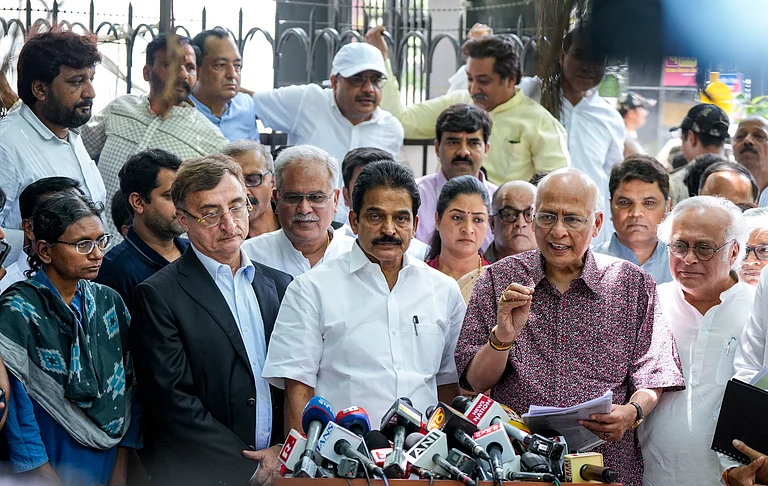
Following scrutiny of the nomination papers, the returning officer on Thursday declared all three BJP candidates elected unopposed.
(With inputs from PTI)