President Trump and oil executives are strategising to maintain a naval blockade of Iran while mitigating the impact on American petrol prices.
The Pentagon reports the two-month conflict has cost $25 billion as Iran’s economy faces record inflation and a currency collapse.
The U.S. is pushing for an international "Maritime Freedom Construct" coalition to secure shipping lanes against Iranian disruption.
President Donald Trump held discussions with oil executives on Tuesday to strategise on maintaining a prolonged naval blockade of Iranian ports while attempting to shield American consumers from surging energy costs. The meeting comes as the White House intensifies its "Maritime Freedom Construct" initiative, urging international allies to help reopen the Strait of Hormuz amidst a deepening military and economic deadlock.
According to Reuters, the Brent crude contract surged more than 6% on Wednesday, hitting a one-month high as markets reacted to the prospect of a months-long blockade. The Pentagon provided its first official cost estimate for the two-month conflict, placing the military price tag at $25 billion so far.
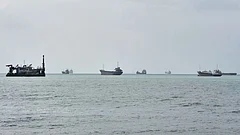
The U.S. naval blockade aims to squeeze Iran’s oil exports to force a reopening of the Strait, which Tehran has largely closed to non-Iranian traffic since U.S. and Israeli airstrikes began on 28 February. In response, Tehran warned on Wednesday of "unprecedented military action" against the disruption of Iran-linked vessels.
While Washington and Tehran exchange threats, Pakistan has stepped in as a mediator. A Pakistani source told Reuters that Islamabad is attempting to prevent further escalation while the two sides trade messages regarding a potential deal. "The Iranians asked for time till the end of the week" to respond to U.S. observations on their latest proposal, the source noted.


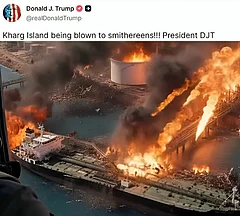
Trump remains firm on his prerequisite for a nuclear agreement. "They don't know how to sign a non-nuclear deal. They'd better get smart soon!" the President posted on Truth Social. The post included a mock-up image of Trump in dark glasses holding a machine gun with the caption, "No more Mr. Nice Guy."
The diplomatic impasse centres on sequencing; Iran’s latest offer suggests delaying nuclear discussions until the conflict formally ends and shipping lanes are cleared. Trump, however, demands the nuclear issue be addressed immediately. Iran currently holds approximately 440 kg of uranium enriched to 60%. Reported Reuters, the Iranian leadership continues to demand acknowledgement of its right to enrich uranium for what it maintains are peaceful purposes.
The internal stability of Iran appears increasingly strained. Since the strikes killed several high-ranking figures, including Supreme Leader Ayatollah Ali Khamenei, power has shifted toward hardline Revolutionary Guard commanders following the elevation of Khamenei’s son, Mojtaba.
Domestic pressure is also mounting within Iran. Reuters reported that the Iranian currency fell to a record low on Wednesday, with inflation reaching 65.8% for the month ending 20 April. Furthermore, U.N. human rights chief Volker Turk stated that Iran has executed at least 21 people and arrested over 4,000 on national security charges since the war began.
In Washington, Trump is facing his own domestic hurdles. As gasoline prices rise, his approval rating has hit its lowest point of the current term. On Thursday, the President is scheduled to be briefed by the leader of U.S. Central Command on new plans for potential military action.
Meanwhile, the State Department is lobbing for a coalition to enforce sanctions and coordinate diplomacy. While France and Britain have engaged in talks, they have indicated a willingness to assist in opening the waterway only after active hostilities have ceased.
(With inputs from Reuters)