






Myanmar’s military-backed USDP secured a large parliamentary majority as final rounds of voting concluded.
Junta chief Min Aung Hlaing dismissed foreign criticism despite low turnout and an opposition boycott.
Rights groups and several countries rejected the election amid continued fighting and air strikes.
Myanmar’s junta chief Min Aung Hlaing on Sunday rejected international criticism of the country’s general election as final rounds of voting were held, with the military-backed Union Solidarity and Development Party (USDP) poised for a landslide victory despite low turnout and the absence of major opposition groups.
According to Reuters, the USDP has already secured an overwhelming majority in earlier rounds of voting, winning 193 of 209 seats in the lower house and 52 of 78 seats in the upper house after polls held on December 28 and January 11. Voter turnout stood at around 55% in both rounds, significantly lower than the roughly 70% recorded in the 2020 and 2015 elections.
Sunday’s voting marked the final phase of polls that the military has presented as a step towards restoring democratic rule following the February 2021 coup. However, major opposition parties have boycotted the election amid an ongoing civil war triggered by the military’s seizure of power.
The United Nations, rights groups and the United Kingdom have described the polls as a sham designed to entrench military rule. Malaysia, which chaired the 11-member Association of Southeast Asian Nations (ASEAN) last year, has said the bloc would not endorse the election, Reuters reported.
“Whether the international community recognises this or not, we don’t understand their perspective. The people’s vote is the recognition we need,” Min Aung Hlaing told reporters on Sunday, according to video broadcast on state television.


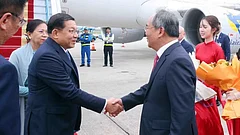
The military has maintained that the election was conducted without coercion and reflects public support for its rule. On Sunday, voting took place in around 60 townships, including the major cities of Yangon and Mandalay.
Images carried by domestic media showed Min Aung Hlaing, dressed in civilian clothes, visiting a polling station in Mandalay earlier in the day, where the atmosphere appeared calm.
The 69-year-old general, who also serves as acting president, has indicated he may appoint a successor as armed forces chief and move into a formal political role, a source told Reuters. Asked about his future position in the next government, Min Aung Hlaing said it was too early to say.
“Once the Parliament is convened, they have their own procedures and methods for selection,” he said.
While the junta has portrayed the election as a success, residents in Myanmar’s largest cities described a climate of fear surrounding the vote. Several people told Reuters that many citizens felt pressured to participate to avoid possible arrest or retaliation.
One Yangon resident said polling stations in neighbourhoods housing army officers and their families appeared to see higher turnout on Sunday, while few voters were visible in other areas.
Myanmar’s military seized power in a dawn coup on February 1, 2021, detaining the elected civilian government led by Nobel Peace Prize laureate Aung San Suu Kyi. The 80-year-old remains in detention, and her National League for Democracy has been dissolved by the junta, along with several other opposition groups.
Fighting continued throughout the election campaign and earlier rounds of voting in many parts of the country, Reuters reported. Air strikes were carried out near civilian areas in border states including Rakhine, Shan and Kayin, according to the news agency.
The USDP, formed in 2010, previously governed Myanmar for five years following the end of an earlier military regime. The party is chaired by a retired brigadier general and includes numerous former senior military officers.
Myanmar’s armed forces, which have ruled the country for most of the past six decades, show little sign of withdrawing from political leadership, analysts say.
“Rather than resolving a crisis now in its fifth year, the vote is more likely to reinforce the military’s hold on power, with little prospect of restoring domestic legitimacy or improving the country’s standing with Western partners,” said Kaho Yu, Principal Asia Analyst at risk intelligence firm Verisk Maplecroft.
Using an election protection law, the junta has charged more than 400 people for criticising or obstructing the election process, state media said, according to Reuters.
(With inputs from Reuters)















