Trump said the US was “dealing with the man who is most respected” in Iran, without naming him
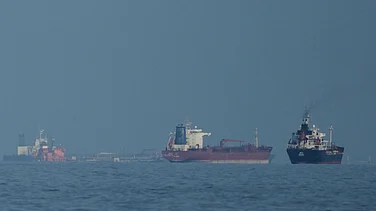
With the Iranian regime closing the Strait of Hormuz, the US's best bet is to place an ally in power
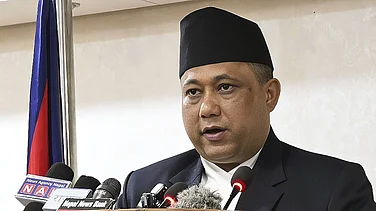
Rouhani was dubbed by Iranian state media as the “diplomat sheikh” due to his prowess for negotiations
In the ongoing war in West Asia, Iran has experienced a leadership void since Ayatollah Ali Khamenei was killed in the joint US-Israel military strikes. A void that was quickly filled by his son, Mojtaba Khamenei. However, US President Donald Trump is displeased with the election of the new Supreme Leader, as he had told the press that the US should have a role in determining the head of the Iranian state, and even claimed to have a list of potential candidates for the role in early March.
In a more recent development, Trump said on Monday that the US was having “very strong talks” and was “dealing with the man who is most respected” in Iran, but declined to name him.
As the conflict continues to impact the world with the Iranian regime closing the Strait of Hormuz, the US's best bet is to place an ally in power. Among the many candidates speculated to be of interest to Trump, such as Reza Pahlavi, the son of the ousted Shah, is Iran’s former President Hassan Rouhani.




Who is Hassan Rouhani?
Born in 1948, Rouhani served as President of Iran from 2013 to 2021. He is best known for his role in the negotiations over Iran’s nuclear programme.
Rouhani’s political career grew steadily from being an ardent supporter to eventually becoming President.
Hailing from Semnan province, he entered religious studies at a seminary in 1960 and later joined the opposition movement led by Ruhollah Khomeini. In 1977, facing the threat of arrest under the Shah’s regime, Rouhani left Iran and joined Khomeini in exile in France. After the revolution overthrew the monarchy in 1979, he quickly emerged as a significant figure in the new Islamic Republic, serving five terms in Iran’s parliament between 1980 and 2000 and holding key roles in the country’s security establishment.
Over the 1980s and 1990s, Hassan Rouhani established himself as a key national security figure. He served on Iran’s Supreme Defence Council during the Iran-Iraq War and later became deputy commander of the armed forces and commander of Iran’s air defences. He earned a spot in the council of experts, which is in charge of choosing the Supreme Leader.
Later, Rouhani served as secretary of the Supreme National Security Council and also served as national security adviser to the president, representing Supreme Leader Ali Khamenei. He later served as Iran’s chief nuclear negotiator between 2003 and 2005, leading talks with Western powers over Tehran’s nuclear programme.
The pragmatic President
Rouhani won the elections and became President in June 2013 with more than 50 per cent of the vote, positioning himself as a pragmatic leader seeking greater engagement with the international community. His presidency was defined largely by negotiations that produced the 2015 nuclear agreement, the Joint Comprehensive Plan of Action, reached with world powers including the United States under Barack Obama. Rouhani was re-elected in 2017, but his later years in office were dominated by tensions after the United States withdrew from the deal under Donald Trump and reimposed sanctions on Iran. His presidency ended in August 2021 when Ebrahim Raisi took office.
In 2024, state media reports Rouhani has been banned from running for reelection to the country’s Assembly of Experts.
The Diplomat Sheikh
Rouhani was dubbed by Iranian state media as the “diplomat sheikh” due to his reputation for negotiations internationally.
Between 2003 and 2005, Rouhani headed Iran’s negotiating team in talks with the International Atomic Energy Agency and global powers over the country’s nuclear programme. During these negotiations, he earned a reputation among Western diplomats as a pragmatic and moderate figure. However, some hardliners within Iran criticised the concessions made during the talks, including allowing expanded inspections and temporarily halting uranium enrichment.
His diplomacy, however, did not stand in the way of enhancing Iran’s nuclear programme. In his 2013 UN assembly speech, the then-Iranian President said, “Iran has a right to pursue a nuclear programme for peaceful purposes”. The Iranian leader also said he is open to transparent, immediate dialogue with the U.S. and the West about Iran's nuclear programme.
Rouhani was a key moderate figure behind the 2015 Joint Comprehensive Plan of Action, an agreement that limited Iran’s nuclear programme in exchange for relief from international sanctions. He strongly backed the deal as a way to ease Iran’s economic pressures and improve relations with the global community.
However, after the United States withdrew from the agreement in 2018 under Donald Trump and reimposed sanctions, Rouhani’s government gradually scaled back Iran’s commitments to the deal while insisting the country remained open to diplomacy.
US Relations
Even though Rouhani is not a hardliner cleric, he has voiced his concerns with the US on several occasions. These relations only worsened when the Trump administration withdrew from the deal in 2018 and imposed sanctions.
Rouhani has not been in the public eye since losing the election. However, he remained active on X until 2020. His last few posts were regarding the assassination of the influential Iranian General Soleimani by the US. The Pentagon claimed that the general was behind the killing of dozens of American soldiers. Trump had ordered the drone strike in Baghdad that killed Soleimani.
Enraged by the assassination, Rouhani honoured the late general and promised that Iran would get its revenge on X, “Our final answer to his assassination will be to kick all US forces out of the region.”
While relations with the US and especially Trump are of a slightly volatile nature with Rouhani, the former Iranian president remains one of the more malleable non-hardliner leaders that the US might just need if they intend to tame Iran with yet another US-backed leader.