c NEET-UG 2026 was scrapped after an alleged paper leak involving a circulated “guess paper” matching actual questions.
The NTA has faced repeated allegations of paper leaks, cheating, hacking, irregular scoring and exam security lapses.
Past scandals include the cancelled UGC-NET 2024 exam, the NEET-UG 2024 leak row and JEE Main hacking and impersonation cases.
The National Testing Authority (NTA) has once again found itself in the midst of controversy as the centre has scrapped the NEET UG 2026 exam conducted on May 3 for more than 22 lakh candidates following a question paper leak and ordered a retest.
Approximately 120 of the 410 questions in the "guess paper" were allegedly included in the Chemistry portion of the actual exam, according to the authorities, and the material had been sent to students as early as 15 days to a month before the test. According to Rajasthan Police Special Operations Group reports, students received the guess paper over WhatsApp as little as 42 hours prior to the start of the test.
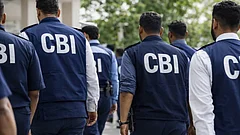
The government has further decided to refer the matter to the Central Bureau of Investigation (CBI). Meanwhile, the NTA maintains that the examination was conducted under "full security protocol".
However, these security measures have done little to pacify students as NTA is no stranger to controversies regarding the various national exams it oversees.

What is the NTA?
The NTA is an autonomous exam-conducting body under the Department of Higher Education in the Union Ministry of Education. Established in November 2017 and operational since September 5, 2018, the agency was created to streamline and standardise entrance examinations for higher education institutions across India. It is registered as a society under the Societies Registration Act, 1860, and was modelled on the US-based Educational Testing Service (ETS).
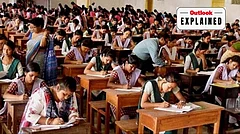


The NTA conducts several major national-level examinations, including JEE Main, NEET-UG, UGC-NET, CMAT and GPAT. Many of these exams were previously conducted by bodies such as the CBSE and AICTE before being transferred to the agency. With more than 2,500 examination centres across the country, the NTA introduced computer-based testing for several exams and expanded centres to district and sub-district levels to improve accessibility for rural students.
The agency was set up with the mandate of conducting examinations in an efficient, transparent and error-free manner. It works in coordination with institutions such as the UGC, NCERT, CBSE and state education boards. However, in recent years, the NTA has faced growing criticism over allegations of paper leaks, technical glitches, irregularities and lapses in the conduct of several high-stakes examinations.
The Many Controversies
The official testing agency has, on many occasions, been criticised for its poor regulation and flaws in the examination. From leaked papers, cheating, and inaccurate scoring, the NTA has been the centre of controversy well before this incident.
The biggest controversy erupted in 2024 when the Centre cancelled the UGC-NET examination, citing a “compromised integrity of the exam.” Around the same time, NEET-UG 2024 came under intense scrutiny over allegations of irregular marking, inflated scores and the awarding of grace marks to 1,563 students, whose scores were later scrapped and a re-test ordered.
The NEET-UG 2024 controversy soon snowballed into the biggest scandal in the exam’s history after Bihar Police uncovered an alleged paper leak racket on the day of the examination. Investigators later traced the leak to a school strong room in Hazaribagh, Jharkhand, where the accused persons allegedly photographed the question paper and circulated solved answers before the exam began. The early declaration of results triggered further outrage after 67 students secured perfect scores, including six toppers from the same centre in Haryana, while marks such as 718 and 719, considered mathematically improbable under the marking scheme, appeared in merit lists. The controversy eventually reached the Supreme Court, which acknowledged that a leak had occurred and benefited at least 155 candidates, but declined to order a nationwide re-examination.
The JEE Main 2024 examination also sparked outrage after students alleged discrepancies in percentile calculations and uneven distribution of candidates across shifts. The NTA additionally debarred nearly 39 candidates for using unfair means, while earlier instances of impersonation and cheating were also detected. Similar concerns had surfaced in 2021 when Russian national Mikhail Shargin allegedly hacked the software used for JEE Main through a Haryana-based examination centre, enabling remote access for “solvers” to write exams on behalf of candidates. Around 20 students were eventually banned for malpractice.
The agency has also been criticised over security and exam-centre management. In 2022, outrage broke out in Kerala after female NEET aspirants alleged they were forced to remove their bras during frisking procedures. The same year, the CBI uncovered a NEET impersonation racket in which fake candidates allegedly appeared for exams in exchange for money. Concerns regarding the NTA’s examination security and functioning have also been raised by parliamentary committees, which recommended reforms and stronger safeguards to prevent recurring lapses.
What the NTA has to Say
Following measures taken by the Rajasthan Special Operations Group (SOG), the National Testing Agency (NTA) released a statement on Sunday addressing the purported irregularities associated with the NEET (UG) 2026 exam.
NTA stated in a post on X that "full security protocol" was followed at all locations during the May 3 assessment.
NTA added that the question papers were transported in GPS-tracked vehicles bearing unique, traceable watermark identifiers. Examination halls operated under AI-assisted CCTV monitoring from a central control room, with biometric verification of every candidate and 5G jammers in operation.

Following the ordered CBI probe, the NTA updated its stance: "NTA will not pre-judge the inquiry, nor characterise its likely outcome. Whatever the agencies determine, including findings that may require further action, will be examined transparently and disclosed in keeping with established procedure”.
As of now, the Rajasthan Police’s Special Operations Group (SOG) have arrested a key accused identified as Rakesh from Dehradun in a crackdown after the controversy. However, for protesting NEET-aspirants, these measures may be too little, too late.