1. Europe has paid an extra $32 billion for oil and gas imports since the U.S.-Israel war against Iran began.
2. EU chief von der Leyen warns of the second major energy crisis in four years, citing Hormuz Strait disruptions.
3. She urges faster clean energy transition, nuclear innovation, and opposes premature sanctions relief for Iran.
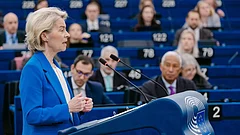
Europe has paid an additional $32 billion for oil and gas imports since the start of the U.S. and Israel’s war against Iran, European Commission President Ursula von der Leyen said Monday, warning that the bloc is facing its second major energy crisis in four years.
Speaking at a news conference in Berlin, von der Leyen compared the current disruption to the 2022 energy shock triggered by Russia’s cutoff of gas supplies to Europe.
“In 2022, Putin cut off our gas supply, and now it’s the Strait of Hormuz,” she told reporters. “Our heavy dependence on imported fossil fuels makes us vulnerable. We must reduce this dependence.”
The Strait of Hormuz, a critical chokepoint for global oil shipments, has become increasingly volatile amid the widening conflict involving Iran. The resulting price spikes and supply uncertainties have driven up Europe’s energy import bills significantly, von der Leyen said.
.jpg?auto=format%2Ccompress&fit=max&format=webp&w=240&dpr=1.0)
To address the crisis, she urged EU member states to accelerate the transition to clean energy and reduce reliance on fossil fuels. She called for expanding renewable energy production and exploring nuclear innovation, including small modular reactors, to ensure reliable and affordable power.
“Every kilowatt-hour of energy generated here contributes to economic stability, affordable energy, and thus to Europe’s independence,” von der Leyen said.
When asked about the possibility of sanctions relief for Iran, she was unequivocal. “We think the dropping of sanctions would be too early,” she said. “We first have to see a change, a fundamental change in Iran for the dropping of sanctions.”
The remarks underscore growing concern among European leaders that persistent geopolitical instability could continue to inflate energy costs, undermining the continent’s economic resilience.