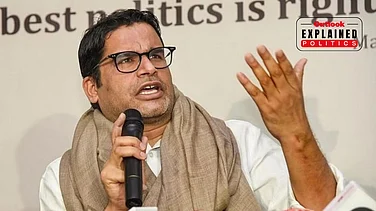
In Puducherry, Vaithilingam’s entry has transformed Thattanchavady into a triangular contest, splitting the opposition vote at a critical moment
Constituencies that were meant to witness coordinated campaigns are now seeing direct contests between supposed allies.
In Bihar, despite a diminished electoral footprint in recent years, Congress continued to push for a larger share
As India moves through yet another intense electoral cycle, the conduct of the Indian National Congress within opposition alliances has come under sharper scrutiny than ever before. From Haryana to Delhi and Bihar, the party has consistently attempted to reassert itself as the central axis of opposition politics. Yet, this assertion has increasingly been accompanied by friction, mistrust, and a visible strain within alliances that were meant to operate on cooperation and mutual respect.
In Haryana, Congress’s reluctance to cede ground during seat-sharing negotiations hinted at a deeper problem—an unwillingness to acknowledge the growing importance of regional players. In Delhi, its uneasy relationship with emerging forces revealed the limits of coexistence, even when facing a dominant ruling party. In Bihar, despite a diminished electoral footprint in recent years, Congress continued to push for a larger share, raising eyebrows within an alliance that has historically depended on careful balancing. Across these states, a pattern emerges clearly. Congress is not merely participating in alliances—it is attempting to dominate them, often at the cost of cohesion.
The “Friendly Fight” Doctrine: Flexibility or Fiction?


At the heart of this evolving strategy lies the concept of the “friendly fight.” On paper, it is a clever political device. It allows alliance partners to contest against each other in select constituencies without formally breaking the coalition. It provides flexibility, accommodates local ambitions, and theoretically expands the alliance’s overall reach.
But elections are not theoretical exercises. They are contests of clarity, messaging, and perception. And in practice, the “friendly fight” doctrine has proven deeply problematic. When alliance partners compete directly, they are not merely testing their strength—they are dividing their base, confusing voters, and weakening their collective ability to present a coherent alternative.
In essence, the doctrine assumes that voters can simultaneously understand competition and unity. But electoral behavior rarely works that way. Voters seek clarity: who stands with whom, and what a vote represents. When that clarity is lost, the entire structure of an alliance begins to wobble. Nowhere has this contradiction been more starkly exposed than in Puducherry.

Puducherry: Alliance in Name, Conflict in Practice
In Puducherry, the INDIA bloc—comprising the Dravida Munnetra Kazhagam, the Communist Party of India, Viduthalai Siruthaigal Katchi and Congress—entered the election with the promise of unity. But even before campaigning began, cracks were visible.
Seat-sharing negotiations dragged on until the final day of nominations, reflecting deep disagreements beneath the surface. While a formal agreement was eventually announced, it quickly became clear that the understanding was fragile. Congress candidates filed nominations in constituencies that had already been allocated to alliance partners, and several refused to withdraw even after the agreement was finalised. This was not a procedural lapse but a direct violation of coalition discipline.
More tellingly, Congress went a step further by fielding candidates in constituencies allotted to its key allies, including the Dravida Munnetra Kazhagam, the Communist Party of India and the Viduthalai Chiruthaigal Katchi. Such moves have been widely viewed as a breach of coalition ethics, where seat-sharing agreements are expected to be binding. By encroaching into allied territories, Congress has not only strained relationships but also signalled a disregard for the basic principles that sustain alliances.
The result is a peculiar political reality. On paper, the alliance exists. On the ground, it is fractured. Constituencies that were meant to witness coordinated campaigns are now seeing direct contests between supposed allies. This is not merely a tactical deviation—it is a breakdown of trust.

Voter Confusion and the Collapse of Clarity
The immediate consequence of this approach has been widespread confusion among voters.
In a typical electoral setting, alliances provide a clear framework. A vote for one party contributes to a broader coalition. It simplifies political choices and strengthens collective messaging. In Puducherry, this clarity has been replaced by ambiguity.
Voters now find themselves choosing between candidates who belong to the same alliance but are contesting against each other. Each candidate claims legitimacy, and each campaign projects itself as the true representative of opposition politics. This confusion is further intensified by the phenomenon of overnight party switching, where candidates denied tickets by one party have swiftly moved to another.
For voters, the election begins to lose its ideological anchor. It becomes less about governance and more about opportunism. In such a scenario, the credibility of the political process itself comes under strain.
The Opportunistic Rise of Tamilaga Vettri Kazhagam
Amid this confusion, Tamilaga Vettri Kazhagam has emerged as a significant disruptor. The party has capitalized on the chaos within established alliances by rapidly fielding candidates, including a former minister, sitting MLAs, and several former legislators—many of whom switched sides overnight after being denied tickets elsewhere.
This rapid consolidation reflects a broader shift in electoral politics, where party platforms are increasingly fluid and driven by individual ambitions. TVK’s rise is not just about its own strategy but also about the vacuum created by the disarray within traditional alliances.
Thattanchavady: The Epicentre of Contradictions
The contradictions of Puducherry’s election are most vividly captured in Thattanchavady. Here, Chief Minister N. Rangasamy is contesting to retain his stronghold. While he faces anti-incumbency concerns, particularly regarding limited constituency engagement, the opposition’s internal divisions may ultimately work in his favor.
Within the INDIA bloc, the seat was allocated to the Communist Party of India, which has narrowly lost here in the past three elections. Recognizing the opportunity, the CPI fielded its state secretary, A. M. Saleem, making it a do-or-die contest.
However, in a move that encapsulates the flaws of the “friendly fight” approach, V. Vaithilingam—Lok Sabha MP, former Chief Minister, and state Congress president—filed his nomination from the same constituency.
A Contest That Favors the Incumbent
Vaithilingam’s entry has transformed Thattanchavady into a triangular contest, splitting the opposition vote at a critical moment. What could have been a consolidated challenge has instead become a fragmented battle.
For N. Rangasamy, this division offers a strategic advantage. Even in the presence of anti-incumbency, a divided opposition lowers the threshold for victory. What might have been a competitive race is now tilted in favor of the incumbent—not by design, but by the opposition’s own missteps.
Congress’s Self-Sabotage
As Puducherry approaches polling day, the Congress strategy stands exposed as a high-risk gamble that has veered into self-sabotage. From Haryana to Delhi and Bihar, its assertive approach has strained alliances. In Puducherry, it has pushed those tensions into the open.
The “friendly fight” doctrine, rather than demonstrating political confidence, has revealed the costs of overreach. By violating coalition ethics, encroaching into allies’ territories, and failing to maintain discipline, Congress has weakened the very alliances it depends on.
In the end, what was presented as strategic flexibility may well be remembered as a critical miscalculation—one that turned unity into division and opportunity into uncertainty.
Amir Hyder Khan is a Bachelor of Architecture student at Jamia Millia Islamia, New Delhi. Originally from Puducherry, he is academically engaged in architectural studies with a growing interest in history, society, politics and public discourse.
Views expressed are personal