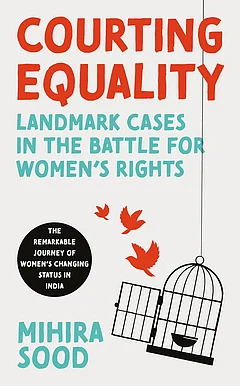
Every April, Dalit History Month brings caste and resistance into the public conversation
Yet, Dalit women continue to be represented through a narrow frame, centred on violence, labour, and survival
This book examines what remains often underrepresented in public discourse and less explored beyond established academic frameworks
Almost a decade after I finished college, I came out as Dalit to a colleague of mine. I didn’t need to, but it felt important then to contextualize my politics to someone I considered a friend. A part of me was also tired of hiding this aspect of my identity at work; by then, I had started writing publicly and was scared that someone would discover it.
So, one Friday evening in Bengaluru, I gathered up some courage and told my colleague that I was Dalit. She looked at me quizzically for a second and blurted, ‘Oh, you don’t look like one.’ If this moment had been filmed, the camera might have aptly caught the expressions of my part-embarrassed, part- crestfallen face. ‘But what does a Dalit look like, Aditi?’ I asked.
She did not know what to say. Her liberal image notwithstanding, her mind—conditioned by caste—equated Dalit to a stereotype, one that can only be recognized through certain markers, which in my case didn’t seem to apply. So she did what she thought was the right thing to do: assure me that I was not like the rest of them. Dirty, poor, uncultured.


I did not feel the need to come out when I was younger. Not only did I lack the political impetus to do it, I also didn’t have to. My socio-economic markers were far less ambiguous back then. I was dark- and dry-skinned, Christian and poor. And if that was not enough, I also spoke broken English and Chennai Tamil. Years later, someone mentioned that my bulbous nose was a dead giveaway. Paara mooku.
For Dalit women who grew up with visible caste markers, navigating savarna-dominated spaces can be demanding. Suspended between the pressures to come out as Dalit, the very real possibility of repercussions on account of coming out, and the gnawing suspicion that coming out is just another performative gimmick, Dalit women can be left feeling helpless. This is especially true for those who did not grow up in contexts that were openly anti-caste and/or are operating in spaces that are outwardly caste-blind but inwardly casteist.
Indian institutions, for example—whether government, academic, corporate or non-profit—can be made up of populations with varying degrees of caste consciousness. Some are extremely adept at identifying caste markers and, if they hold any kind of power and harbour a caste bias, could sabotage a Dalit worker’s career prospects. Some are like my colleague Aditi—who may readily profess caste-blindness but still believe in caste-based stereotypes. Some are proficient in the language of caste politics, and may even be scholars of caste, while concealing a deep disgust for Dalits.
Coming out is therefore a risk, the cushioning of which requires one or more of the following: a higher socio-economic status; anti-caste politicization; adjacency to savarna or white lineage; and an upbringing in, or migration to, a geographical context that is not caste contoured. It is far more challenging to be vocal about one’s Dalit identity if one’s life is in immediate danger; or there is not enough social and economic capital to buffer casteist onslaughts; or there is no lineage to fall back on when one’s Dalit identity is attacked; or one’s anti-caste education has not equipped them with the political ammunition required to defend themselves.
Several contemporary Dalit women have, however, openly self-identified—even in the absence of protections and politicization. Yashica Dutt, the award-winning author of Coming Out as Dalit, has spoken at length—both in her book and outside of it—about the struggles with hiding and the complicated but necessary freedom she felt when she came out. To many readers, particularly those who have not had an Ambedkarite upbringing or other types of scaffolding, this was an experience we could relate to. Like my parents, I too made efforts, as an adult, to hide my caste location—not by saying I was Indian Christian, as they did, but by carefully camouflaging my caste markers.
At work and at school, I adopted English accents that sounded American and British—at one point, even Australian. There was also my surname—or rather the lack of it—which helped me in some ways. Because of a clerical error, I grew up without a surname or initials. ‘Dhanuja’, one of my middle names, became a proxy for my surname at work, and ‘Dhanaraj’—my father’s name, which should have been my official surname— became a pseudonym. As I began writing on caste, I added a middle name to my pseudonym: Thomas. Christina Thomas Dhanaraj. Malayalee-ish? Maybe. Ambiguous? Absolutely.
I had to quit my corporate job, marry into a Dalit family and move countries before I could fully and publicly come out as Dalit. Had I not left India, I would have continued to keep my Dalit identity hidden. Being out as Dalit now feels freeing. It is even more so when the world around me seems to accept it—albeit a carefully curated world, occupied only by those who appear to denounce caste; who listen with rapt attention to my emphatic bashing of savarna arrogance and respond with delightful candour to my self-deprecating humour. It’s sweet relief to be on this side of the bridge— where it appears that I’m celebrated not in spite of being Dalit but because of it.
But I’m also convinced that Dalit women—including those who keep their caste location hidden for the sake of self- preservation—should not be under any pressure to come out. Because, one, the act of coming out in and of itself doesn’t guarantee societal acceptance. And two, there is nothing inherently Dalit about any of us that mandates a broadcast.
(Excerpted with permission from Penguin Random House India)