The idea of the “working actor” and what it means.
How actors stay creatively fulfilled between shooting for TV, films or web series.
COVID made actors reinvent themselves and find new skills and avenues to stay relevant and busy.
In the past year, “comeback” has been a buzzword. Right from Akshaye Khanna, Bobby Deol and Sanjay Dutt to Madhuri Dixit and Emraan Hashmi, actors are being asked, “Oh, where have you been all this while?” The simple answer to that is “working”.
“In India, if you're not visible on screen at that exact moment, people assume you're "struggling" rather than working. But here's the reality: every actor is technically unemployed between projects. That's the business,” says Ashwin Mushran. Waiting and looking for work is an intrinsic aspect of an actor’s life. “What people don't see is the constant work—auditioning, networking, sourcing where the next job might come from. Sometimes a project takes two years to release and your next job depends on that. So you wait,” he adds.
Gul Panag believes that for an actor, the more you experience life, the more you enrich yourself and the more you can give back to the craft. “It is these other pursuits that give us depth and heft in the way we bring characters to life,” she says. “I have actively pursued a life outside of my acting career and it has been immensely rewarding. Whether it was going back and pursuing my Masters in Political Science in my early thirties, subsequently training and earning my Private Pilot’s Licence or going to Law School. And of course, my love for all things on wheels,” adds Panag.


“When I am in between projects, it doesn’t mean I am not doing anything and more importantly, it does not mean that I have retired or I have been struck off the rolls,” says Loveleen Misra. “Like for an athlete, when he/she is not playing tournaments or matches, his fitness regime continues, an actor has to keep all his instruments—be it voice, body watching and analysing art, networking, giving auditions and often when necessary, taking a break from it all,” she states.

This is what Adil Hussain calls riyaz. “When I am not busy reading scripts, I have my daily practice with my voice, my diction, pronunciation, intonation; then there is the aspect of physical fitness—not in terms of body building, but flexibility of my muscles to match the vibrations and embody the feelings of a character I am trying to portray,” says Hussain.
Mushran reminds us that often, people don't realise that an actor works across multiple mediums. “I've done daily soaps, finite series, commercials, independent cinema, OTT. I'm the voice of the Professor in Money Heist on Netflix—most people hear me without even realising it. Yet someone will still ask, "Where have you been? Are you still working?" after not seeing me since Lage Raho Munna Bhai nearly 20 years ago. They might not have seen me, but they've definitely heard me,” he says.

This time between projects is not lying fallow; in fact, it is the opposite. Mushran, for instance, treats it as his film school. “I catch up on all the shows and performances I missed while shooting…soaking up work from around the world. It's how I learn. My home studio keeps me busy with voice work for commercials and corporate films, which I genuinely love. The fact that I can deliver from the comfort of my home makes it even better. And whenever possible, I'm on stage. Nothing keeps you sharper as an actor than live theatre…no second takes, no safety net, just you and the audience,” he explains.
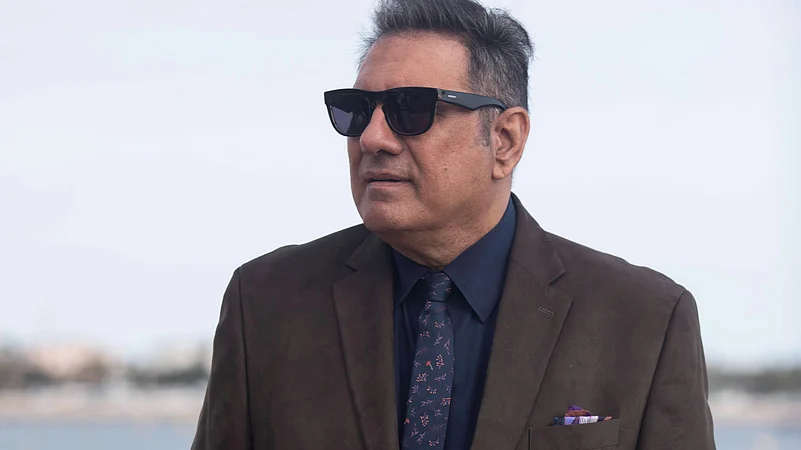
Boman Irani observes that a working actor is someone who doesn’t always aspire to be a star or do big films, big budget films, huge hits alone but someone who looks at acting as a profession. He could be working in smaller films, TV shows, web series, may be obscure films...but he is working through the year. “But that also goes for actors who work in the mainstream—some of these big films may not do well, but the actors also work in indie films, short films, walk on parts, but they are working all the time,” he says
The COVID effect
COVID hit actors hard, forcing them to think about sustainability and backup plans. As brutal as it was, it became a catalyst for reinvention, says Irani, because actors realised that sitting at home was a scary option. “So instead of waiting for the big thing and refusing a lot of work, when the lockdown opened, people said, ‘Let me be a working actor. Let me not say no to small films, web series, small parts, let me just go out and work,’” he says.
“COVID has forced people to be more creative. I was busy working at home, talking about acting, doing live interactions with my audience on Facebook and Instagram, but mostly I was cooking for my wife and son,” says Hussain. “It worked out very well for me. Of course, there was the worry of when would I start working again, but that happened soon, in August 2020, with Bell Bottom being shot in the UK with Akshay Kumar,” he recalls. Quite a few actors have gone through difficult times, reminds Hussain, and he remains grateful that the universe conspired to find him work.

Misra remembers the audition game changing the platforms for acting during COVID. “I remember, not only did I act during the pandemic (before the lock down) with adequate safety measures, I even got my husband to shoot (from a phone) a sketch for an OTT platform! I read out stories. Thanks to Swiggy, Borzo and Instamart, actors were couriered the requisite props, light and reflectors,” she says. Before Covid, actors would have to go to the offices of casting agencies to audition. Covid changed that and phone tripods became popular “because we all had to shoot ourselves and send auditions from home—a practice that continues even now,” she tells.
A big shift for Mushran was launching his communication training program, Million Dollar Presence. “I now train professionals and corporates on how to speak and present themselves better, helping them amplify the best version of themselves. If it wasn't for COVID, I would never have started this,” he says. Irani also found a new joy in teaching during COVID with Spiral Bound—a series of online scriptwriting workshops, in which he collaborated with screenwriters, totalling up to 850 sessions on the craft of storytelling. “Lot of actors also found a new craft, a new method, a new philosophy towards their creativity and acting,” Irani says.
What these voices reveal is not a profession in waiting, but one in perpetual motion. Acting in India is less a straight line of projects and more a web of unseen labour—learning, adapting, sustaining, and surviving. The problem is not that actors disappear between releases; it is that our idea of work remains stubbornly visual. Until we learn to recognise labour that doesn’t announce itself on screen, the “working actor” will continue to be misunderstood—always working, even when not seen.