






Ranbir Kapoor is set to portray Lord Rama in director Nitesh Tiwari’s much-anticipated Ramayana.
The recently released teaser of the film drew sharply polarised reactions, ranging from effusive praise to searing scepticism.
For established stars with strong fan bases, breaking away from a fixed screen image has always been a formidable challenge. Kapoor, fortunately, has largely avoided being boxed into a fixed persona.
Ranbir Kapoor, widely regarded as one of the finest actors of his generation, has now ventured into a territory that most of his illustrious predecessors and contemporaries from Hindi cinema have avoided: mythological cinema.
Kapoor, 43, is set to portray Lord Rama in director Nitesh Tiwari’s much-anticipated Ramayana, said to be the most expensive film ever made in Indian cinema. The recently released teaser of the film offered a glimpse of Kapoor as Maryada Purushottam and drew sharply polarised reactions, ranging from effusive praise to searing scepticism.
While some viewers lauded his suitability for the divine role, others felt that something, perhaps a certain “innocence”, was missing. Clearly, both the film and Kapoor’s portrayal of Lord Rama will come under intense scrutiny when the first instalment of this mythological spectacle is released on Diwali this year.

Kapoor has delivered several standout performances since his debut in Sanjay Leela Bhansali’s Saawariya (2007), the latest being his compelling portrayal of a violent protagonist in Animal (2023).
While his performance in Sandeep Reddy Vanga’s blockbuster underscored his versatility, it has also led sceptics to question whether the Kapoor scion will be able to shed the shadow of his morally complex Animal character while stepping into the role of a divine figure that stands in stark contrast in both spirit and narrative.


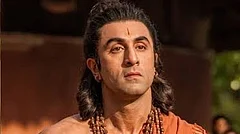
It is little surprise, then, that Ramayana will serve as a litmus test even for an actor of his calibre. To his credit, he has rarely shied away from stepping beyond his comfort zone, often choosing roles that challenge him as a performer. Portraying Lord Rama, in that sense, is a natural extension of his artistic daring.
Yet, the journey will be far from easy. The character of Lord Rama and the epic Ramayana have been deeply embedded in Indian cultural consciousness for centuries and even the slightest misstep by a filmmaker, writer, or actor has historically met with strong reactions from audiences.
Audiences embraced Ramayana, the television serial created by Ramanand Sagar in the 1980s on a modest budget, but rejected Om Raut’s big-budget Adipurush (2023) in recent times. Arun Govil’s portrayal of Lord Rama in Sagar’s Doordarshan serial resonated so deeply with viewers that he later struggled to secure roles of a different nature in films. His image as the ever-smiling Rama remains etched not only in cinematic memory, but also in the collective consciousness of the average Indian.
This Ram Navami—almost four decades after Ramayana serial was first telecast—Govil shared the stage in Patna with BJP national president Nitin Nabin primarily due to his enduring association with Lord Rama, rather than his political identity as the party’s Meerut MP.

Interestingly, unlike their southern counterparts, Hindi cinema’s leading stars across generations have largely stayed away from mythological films, particularly in the post-Independence era. Even though films such as Ram Rajya (1943), Sampoorna Ramayana (1961) and Jai Santoshi Maa (1975) were major successes, they typically featured relatively lesser-known actors such as Mahipal and Ashish Kumar in lead roles.
From the era of Raj Kapoor, Dilip Kumar and Dev Anand to the dominance of Aamir Khan, Salman Khan and Shah Rukh Khan, Bollywood’s biggest stars have generally steered clear of mythology-based cinema, perhaps viewing it as incompatible with their screen image or stature. Although a parallel stream of such films existed until the late 1970s, led by pioneering filmmakers like Homi Wadia, these ventures were often dismissed as overly dramatic, “B-grade” fare.
At times, prominent filmmakers made ambitious announcements to adapt epics such as the Mahabharata and Ramayana, but most of these projects were eventually shelved. For example, Ramanand Sagar once planned Yogeshwar Krishna with Shashi Kapoor in the lead role, but reportedly abandoned it due to budget constraints.
Today, however, neither budget nor technology presents the same challenge. The digital era, with its advancements in CGI and VFX, has opened up vast possibilities for filmmakers. While this has encouraged the creation of fantasy films inspired by mythological elements, full-scale adaptations of epics like the Ramayana have remained elusive for major stars and filmmakers. Ultimately, it was left to Tiwari, best known for Dangal (2016), to undertake this ambitious project and cast Kapoor as Lord Rama. Kapoor must now rise to the occasion, embodying the serene and virtuous persona of Lord Rama, an image indelibly shaped by Arun Govil’s portrayal.
For established stars with strong fan bases, breaking away from a fixed screen image has always been a formidable challenge, though not an impossible one. Actors such as ‘Tragedy King’ Dilip Kumar achieved this with comedies like Kohinoor (1960) and Ram Aur Shyam (1967); Raj Kapoor with Jagte Raho (1956) and Teesri Kasam (1966); and Dev Anand with Guide (1965). Not all, however, have succeeded. Amitabh Bachchan, for instance, faced setbacks when he attempted an image shift with Alaap (1977) during the peak of his “angry young man” phase.
Kapoor, fortunately, has largely avoided being boxed into a fixed persona. This flexibility has enabled him to take on diverse roles with conviction over the past 19 years. Ramayana, therefore, presents a defining opportunity—perhaps even a turning point—for him to demonstrate that he can portray a character as complex and polarising as in Animal and as revered and restrained as Lord Rama with equal ease.
















