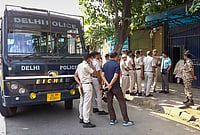
Kanchan Nanaware, Stan Swamy, both arrested under UAPA in different cases died as under trial prisoners.
Pandu Narote, 33, tribal youth was serving a jail term at Nagpur central prison after his conviction under UAPA by the Gadchiroli sessions court. Narote died during jail term, allegedly due to medical negligence by prison authorities. Two months later, he was acquitted by the Bombay High Court.
Criminal justice is travesty in these cases of prison deaths, say lawyers.
Pandu Pora Narote, 33, a tribal youth from Maharashtra’s Gadchiroli district, was arrested in August 2013 on allegations of links with the banned CPI (Maoist) and its frontal organisation, the Revolutionary Democratic Front. The case later widened to include former Delhi University professor G.N. Saibaba and several others.
In March 2017, a Gadchiroli sessions court convicted Narote and his co-accused under multiple provisions of the Unlawful Activities (Prevention) Act and Section 120-B of the Indian Penal Code, sentencing most of them to life imprisonment. They challenged the verdict before the Bombay High Court, where the appeal languished for more than five years.

Narote did not live to see the outcome. On 25 August 2022, he died in Nagpur Central Jail after contracting swine flu, with his family and lawyers alleging that he was denied timely medical care. Two months later, in October 2022, the Bombay High Court acquitted all the accused, ruling that the prosecution’s sanction under the UAPA was invalid.

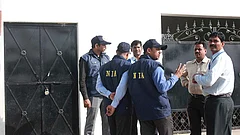
The Maharashtra government challenged the decision, prompting the Supreme Court to stay the acquittal and, in April 2023, send the case back to the High Court for a fresh hearing on merits. After reconsidering the evidence, the Bombay High Court in March 2024 acquitted Narote, G.N. Saibaba and the remaining accused, holding that the prosecution had failed to prove its case beyond reasonable doubt. The state has since appealed to the Supreme Court, where the matter is still pending.

Aakash Sorde, lawyer for Pandu Narote, recalls him with deep emotion. “My heart feels heavy whenever I think of Pandu. He was not just another client,” he told Outlook. Sorde met Narote weekly while he was lodged in Nagpur Central Prison with Mahesh Tikri and G.N. Saibaba.
After Narote complained of severe suffering, prison authorities admitted him to the prison hospital. His condition worsened, and on 20 August 2022 he was shifted to Government Medical College (GMC), Nagpur, where he died on 25 August.
Sorde, who visited him at GMC, said Narote was neglected. “He was handcuffed to the hospital bed, left in a corner of the ward and unattended. It was inhumane.” Narote pleaded, “Please shift me somewhere. I want to recover and live longer.”
According to Sorde, Narote’s swine flu was not diagnosed in time. “Before we could approach the court to seek his transfer, he died due to the negligence of the prison authorities.”

Narote, a poor tribal youth, was particularly vulnerable. His family was informed about his condition only after he was shifted to Government Medical College (GMC) in Nagpur. After his death, the hospital initially refused to provide an ambulance to take his body to his home near Aheri–Allapalli in Gadchiroli. An ambulance was arranged only after intervention by his lawyers.
Lawyer Aakash Sorde recalls Narote’s final plea. “Please shift me somewhere. I want to recover and live longer,” he said when Sorde met him at the GMC hospital.
Two months after his death, the Bombay High Court posthumously acquitted Narote. His documents and money, held by Nagpur Central Prison, have still not been returned to his family. “I applied on behalf of Pandu’s brother, but the prison authorities refused, saying only his wife could claim them,” Sorde told Outlook.
Kanchan Nanaware
Kanchan Nanaware, 38 was arrested in September 2014 by the Maharashtra Anti-Terrorism Squad (ATS) along with her husband Arun Bhelke on allegations of links with the banned CPI (Maoist). She was charged under multiple provisions of the Unlawful Activities (Prevention) Act (UAPA). The prosecution claimed the couple worked as urban operatives, using false identities to mobilise support in cities such as Pune and Mumbai.
Nanaware spent over six years in custody as an undertrial. During this period, her health deteriorated sharply. She suffered from serious neurological and heart-related conditions, while activists and lawyers repeatedly raised concerns about inadequate medical care in prison. She died on 22 January 2021 while lodged at Yerawada Central Prison, after being shifted to the government-run Sassoon Hospital when her condition worsened.

“Kanchan Nanaware was never convicted,” said senior criminal lawyer Rohan Nahar, who represented her in the Pune sessions court. “The prosecution failed to produce any evidence linking her to violence or so-called anti-national activities. Despite long-standing heart ailments, she was denied bail on medical grounds due to the ‘seriousness of allegations’.”
Nahar recalled that Nanaware struggled to walk even short distances during court appearances. “Her condition was evident to the court, yet she was denied bail and remained in jail for six years as an undertrial. This is a travesty of justice.”
He also criticised the UAPA, calling it a draconian law often used to suppress dissent. “Today, young lawyers fear defending left leaning political prisoners under UAPA, worried they will be branded ‘urban Naxal sympathisers’,” he said.
Although Nanaware faced multiple cases, she was not convicted in any. Any future acquittal would be meaningless to her. Civil liberties groups condemned her death as institutional neglect and a denial of timely medical care, highlighting the human cost of prolonged incarceration under stringent anti-terror laws.

Stan Swamy
Stan Swamy, 84, was a Jesuit priest, scholar and tribal rights activist who spent decades working with Adivasi communities in Jharkhand on land rights, displacement and the plight of undertrial prisoners. He was arrested in October 2020 under the Unlawful Activities (Prevention) Act (UAPA) in the Bhima Koregaon case, over alleged Maoist links.
Suffering from Parkinson’s disease and other serious health conditions, Swamy’s health worsened after he contracted Covid-19 while lodged at Taloja Jail in Navi Mumbai. Despite repeated bail pleas, he was denied release and even basic medical aids, including a straw and sipper to drink water. Prison authorities reportedly provided it much later.
Swamy died in judicial custody on July 5, 2021. Five years after his death as an undertrial, the trial in the Bhima Koregaon case has yet to begin.
Speedy trials mean nothing for Pandu Narote, Kanchan Nanaware and Stan Swamy who suffered prolonged incarceration under UAPA.