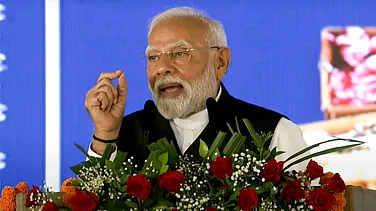
First-time corporator Syed Iqbal won 39 of 65 votes with Congress backing, defeating the BJP candidate in mayoral election.
Parbhani’s post-2019 tilt towards Shiv Sena (UBT) reflects shifting caste and communal alignments in a Muslim-majority city.
Beyond symbolism, the mayor faces challenges of communal agenda and unresolved civic issues affecting Dalits and Nomadic Tribes.
Syed Iqbal Syed Khwaja of Shiv Sena (UBT), who was elected mayor of the Parbhani Municipal Corporation, made headlines this week as the first Muslim mayor of the city.
Everybody, from deputy chief minister Eknath Shinde to BJP leader Chitra Wagh, had criticised Iqbal with the ‘Khan mayor’ narrative, which was floated during the Brihan Mumbai Corporation (BMC) elections. Many see Khwaja’s leadership position as important from the representation of Muslims point of view and the manner in which it challenges the ruling BJP in the civic body. On the other hand, many have raised doubts, alleging Khwaja is unaware about the civic issues of the city.

Khwaja, a first time corporator, secured 39 votes for mayoral election in the 65-member civic body with the support of Congress corporators. He defeated BJP candidate Tirumala Khilare in the mayoral contest. The Shiv Sena (UBT) leader has strong grassroots connections within Parbhani’s Muslim community, but he is relatively new to active politics. His elder brother Sayed Abdul Khadar runs a company named Syed Builders and Developers in Parbhani. Both brothers are known in the city for their love for horse riding and have participated in many events and competitions. The family is affluent and their political interests are often tied with the family business, according to residents of Parbhani.


History and Politics of Parbhani
Parbhani is a district of central Maharashtra (Marathwada) which was culturally influenced by the Nizam rule before India’s independence. Therefore, nearly 40 % of the population of the city is dominated by Muslims. Significant parts of the district are drought-prone. The district has been a stronghold of Shiv Sena historically and was later dominated by Shiv Sena (UBT). MP Sanjay (Bandu) Jadhav, MLA Dr. Rahul Patil and now the mayor are all with the Shiv sena (UBT).
“The city’s Muslim population is politically wise and they have shown overwhelming support to the Shiv Sena (UBT) after 2019 to keep the BJP at bay. I have contested the Lok Sabha elections against Shiv sena (UBT) leaders on behalf of the Communist party of India (CPI) yet we have supported Shiv Sena (UBT) ever since their position on communalism changed and agenda of defeating the BJP,” Madhuri Kshirsagar, communist leader and lawyer based in Parbhani told Outlook.
Historically, the Shiv Sena (United) used the ‘Khan vs Baan’ narrative to consolidate Hindu votes, asking ‘Khaan hava ki baan?’ (Do you want Khan as your leader or Baan, the arrow that symbolises Shiv Sena). From this election, the narrative of choosing a Muslim corporator for a mayoral position is being perceived as an ideological shift in limited sense for the Shiv Sena (UBT).
However, Kshirsagar says, “Giving an opportunity to a Muslim leader to lead the house is good, but it is also due to the arithmetic. The Muslim population is predominant in Parbhani city and even the Shiv sena (UBT) won a majority of seats with Muslim candidates, that way it was bound to happen. Syed Iqbal Khawja should be seen as a people’s representative, he received Hindu votes as well,” she adds.
The city has been an example of syncretism since the Nizam’s rule as language, culture, and the social fabric are well intertwined among Hindus and Muslims. People were co-existing with love and peace until the 2003 Mosque Blast. In November 2003, an explosion rocked the Mohammadiya Masjid in Parbhani during Friday prayers, injuring several citizens, sending shockwaves through the Marathwada region.
Initially investigated by local police and later taken over by the Maharashtra Anti-Terrorism Squad (ATS), the case marked a significant moment in the state’s communal violence history. Investigators concluded that the explosion was a deliberate act intended to target a Muslim place of worship and disturb communal harmony. Forensic evidence, witness accounts and material recovered during the probe led authorities to link the attack to members associated with right-wing extremist networks operating in the region at the time.
In 2006–07, a Sessions Court convicted multiple individuals, awarding prison terms ranging between seven and twelve years. The court observed that the conspiracy was aimed to terrorise a religious community and undermine public order. Convictions were later upheld on appeal. The case gained wider attention because it was among the early instances in Maharashtra where extremist violence linked to radical Hindutva elements resulted in judicial conviction, influencing later investigations into similar incidents in the region.

Challenges before the new mayor
It took years for activists, civil society members, and peace building organisations to restore peace in the city. This was one among the few reasons behind the strategic voting of Muslims from parliamentary to civic body elections, according to Kshirsagar.
Khawaja has many challenges as mayor of the city, rising communal hatred is one of them, but his understand of the civic issues of the other marginalised groups is another challenge.
“Syeds are not known for their commitment or connection with the marginalised groups in the city. We have been protesting at the Collectorate office for the past 150 days, for the issue of subclassification in SC reservation. Though the issue can’t really be solved at his level, he or other Shiv Sena (UBT) leaders haven’t visited us at a protest site even after the election to understand the issue or show support,” says Ganpat Bhise of the Lal Sena organisation based in Parbhani.

The Shiv sena (UBT) leadership hasn't catered to the issues of Dalits in the city especially since the Matang community and Laman Banjaras are Nomadic and de-notified tribes. The evictions of houses of the most marginalised, caste atrocities, civic issues in the slums where Dalits and nomadic tribes live have not been resolved by the Shiv Sena (UBT) elected leaders. “Will new mayor Iqbal Syed Khwaja pay attention to these issues or protect the interests of the middle class? This is the question, we’ll keep asking,” says Bhise.