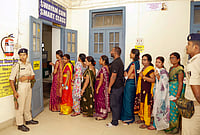
In a first since the Manipur ethnic violence began, Kuki-Zo civil society representatives held a preliminary meeting with Chief Yumnam Khemchand Singh, raising concerns over security, justice, and rehabilitation.
While both sides called it a tentative step with no commitments, the demand for separate administration remained unresolved.
Within hours, protests in Churachandpur turned violent in which a security official got injured.
For the first time since ethnic violence erupted in Manipur, representatives of Kuki-Zo civil society sat across the table with Chief Minister Yumnam Khemchand Singh — a meeting that was meant to signal the possibility of dialogue, but was quickly followed by unrest on the ground.
Nine members of the Kuki Zo Council (KZC), an apex body representing Kuki-Zo groups, travelled to Guwahati for what participants described as an “introductory” interaction with the chief minister. While no formal assurances emerged, those present said the meeting marked a tentative beginning after months of hardened positions.
The KZC, which had earlier called for the “social boycott” of MLAs from the Kuki-Zomi-Hmar community who chose to join the new government formed in February, following a year of President’s Rule in the state, described the talks with the chief minister as limited in scope.
Chairman H. Thanglet said key concerns raised included security arrangements in conflict-hit areas such as Ukhrul district, particularly along roads and in vulnerable villages. “Security should be ensured… both along the roads and in the villages,” he said.



Ukhrul district has remained on edge since February 2026, when the alleged assault of a Tangkhul Naga man triggered a fresh cycle of tensions. Clashes in the Litan–Sareikhong area saw houses set ablaze, sporadic gunfire, and a temporary suspension of internet services.
More recently, the situation escalated again after the bodies of two Kuki men, who had earlier gone missing, were recovered from a hilltop near Thawai Kuki village in Kamjong district. The discovery briefly sparked a hostage crisis involving Tangkhul Naga civilians.

Tensions have since remained high. On Monday, unidentified armed miscreants allegedly opened fire on civilians working in farmlands in the Litan area, leaving a Kuki woman injured.
The long-standing demand for a separate administration by the tribal communities, however, remained only briefly touched upon in the meeting.
“We discussed very little about it since it is related to the Ministry of Home Affairs. We did not go into it in detail,” Thanglet said.
“However, we did tell him clearly that we have a political demand of separate administration and we will continue to demand it,” said Ginza Vualzong, spokesperson of the Indigenous Tribal Leaders’ Forum (ITLF), who was part of the delegation. At the same time, he emphasised that the discussion did not move into negotiations. “Nothing in writing, no decision. it was just an ice-breaking session.”
Thanglet told Outlook that concerns around “overlapping police jurisdiction, forest matters, and employment” were also raised during the meeting with the chief minister, with discussions largely centred on maintaining status quo in these sensitive areas.
Concerns about rehabilitation and justice were also mentioned in the meeting. Vualzong said the delegation told the chief minister that peace could not be imposed without addressing the losses suffered during the conflict.
“Until justice is given to those who died, those who were injured, and those who lost property, the true spirit of peace cannot be achieved,” he said.

Confidence-building measures, including improved compensation for internally displaced persons, were also flagged. “The assistance provided currently is very less. The government needs to do more to ensure people feel supported.”
Despite internal opposition within a few sections of the Kuki-Zo community to even engaging with the state government, Vualzong considered the meeting as a necessary first step.
“We cannot remain hostile and say we will not talk. We need to engage so that something concrete may come in the future,” he told Outlook.
But any fragile momentum from the talks appeared to unravel within hours.
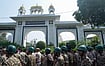
Tension gripped Churachandpur on March 22 after a group of youths attempted to storm Thanglet’s residence, apparently in protest against the meeting, according to the senior police official that Outlook spoke to.
Around 100 people, mostly young men, gathered outside his house, pelting stones and trying to force entry.
A senior police officer said the protest quickly escalated. “It was related to the meeting with the Chief Minister. It started as a protest but then turned a little violent,” he said, noting that slogans like “Kuki land” and “Zomi land” were raised.
Security forces responded with tear gas and blank firing to disperse the crowd. “We used tear gas and fired a few blank rounds after being fired upon,” the police official told Outlook, adding that one security personnel was injured. No major civilian injuries were reported.
Thanglet confirmed that his residence had been targeted but said the situation was brought under control by the security forces.

Addressing the media on Sunday, Chief Minister Yumnam Khemchand Singh said the biggest concern remains the inability of internally displaced persons (IDPs) to return home, stressing that rebuilding trust between communities is essential. “Central forces cannot guard people indefinitely. Communities must move towards rebuilding trust,” he said.
He noted that the return of IDPs from both sides was discussed during the talks and described the meeting as “a good beginning.” Thanking the Kuki Zo Council for engaging in dialogue, Singh said the focus was on peace-building, adding, “There is no demand or commitment at this stage.”
On the demand for a separate administration, he reiterated that Prime Minister Narendra Modi has assured that Manipur’s territorial integrity will remain intact.
Clarifying the term “buffer zones,” Singh said the government views these as “sensitive zones” where security forces are deployed due to a lack of trust. He also urged all sides to avoid confrontation and focus on restoring peace rather than dwelling on statements and differences.